Ponta Delgada or Furnas as Your Base?
Should I base my São Miguel trip in Ponta Delgada or Furnas?
Base yourself in Ponta Delgada: it holds the airport, the cruise marina at Portas do Mar, the widest choice of hotels and restaurants, and it puts every part of the island within a day's drive. Furnas is a caldera village built around thermal cooking and hot springs, not a transport hub or a nightlife town — plan a day or an overnight there, never your arrival or departure.
Two very different kinds of base
Ponta Delgada and Furnas sit about 45 minutes apart by road, and they could hardly be more different as places to sleep. Ponta Delgada is a working harbour town of roughly 68,000 people, with the island’s only airport, its cruise marina, its hospital, and by far its largest choice of hotels and restaurants.
Furnas is a village of a few thousand people built inside an active volcanic caldera, known for steaming ground, thermal pools, and a lunch that is cooked underground rather than on a stove. One is the island’s transport and services hub. The other is a place you go to slow down for a day. Neither is a compromise version of the other, and this page is about picking correctly between them — not about how many days to spend on São Miguel, or about the island’s broader regions, which are covered elsewhere.
Scale explains part of the imbalance too. São Miguel is only about 65 km end to end and 8-15 km wide — 744 km² in total — yet it holds roughly 137,000 residents, over half the population of the whole Azores archipelago, and the two towns this page compares split that population very unevenly. The island is nicknamed the Ilha Verde, the green island, and almost every visitor working out how many days they need ends up structuring the trip around exactly this Ponta Delgada/Furnas split, simply because the island’s shape leaves few other realistic hubs.
Ponta Delgada: the practical default
For almost every visitor, Ponta Delgada is the right base, for reasons that are logistical rather than scenic. João Paulo II airport sits about 2-3 km from the town centre, close enough that an early flight or a late arrival barely disturbs a stay. The cruise berths at Portas do Mar sit inside the same short walk, which is why ships dock here and nowhere else on the island.
A city day exploring Ponta Delgada takes in the Portas da Cidade arches, the Forte de São Brás and the black-and-white cobbled streets of the old town — a route covered step by step in the old town walking guide — and in the evening the town has the island’s real concentration of restaurants, cafés and bars, anchored by the stalls and produce of the Mercado da Graça.
Basing here also means every other part of the island is a manageable drive away, not a relocation. Sete Cidades is under an hour to the west, Ribeira Grande and the north coast closer still, and Furnas itself around 45 minutes east along the EN1-1A. Car hire desks, fuel stations and the island’s only real road network hub are all here, which matters given that driving on São Miguel means narrow, winding roads without the shortcuts a map suggests.
If you would rather not drive at all, a car-free day in Ponta Delgada still works, and cruise passengers doing a single stopover can follow a ready-made shore excursion itinerary straight from the ship. None of this exists in Furnas: no airport, no cruise berth, no meaningful choice of after-dark restaurants, and a much thinner spread of accommodation.
Evenings in Ponta Delgada also open up activities that need a working harbour rather than a caldera. An evening sailing trip out of the marina is a straightforward way to end a day here, and cruise passengers with only a few hours ashore are usually better served by a half-day shore excursion booked from the port than by trying to reach the caldera villages independently.
Furnas: a caldera village, not a transport hub
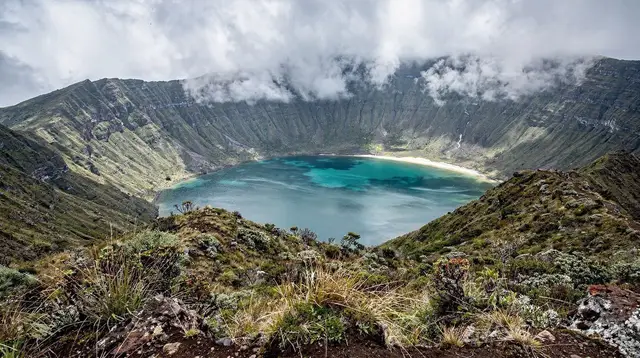
Furnas earns its place on every itinerary, but as a destination for a day or an overnight, not as a base for the trip as a whole. The village sits inside a caldera that is still volcanically active: fumaroles vent steam at the roadside, the Lagoa das Furnas is where cozido pots are buried in the hot ground each morning, and the Terra Nostra garden holds an iron-rich thermal pool that stains swimwear a permanent shade of orange.
A full circuit of these sights is set out in the Furnas day-trip guide, and the underground cooking itself — five to seven hours on volcanic heat, with no fire and no booking of the hole yourself — is explained separately in the cozido guide.
Because restaurants take the cozido order and the booking rather than visitors doing it themselves, table reservations matter more here than almost anywhere else on the island, a point covered in where to eat near Furnas. For a slower soak after the crowds thin out, the Terra Nostra pool guide is worth reading before you pack a swimsuit you don’t mind staining.
What Furnas does not have is almost everything a base needs. There is no airport and no meaningful public transport link timed to flights, so treating it as an arrival or departure base adds an unnecessary 45-minute drive at the worst possible moment of a trip. There is no nightlife to speak of — restaurants here are built around long lunches and thermal cooking, not an evening scene — and the choice of hotels is a fraction of what Ponta Delgada offers.
Staying overnight in Furnas is a genuinely good idea for travellers with the time: it buys a quiet early soak at Poça da Dona Beija before the day-trip buses arrive, and a Terra Nostra pool session at hours when it isn’t full. But it works as an addition bolted onto a Ponta Delgada-based trip, not as a replacement for one.
Why Ponta Delgada became the capital — and Furnas never was
The imbalance between the two towns is not an accident of modern tourism; it goes back to 1522. Until that year, the island’s capital was Vila Franca do Campo, on the south coast between Ponta Delgada and Furnas. An earthquake-triggered landslide buried much of the town that year, killing much of its population, and administrative functions moved to Ponta Delgada afterwards — a shift covered in full in the former-capital guide and in a short piece on the same event.
Ponta Delgada kept that role for the five centuries since, which is also why it, rather than Furnas or Vila Franca, ended up with the island’s airport, its main harbour, and its hospital. Furnas was never in the running: a village inside an active caldera, prone to steaming ground and gas venting, was never going to be developed as the administrative or transport centre of the island. Its value has always been geological and gastronomic rather than logistical, and that hasn’t changed.
The south coast route between the two
Driving from Ponta Delgada to Furnas along the coast, rather than inland, also strings together most of the villages this two-town comparison skips over. Lagoa and Água de Pau sit just east of the capital, followed by Caloura, a small fishing harbour worth a stop in its own right — covered in the harbour boat-trip guide — before the road reaches Vila Franca do Campo itself and, just offshore, the sunken crater islet of Ilhéu de Vila Franca, swimmable in season and detailed in its own boat-trip guide.
Past Vila Franca, the road climbs over a ridge into Povoação, then drops back down to Ribeira Quente, which functions as Furnas’ beach on the far side of that ridge — a pairing worked into a single Povoação and Ribeira Quente day trip. None of these villages changes the base decision itself, but they explain why the 45 minutes between Ponta Delgada and Furnas is rarely a straight, empty road — it passes several places worth a stop, particularly for anyone choosing the two-base compromise below rather than a single fixed hotel.
Ponta Delgada vs Furnas at a glance
| Ponta Delgada | Furnas | |
|---|---|---|
| Role | Island capital, main town | Caldera village |
| Airport distance | 2-3 km from centre | About 45 minutes’ drive |
| Cruise access | Portas do Mar marina, in town | None |
| Hotels and restaurants | Widest choice on the island | Small, limited after dark |
| Best for | Arrival/departure, day-trip hub, evenings out | Thermal pools, cozido, caldera scenery |
| Typical stay | Base for the whole trip | One day, or one overnight add-on |
| Getting to the other town | About 45 minutes to Furnas | About 45 minutes to Ponta Delgada |
Which base fits your trip
If you’re flying in and out
Stay in Ponta Delgada, at least for the first and last nights. With the airport 2-3 km from the centre, there is no advantage to adding a 45-minute drive at either end of a trip, and every guided day trip into the Furnas valley already collects guests from Ponta Delgada hotels in the morning and returns them in the evening.
If cozido and thermal pools are the point
Furnas deserves real time, just not as your only base. A guided private, flexible-itinerary tour of Furnas from Ponta Delgada lets you set your own pace around the caldeiras, the garden and lunch, and an overnight in the village afterwards buys a quiet early soak before the day-trip groups arrive.
If you’re on a cruise
There is no real choice here: ships berth at Portas do Mar in Ponta Delgada, and Furnas has no port at all. Book your shore time around the marina, whether that means walking the old town yourself or joining an organised excursion inland.
If you want one base for the whole island
Ponta Delgada again. Its position roughly in the middle of São Miguel’s north-south axis, its road connections and its rental-car options — set out in the car rental guide — put Sete Cidades, the north coast, Lagoa do Fogo and Furnas all within a comfortable day’s round trip, something no other town on the island can match.
A realistic two-base compromise
The strongest itineraries on São Miguel don’t force an either/or choice; they use Ponta Delgada for the bulk of the stay and add one or two nights in Furnas in the middle. A three-day route built around exactly this pattern spends the first and last nights in Ponta Delgada and breaks the middle day around Furnas, so the caldera village gets unhurried time without ever having to double as an airport hotel.
Anyone weighing a fully independent trip against a guided one should also read the comparison of self-drive versus guided touring, since it affects how practical a Furnas overnight actually is without a rental car. Whichever pattern you choose, keep the roles straight: Ponta Delgada is where you arrive, sleep most nights, and eat after dark; Furnas is where you go to stand over a steaming caldeira and eat a lunch that spent the morning cooking underground.
Ponta Delgada or Furnas: frequently asked questions about basing your stay
Is Furnas close to the airport?
No. Furnas sits inland in its own caldera in the east of the island, roughly 45 minutes’ drive from João Paulo II airport in Ponta Delgada. There is no shortcut and no direct bus timed to flights, so it is a poor choice for an arrival-night or last-night stay.
Can I stay overnight in Furnas?
Yes, and it suits a slower pace: a handful of small hotels and guesthouses sit around the village and the Terra Nostra garden. Shops and options for dinner are limited compared with Ponta Delgada, and most restaurants expect a booking, especially around cozido service.
Which town has better restaurants and nightlife?
Ponta Delgada, by a wide margin. It has the island’s density of restaurants, cafés and bars, plus the Mercado da Graça food market. Furnas has a small number of restaurants built around thermal cooking and long lunches, not an evening scene.
Is Ponta Delgada a good base for day trips to Furnas?
Yes — it is the standard way to see Furnas. The drive is around 45 minutes each way, and most guided Furnas day trips and 4x4 tours depart from Ponta Delgada hotels in the morning and return in the evening.
Why did Ponta Delgada become the island capital instead of Vila Franca do Campo?
Vila Franca do Campo was São Miguel’s capital until 1522, when an earthquake-triggered landslide buried much of the town. Ponta Delgada took over administrative functions afterwards and has remained the capital ever since, which is also why it, not Furnas or Vila Franca, ended up with the island’s airport and main harbour.
Is Furnas worth staying in for one night?
For visitors with the time, yes: an overnight lets you use the Terra Nostra pool at quiet hours and take a slow morning at Poça da Dona Beija before the day-trip buses arrive. It is an add-on to a Ponta Delgada-based trip, not a substitute for one.
Which base is better for a cruise stopover?
Ponta Delgada, without question. Ships dock at Portas do Mar in the town centre, and shore excursions to Furnas, Sete Cidades and the rest of the island are built around that berth. Furnas has no port and no capacity to receive cruise passengers directly.
Comparison on GetYourGuide
Verified deep-linked GetYourGuide tours. Book through these links and we earn a small commission at no cost to you.
GetYourGuide does not provide a product photo for this activity — the image shows the meeting point, photographed by us.