Eating in Furnas: Do You Need to Book?
Do I need to book a restaurant in Furnas?
In June to September, yes — book ahead at the same time as your rental car, because Furnas has few tables for a village that draws day-trippers from across the island. In November to March, restaurants stay open and are far easier to walk into, even though boat trips elsewhere on São Miguel are cancelled more often for sea conditions.
Furnas Is Small, and Everyone Wants to Eat There
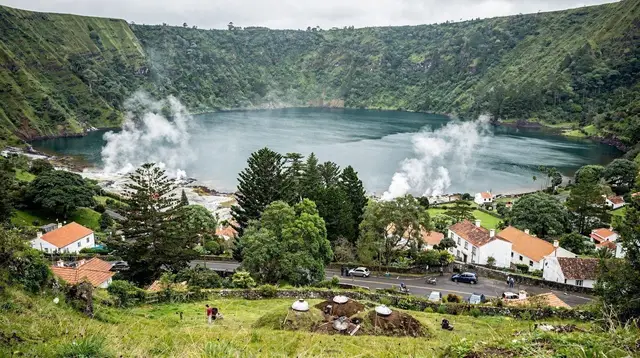
Furnas sits inside an active caldera in the east of São Miguel, a village built around steaming ground rather than a harbour or a high street. It is one of the island’s most-visited places in a single day, which creates an odd mismatch: a settlement of a few thousand people has to feed a much larger number of day-trippers, tour groups and overnight guests, all converging on the same stretch of road around the same hours. The kitchens themselves are excellent — this is where cozido das Furnas is cooked in the ground and where Azorean produce is close to the source — but the number of tables is not built to absorb a peak-season midday rush without warning.
This page does not repeat how the cozido itself is cooked; that is covered in full in the cozido explained guide. What it answers is narrower and more practical: when does a table in Furnas need booking ahead, when does it not, and what does “booking ahead” actually mean for a village where nobody is publishing a citywide reservation system.
Peak Season: June to September
From June to September, Furnas is at its busiest for the same reasons the rest of the island is: this is when the hydrangeas are in flower, the sea is warmest, and school-holiday travel from both Portugal and further afield concentrates into a few months. Furnas absorbs a disproportionate share of that traffic because it is one of the handful of places every itinerary includes, whether the visit is a half-day loop from Ponta Delgada or a full Furnas day trip.
The practical result is that restaurant tables in Furnas during these months are genuinely limited, and the busiest window is the same for almost every visitor: late morning through early afternoon, when the cozido pots are being hauled out of the ground and everyone who timed their visit around that moment wants to sit down and eat immediately afterward. A kitchen that could comfortably serve a steady flow across a normal day instead faces a spike concentrated into two or three hours.
Book ahead. That is the entire recommendation for this season, and it applies whether you are after a sit-down meal, a table at a specific mealtime, or a guided experience built around the cozido tradition, such as an Octant Furnas Hotel cooking class built around the underground cozido tradition. Reserving that kind of experience in advance solves two problems at once: it locks in both the meal and the cultural piece, and it removes the table-hunting altogether.
Book the Car and the Table Together
The single most useful piece of practical advice for summer visits to Furnas is this: book your restaurant table at the same time you book your rental car, not as an afterthought once you land. The reasoning is the same for both. A rental car is the practical default for getting around São Miguel, and in peak months the fleet on the island is limited enough that waiting until arrival routinely means paying more or not finding one at all. Furnas tables run on an identical curve, for an identical reason: everyone visiting in the same narrow window is trying to solve the same logistics at the same time.
If your dates are fixed for a June-to-September trip, treat “reserve the car” and “reserve where we’ll eat in Furnas” as one planning task rather than two. This matters even more if your day in Furnas is built around a specific slot, such as a guided half day tour that already fixes your arrival window — in that case, the restaurant booking needs to match the tour’s timing, not the other way around.
What “Booking Ahead” Actually Means Here
Furnas is not a city with a centralised booking platform covering every kitchen in the village, so “book ahead” is less a single click and more a habit: contact the specific place you want to eat, directly, once you know your date and rough arrival time, and confirm rather than assume. For anyone who would rather not manage that step at all, folding the meal into a guided experience is the simpler route — a booked activity that already includes lunch removes the separate reservation entirely.
Two of the more complete options do exactly that. A guided stew workshop that pairs a hands-on cooking session with lunch and a dairy farm visit combines the meal with an activity built specifically around Furnas produce, and a broader half-day tour of Furnas typically structures the day so that eating happens at a fixed, pre-arranged point rather than being left to chance once you’re already there. Either approach sidesteps the peak-season table hunt by design.
Low Season: November to March
Winter on São Miguel is genuinely a low season, not a dead one, and Furnas restaurants reflect that distinction clearly. They stay open through the colder, wetter months — the same as the thermal pools, caldeiras and tea plantations that keep operating regardless of weather. What changes between November and March is not restaurant availability but the balance of activity around the island: boat-based excursions are cancelled far more often once the Atlantic turns rougher, while a village kitchen inland in a caldera is largely unaffected by sea conditions.
Walking into a Furnas restaurant without a reservation is realistic for most of the low season. Day-trip numbers drop, tour buses run less frequently, and the crush around the cozido-collection hours eases considerably. This is also, incidentally, one of the better arguments for visiting Furnas outside summer at all: the same caldera, the same thermal pools at Terra Nostra and Poça da Dona Beija, with none of the queueing.
Cozido Bookings Are a Special Case
Because cozido das Furnas cooks in the ground on volcanic heat for five to seven hours with no fire, the pots are placed in the morning and collected around midday by arrangement with a specific kitchen — the hole in the ground by the Lagoa das Furnas is never a visitor’s to use directly. That logistics detail, already covered in full elsewhere, has one direct consequence for restaurant planning: a cozido meal is effectively pre-booked by definition, since the pot has to go into the ground hours before anyone sits down to eat it.
That makes cozido bookings the clearest case where reserving ahead isn’t a summer-only precaution — it’s how the meal works at any time of year, even if the wider table crush around it is a peak-season problem specifically. A combined outing such as a day pairing the cozido meal with the Furnas thermal pools bundles both halves of that logistics chain into one reservation, which is often the least stressful way to guarantee both.
Everyday Eating Beyond the Cozido
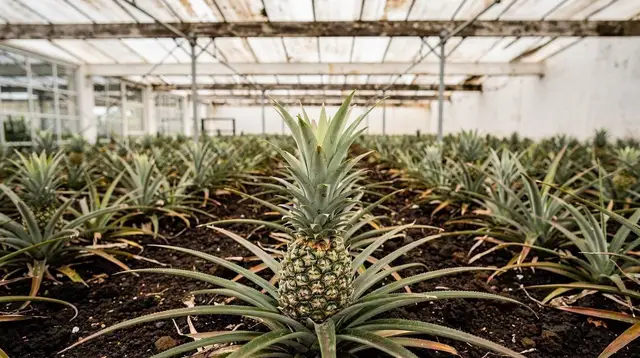
Furnas food is not only cozido. The village and the wider caldera area sit at the centre of the island’s tea and pineapple growing country, and kitchens here draw on that produce alongside Azorean seafood brought up from the coast. A meal in Furnas that isn’t built around the underground stew — a simple lunch between the caldeiras and the gardens, or dinner after a soak at Terra Nostra — follows the same seasonal booking logic as everything else here: essential to arrange ahead in summer, straightforward the rest of the year.
This page deliberately avoids naming specific restaurants, quoting prices, or promising opening hours, because all three change and none of them are the actual decision that matters. The decision that matters is timing: book ahead in the busy months, relax in the quiet ones, and don’t assume a village this small can absorb a full day’s worth of visitors without some advance planning on your part.
Local Ingredients Worth Ordering
Furnas kitchens draw on more than the cozido pot. The caldera’s volcanic soil and the mist that keeps the hillsides green support the same tea-and-pineapple economy the rest of the island runs on, and a Furnas menu will often nod to both: a pot of Gorreana tea alongside dessert, or a pineapple grown closer to Ponta Delgada finishing a meal. Bread and sweets follow their own local pattern too — bolo levedo and queijadas da Vila turn up on breakfast tables and bakery counters well beyond the village most associated with the queijada, and Furnas is no exception.
None of this changes the booking calculus above. A kitchen serving tea-and-pineapple desserts alongside a stew cooked in volcanic ground still has the same handful of tables as any other Furnas restaurant, and the same peak-season crush applies whether the order is a full cozido plate or a lighter meal built around local produce.
Tipping, VAT, and Table Etiquette
Restaurant prices across the Azores are displayed VAT-included, and the region’s standard rate sits around sixteen percent — lower than mainland Portugal’s twenty-three. Tipping follows the same modest pattern found across the archipelago: a round-up or roughly five to ten percent for good service, not the fifteen-to-twenty-percent norm expected in North America. Full detail on both, along with the wider dining customs worth knowing before you sit down, is covered in the tipping, VAT and restaurant etiquette guide.
Because Furnas restaurants run on genuinely tight tables in peak season, basic reservation courtesy matters more here than almost anywhere else on the island: confirm your booking, arrive close to the agreed time, and cancel if your plans change rather than leaving a table empty that someone else could have filled.
Fitting Furnas Into a Wider Trip
Most visitors reach Furnas as part of a loop rather than a standalone destination — arriving via the north coast or looping back through Povoação and Ribeira Quente on the coastal side of the ridge. If you’re still shaping the rest of the day, the how many days you need on São Miguel guide and the general guide to eating with the seasons are useful companions to this page, since restaurant crowding in Furnas tracks the island’s wider seasonal rhythm rather than following rules of its own.
Where to Base Yourself for Furnas Meals
Where you sleep affects how easily you eat in Furnas. Visitors based in Ponta Delgada treat Furnas as a day trip, which means arriving and leaving on the same clock as everyone else doing the same loop — exactly the pattern that creates the midday table crush described above. Staying overnight in Furnas itself, or choosing it as a base for part of a longer trip, spreads meals across a normal day instead of concentrating them into the same narrow window as the tour buses.
The guide to choosing Ponta Delgada or Furnas as your base weighs that trade-off in more detail, and the general where to stay on São Miguel guide covers accommodation options across the island for anyone still deciding.
For a wider view of how Furnas fits into a multi-day plan rather than a single rushed afternoon, the three-day itinerary and the more detailed five-day itinerary both build in time for an overnight or a slower pace around the caldera, which loosens the restaurant timing considerably compared with a day trip squeezed between a morning ferry-free crossing and a return drive to Ponta Delgada.
Furnas Restaurant Bookings, Answered
Do Furnas restaurants take walk-ins?
Outside the June-to-September peak, walk-ins are usually fine. In high summer, especially around midday when tour groups and independent visitors overlap, a table without a reservation becomes a matter of luck rather than planning.
How far ahead should I book a table in Furnas?
Book as soon as your travel dates are fixed if you are visiting in summer, at the same time you reserve your rental car. A few days’ notice is the working minimum in July and August; a few weeks gives you an actual choice.
Can I just book the cozido experience instead of a separate meal?
Many visitors do exactly that: a cozido lunch or a guided cooking experience covers the meal and the cultural piece in one booking, which removes the need to separately chase a table. It still needs booking ahead in summer for the same reason.
Is Furnas busier than the rest of São Miguel for food?
Yes, disproportionately. Furnas is a single caldera village, not a town, so its handful of kitchens serve a flow of day-trippers, tour buses and overnight guests that a place its size would not otherwise need to feed.
What happens if I can’t get a table in Furnas?
Eat earlier or later than the midday peak, widen your search to include places just outside the village centre, or shift the meal to Ribeira Quente or Povoação on the coast side of the caldera, both a short drive away.
Does low season mean restaurants close?
No. Furnas restaurants operate through the winter; it is boat-based activities elsewhere on the island, not village kitchens, that see more weather cancellations between November and March.
Should I book the car and the restaurant together?
In summer, treat them as one decision. A rental car reserved without a restaurant plan, or a table booked without transport sorted, both fail for the same reason: everyone else on the island is making the same two bookings in the same narrow window.
Food & Gastronomy on GetYourGuide
Verified deep-linked GetYourGuide tours. Book through these links and we earn a small commission at no cost to you.
GetYourGuide does not provide a product photo for this activity — the image shows the meeting point, photographed by us.