Lapas and Azorean Seafood: What to Try on São Miguel
What seafood should I try on São Miguel?
Lapas (limpets, grilled with butter, garlic and lime) are the island's signature shellfish dish, alongside percebes (goose barnacles), polvo (octopus) and cracas (a smaller barnacle). Most of it is landed by small boats out of villages like Rabo de Peixe, Ribeira Grande, Capelas and Caloura, and served simply, grilled or boiled, rather than dressed up.
Reading a São Miguel seafood menu
São Miguel’s seafood is not built for spectacle. There is no tasting menu culture around it, no plating designed for photographs, and most of what lands on a plate here was in the Atlantic that same morning. The island’s cooking leans on what small boats bring in from villages like Rabo de Peixe, Capelas and Caloura, prepared with a short list of ingredients: garlic, butter, olive oil, lime, salt.
Understanding a handful of names before you sit down does more for the meal than any amount of research into where to eat, since this guide deliberately does not point you toward specific restaurants or prices — those change too fast and too locally to be useful in writing, and a place recommended one season can be closed or different the next.
What follows is a short, honest list of what actually appears, starting with the dish most visitors have never heard of and that locals will not translate for you.
Lapas: the dish kept in Portuguese
Lapas are limpets — small, cone-shelled molluscs that grip the island’s black volcanic rock in the zone the tide uncovers and covers twice a day. They are gathered by hand, not farmed, which is part of why they are not always available: what the sea allows on a given week decides the supply, and closed seasons and minimum-size rules exist precisely because the resource is finite and local.
The word lapas is Portuguese, and it stays that way on menus and in conversation across the island; there is no accepted English translation used in practice, and forcing one (limpets, in cookbook English) tends to undersell how specific and local the dish is. The standard preparation is simple: the shells go under a grill with butter, garlic and a squeeze of lime or lemon, just long enough to cook the meat through without turning it tough. It is eaten straight from the shell, usually as a starter rather than a main course, often alongside bread to mop up the garlic butter.
If lapas are on a menu at all, it is worth ordering them once, precisely because they are a dish this island keeps largely to itself. Nothing about the preparation is difficult to eat or unfamiliar in flavour — mild, faintly briny, closer to a scallop than an oyster in texture — the unfamiliarity is entirely in the name.
Percebes, cracas, polvo: the rest of the shellfish list
Percebes (goose barnacles) are the shellfish most associated with the wider Portuguese coast, and São Miguel has its own supply, gathered from exposed rock faces that take real risk to reach — one reason percebes tend to be the priciest item on a seafood list here, though this guide will not quote a figure since it dates within a season. They are boiled briefly in salted water and eaten by hand, the leathery outer skin peeled back to reveal a short stalk of meat.
Cracas are a smaller, more affordable barnacle, more of an everyday snack than an occasion dish, often served as a starter alongside drinks rather than as a course on its own.
Polvo (octopus) appears across the island in several forms — grilled, in a rice (arroz de polvo), or cold in a salad — and is one of the easiest entry points for a visitor who wants to try island seafood without committing to an unfamiliar shellfish. Peixe assado, whole grilled fish, rounds out most menus, the species depending on what came in that day rather than a fixed rotation.
None of these dishes are elaborate. The island’s cooking treats good, fresh seafood as something that speaks for itself, and heavy sauces or long preparation lists are the exception rather than the rule.
Rabo de Peixe: a village that runs on the tide
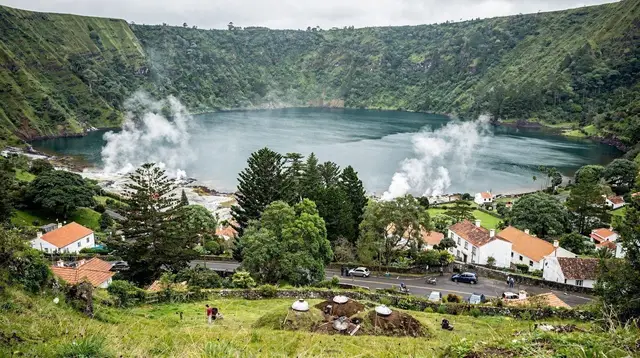
Rabo de Peixe, on the north coast between Ribeira Grande and Capelas, is the island’s most visibly working fishing town. Its name (literally “fish tail”) says plainly what the place has always done. This is not a stop built for visitors, and it should not be approached as one: there is no seafront promenade of restaurants, no craft market timed to tour buses, and the boats coming and going are doing a job, not putting on a show.
What makes it worth a look, briefly, is the rhythm itself — small boats returning around the morning tide, nets and gear laid out on the quay, a working harbour that has not been reshaped for tourism the way parts of Ponta Delgada or Vila Franca do Campo have been.
The sea sets the timetable here in a way it no longer does in the island’s larger towns, and that includes tourist activity too: boat trips and shore excursions along this stretch of coast are as weather-dependent as the fishing itself, cancelled or delayed by the same swell that keeps the fleet in harbour. Villages further along the coast, like Caloura and its small harbour, share the same pattern on a gentler south-facing coastline.
If you are curious about actually going out on the water yourself, whether to fish or simply to be on a boat, that is a separate subject with its own considerations around booking, season and what to expect — covered in the dedicated guide to fishing charters on São Miguel rather than here.
Where seafood fits into a day on the island
Seafood is rarely the reason to build a whole day around a single village, but it slots naturally into itineraries that already run along the coast. A loop through the north coast taking in Praia de Santa Bárbara and the old whaling grounds around Capelas is a reasonable stretch to plan a seafood lunch around, since these are also the villages where the boats are working. On the south coast, Caloura’s small harbour and the water around the Ilhéu de Vila Franca offer the same pairing of coastal scenery and a working fishing culture, without needing a special detour.
Guided full-day itineraries that already include a meal, such as an east-coast van tour that stops for lunch along the way, are a straightforward way to try island cooking without researching where to go, since the lunch stop is arranged as part of the day rather than left to chance.
Similarly, a Terra Nostra gardens tour that includes a guided lunch pairs the botanical gardens with a sit-down meal, and an evening Furnas tour built around dinner and the hot springs works the same way after dark. Cruise passengers on a tight schedule can get a taste of local food as part of a wider loop through the island via a shore excursion arranged from the Ponta Delgada cruise terminal, without needing to plan meals separately.
None of these tours are seafood tours specifically — São Miguel does not really have that category — but building a meal into a day that is already moving along the coast is usually more reliable than setting out to find a particular dish on a particular afternoon.
Buying seafood rather than ordering it
If the goal is to see the island’s seafood rather than eat it as a restaurant course — how it is displayed, what is in season, what a local kitchen might actually buy that week — the Mercado da Graça in Ponta Delgada is the place for that, and it is covered in full in its own guide to the market. Buying and eating are different activities with different logistics (most visitors are not self-catering), which is why this page keeps to what to expect on a menu and leaves market browsing to that separate guide.
A note on tipping and how meals are priced
Menu prices on the island are shown VAT included, and the regional VAT rate runs lower than mainland Portugal’s, which is part of why São Miguel often reads as good value next to a mainland city break. Tipping culture here is a modest round-up rather than the fixed percentage expected in North America — nobody will chase you down for more, and nobody expects it.
Restaurants built around scarce, hand-gathered items like lapas and percebes get busy fastest in the height of summer, so a table on a July or August evening is worth arranging ahead rather than assumed, a pattern covered more broadly in the guide to eating with the seasons.
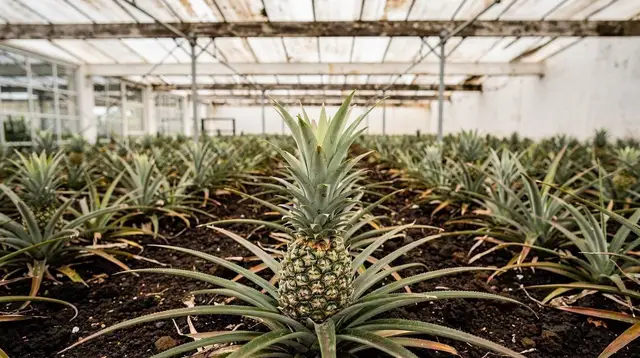
Seafood sits alongside the island’s other defining foods — the tea and pineapple grown a few kilometres inland, and the cozido cooked underground in Furnas — as part of a wider food culture worth reading about together; see tea and pineapple as local ingredients, cozido das Furnas explained, and the island’s baking tradition of bolo lêvedo and queijadas da vila.
The island’s older relationship with the sea, before tourism, also shows up in its whaling heritage and the vigias who once watched these same coasts for a very different catch, and in the everyday customs and language covered in the guide to Azorean Portuguese. For a broader sense of what falls under food and drink on the island, the food and gastronomy category and the wider look at what locals actually eat both sit alongside this page.
Lapas and Azorean seafood: your questions answered
What are lapas, exactly?
Lapas are limpets, small cone-shelled molluscs that cling to the island’s volcanic rock in the intertidal zone. On São Miguel they are usually opened on the shell and grilled briefly with butter, garlic and a squeeze of lime, so the meat stays tender rather than turning rubbery.
Are lapas wild-caught or farmed?
They are gathered by hand from the rocks at low tide, not farmed. Because the resource is limited to what the coastline can support, some periods and locations are subject to closed seasons and minimum-size rules, which is one reason lapas are not always on every menu.
What other seafood is worth ordering on São Miguel?
Percebes (goose barnacles), polvo (octopus, often grilled or in a rice), cracas (a smaller barnacle than percebes), and a wide range of grilled whole fish (peixe assado) landed the same day. None of it is exotic or elaborately plated; the point is freshness rather than presentation.
Is Rabo de Peixe worth visiting for its seafood?
Rabo de Peixe is a working fishing town on the north coast, not a food destination built for visitors. Its interest is in watching a place where the sea genuinely sets the day’s rhythm, boats and all, rather than in a specific meal to seek out there.
Is seafood expensive on São Miguel?
Prices vary by season and by how limited a particular catch is, and this guide does not quote figures because they date quickly and differ from one kitchen to the next. As a rule, simply prepared fish and shellfish cost less than dishes built around a scarce item like percebes.
Can I watch the fishing boats come in?
In villages like Rabo de Peixe, Capelas and Caloura, small boats still land the day’s catch at fairly predictable times around the morning tide, and it is normal to see this from the harbourside without needing to book anything. This guide does not cover chartering a boat yourself; see the separate guide to fishing charters for that.
Where can I buy seafood to cook or take away?
The Mercado da Graça in Ponta Delgada is the main place to see the island’s seafood laid out for sale, alongside produce and cheese. It is covered in its own guide rather than here, since browsing a market and eating a cooked dish are different activities.
Is there a season when seafood is at its best?
Sea conditions affect what boats can safely gather, so lapas and percebes in particular can disappear from menus for stretches, especially in the rougher winter months. There is no fixed calendar to plan around; it comes down to what the sea allowed that week.
Food & Gastronomy on GetYourGuide
Verified deep-linked GetYourGuide tours. Book through these links and we earn a small commission at no cost to you.
GetYourGuide does not provide a product photo for this activity — the image shows the meeting point, photographed by us.