When to Book: São Miguel's Restaurant and Car Rental Seasons
When do I need to book restaurants and a rental car on São Miguel?
Book well ahead for June to September, especially late July and August, when cars and the Furnas restaurants sell out. From November to March, thermal pools, tea plantations and museums stay open with little planning needed, but boat trips are cancelled far more often for sea conditions.
Two Very Different Booking Calendars, One Island
São Miguel doesn’t have a single tourist season so much as two overlapping ones that ask for opposite habits. There’s the calendar for things that depend on other people — a rental car, a table at a restaurant with limited seating, a boat with a captain and a licence — and there’s the calendar for things that just sit there waiting for you, like a thermal pool or a tea field.
Knowing which category a plan falls into is most of the battle. If you want a general sense of how long to spend on the island before you get into booking logistics, how many days you need on São Miguel is worth reading first, and the month-by-month guide covers weather and crowds in more depth than this page will.
This page is about timing your reservations, not your itinerary stops. It doesn’t cover the cozido cooking process itself — that’s in a dedicated explainer — and it doesn’t rank viewpoints by season, which belongs with the photography guides. What it does is lay out, plainly, when a car and a table need to be locked in weeks or months ahead, and when you can improvise.
June to September: The Squeeze
June through September is São Miguel’s warmest, driest stretch, with sea temperatures climbing into the low-to-mid twenties and hydrangeas lining the roads from June, peaking through July. It is also, unsurprisingly, the busiest window, and the crunch tightens hard through late July and August specifically — not gradually across the whole four months.
Two things get scarce in that window, for different reasons.
Rental cars. A rental car is the practical default for getting around the island — buses run on school and work timetables rather than sightseeing ones, and there’s no train. But the island’s rental fleet is small relative to demand, and in peak weeks the popular categories (small manuals, anything automatic) don’t get more expensive as they fill — they simply run out.
If you’re arriving into Ponta Delgada in late July or August without a car booked, you may be choosing between an oversized model at a premium price and no car at all. For the mechanics of driving here — narrow roads, the EN1-1A ring road, passes that can close — see driving on São Miguel: what to expect, and for the booking side specifically, renting a car on São Miguel.
Restaurant tables, especially in Furnas. The restaurants clustered around the Lagoa das Furnas that serve cozido are a special case: a table there is effectively a reservation for a cooking slot, since the pots go into the ground in the morning and come out at a fixed time around midday. There’s a hard ceiling on how many pots a given kitchen can put in the ground on any day, which means demand doesn’t just push prices up — it pushes bookings out, sometimes by weeks, for the peak weekends of July and August. If your plans include a Furnas day trip, treat the restaurant booking as one of the first things you lock in, not an afterthought once you land.
A rough guide to how far ahead to move, for the peak months:
| What | When to book (June–Sept) | Why |
|---|---|---|
| Rental car | 2–3 months ahead | Small fleet, categories sell out rather than just cost more |
| Furnas cozido restaurant | 3–6 weeks ahead for weekends | Fixed number of cooking slots per day |
| Other restaurants (Ponta Delgada, coastal towns) | A few days to a week | Busier, but more capacity and options |
| Whale watching / boat tours | 1–2 weeks ahead in peak weeks | Good sailing weather draws more bookings, not fewer boats |
| Thermal pools, tea plantations, museums | No booking needed | Facility-based, not seat-limited |
None of this means São Miguel is unpleasantly crowded in August. The island covers 744 km² and has a resident population over 100,000, so the crush is felt at specific pinch points — a popular restaurant on a Saturday night, the rental counter at the airport — rather than everywhere at once. A morning at Lagoa do Fogo or a walk through Ribeira dos Caldeirões doesn’t feel materially different in August than in May.
If a full-day guided outing takes the booking pressure off you entirely, an option like a full-day van tour of the east of the island with lunch included bundles transport and a meal into one reservation instead of several — useful precisely in the weeks when cars and tables are both tight.
April to June and September to October: The Balance
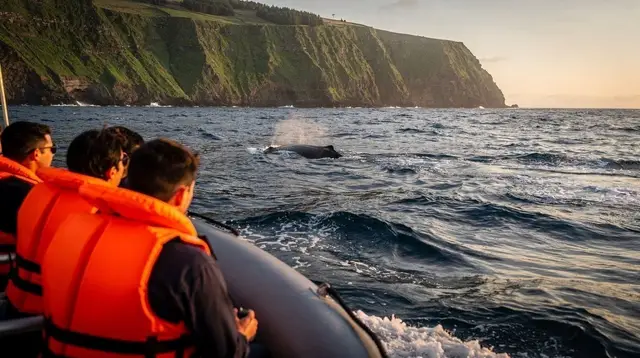
The shoulder months are the honest sweet spot. Whale watching is at its strongest between April and October, with blue, fin and sei whales passing through on their spring migration roughly March to June, while sperm whales and dolphins are resident year-round regardless of month. Hydrangeas start showing from June. The island is green, prices sit below peak, and — the point of this page — the booking pressure eases considerably without disappearing.
You still want a car reserved rather than assuming you’ll find one on arrival, particularly around Easter or any local holiday weekend, but the multi-month lead time of August isn’t necessary. A week or two ahead is usually enough. The same goes for a Furnas table: booking a few weeks out rather than the day before is sensible, but you’re not competing with the entire peak-season crowd for the same handful of midday slots.
This is also a good window to combine a thermal-and-garden day with something on the water while conditions are still cooperative. A guided outing such as a biologist-guided walk through the Terra Nostra gardens with lunch pairs well with the shoulder season’s quieter paths, and for the water itself, best time to go whale watching explains the migration timing in more detail than fits here.
November to March: Open, but Wetter
This is the genuinely low season, and it’s worth being direct about what that means: mild but wet and windy, daytime temperatures around 14–17°C, rain possible on any given day, and sea temperatures down around 17–18°C. It is not a dead season, and it is not one where everything shuts — the distinction that matters for a page about restaurants and cars is this: land-based things stay open, and sea-based things get cancelled more.
Thermal pools keep their hours right through winter — the iron-rich pool at Terra Nostra, Poça da Dona Beija, and the others across the island don’t care about swell. Tea plantations like Gorreana, the oldest working tea estate in Europe, run their normal self-guided visits year-round. Museums keep their doors open. Most restaurants, including the Furnas cozido houses, keep serving, and because demand is much lower, you can often book a table days rather than weeks ahead — sometimes you can walk in.
What does get cancelled far more often in this window is anything that needs a workable sea: whale watching trips, the seasonal boat out to the Ilhéu de Vila Franca, sailing out of Ponta Delgada’s marina. None of that is a flaw in how those operators run things — a boat genuinely cannot go out in the wrong conditions, and no legitimate operator will pretend otherwise.
If a boat-based plan is part of a winter trip, it’s worth reading whale watching weather and cancellations explained or the broader boat tours and weather cancellations guide before building a tight schedule around it — and worth having a land-based backup for that day, since on São Miguel the coastline and the caldera interior are usually not experiencing the same weather at the same hour.
A sailing outing such as a private sailboat cruise out of Ponta Delgada with drinks and snacks is a good example of the trade-off: worth booking, but worth booking with the understanding that a weather call can move or cancel it, which is truer in winter than in July.
| What stays open in winter | What gets cancelled more often |
|---|---|
| Thermal pools (Terra Nostra, Poça da Dona Beija, Caldeira Velha) | Whale watching boats |
| Tea plantations (Gorreana, Porto Formoso) | Ilhéu de Vila Franca boat trips |
| Museums and indoor attractions | Sailing and marina-based trips |
| Restaurants, including Furnas cozido houses | Sea kayaking on open coastline |
| Caldeiras, fumaroles, walking trails (weather-dependent, not booking-dependent) | Some coastal viewpoint access in storms |
For a broader look at why this is a legitimate season to visit rather than one to avoid, see São Miguel in winter: the honest low season.
The One Rule That Doesn’t Change by Season
Never treat a forecast for São Miguel as a promise. The weather here changes hour by hour and side by side — it genuinely can be raining over Furnas while Ponta Delgada is dry twenty minutes down the road, in any month of the year. That cuts both ways: a grey morning in August doesn’t mean a washed-out day, and a sunny forecast in December doesn’t guarantee a boat will sail. Book according to the seasonal patterns in this guide, but build in a backup plan for any single day that depends on the sea or on a mountain pass being open, rather than assuming a date on a calendar settles the question.
If your route touches the interior — a caldera walk, the Sete Cidades rim, or a crossing near Lagoa do Fogo — pair your booking plan with a look at driving on São Miguel, since the passes up to the higher ground are the parts of the road network most likely to close or fog in, independent of the season you’re travelling in.
A land tour that combines several interior stops into one guided day, such as a hike through Ribeira Funda paired with a tea plantation visit and lunch, sidesteps a lot of this: it doesn’t depend on sea conditions, and a single confirmed booking replaces several separate reservations you’d otherwise be juggling.
A Simple Way to Decide How Far Ahead to Book
If you’re planning a trip and want one rule of thumb rather than a full calendar: book anything that involves a seat, a car, or a boat as far ahead as your travel dates allow if you’re arriving between late June and the end of August, treat April–June and September–October as needing a couple of weeks’ lead time rather than months, and treat November–March as flexible for restaurants and cars but still worth checking a day or two ahead for anything on the water.
For context on how this fits into building a full trip, first-time guide to São Miguel and what to book in advance on São Miguel both go wider than restaurants and cars alone, covering flights and accommodation as well.
Restaurant and Car Booking on São Miguel: Questions People Ask
How far in advance should I book a rental car for São Miguel?
For June to September, book two to three months ahead if you can, and at least several weeks out even in the shoulder months. The island’s car fleet is small relative to demand, and once the popular categories sell out for a given week, they are gone rather than just pricier.
Do I need to reserve a table at the Furnas cozido restaurants?
Yes, and earlier than you’d expect. The restaurants around the Lagoa das Furnas take a limited number of pots out of the ground each day, so a table there is really a booking for a specific cooking slot, not just a seat, and weekends in July and August fill first.
Is São Miguel too crowded in August?
It is the busiest month, with hydrangeas still out, warm sea and the fullest restaurant books, but the island is 744 km² with a permanent population well over 100,000 — it gets busy at specific pinch points, not everywhere at once.
What stays open on São Miguel in winter?
Thermal pools, tea plantations, museums and most restaurants keep their normal hours from November to March. What changes is the sea: whale watching and boat trips to places like the Ilhéu de Vila Franca are cancelled far more often for wind and swell.
Why do boat trips get cancelled more often in low season?
Boats need workable sea conditions, and November to March brings more wind and swell days. Land-based things — a thermal pool, a tea factory, a caldeira walk — don’t depend on the sea state, which is why they keep running when a boat trip that same morning is called off.
Is the shoulder season a safe bet for booking less rigidly?
It’s the best balance on the island: whale watching is at its strongest, hydrangeas start appearing from June, prices are lower than peak, and while it’s still sensible to book a car and any Furnas table, you don’t need the multi-month lead time that July and August demand.
Seasonal Guide on GetYourGuide
Verified deep-linked GetYourGuide tours. Book through these links and we earn a small commission at no cost to you.
GetYourGuide does not provide a product photo for this activity — the image shows the meeting point, photographed by us.