Whale-Watching Cancellations on São Miguel: Weather, Sea State and What to Expect
Why do whale-watching trips get cancelled on São Miguel?
Boats stay in port for sea state, not for cold: strong wind, swell or poor visibility make small vessels unsafe or uncomfortable and can hide the surface signs vigias rely on. São Miguel has no ski season or off-season closure, so a cancellation is always about the ocean and sky on that particular morning, on that particular coast.
The ocean decides, not the calendar
São Miguel is a year-round destination. There is no closed season for tourism here, no shoulder months when the island shuts down, nothing resembling the on/off rhythm of a ski resort. Whale-watching runs from January through December because the animals themselves do — sperm whales and dolphins are resident all year, and the spring passage of blue, fin and sei whales simply adds to what is already out there.
So when a whale-watching booking on São Miguel is cancelled, the reason is never “it’s the wrong season.” It is always the same underlying fact: a small boat is going out onto the open North Atlantic, and on a given morning the sea and sky either allow that safely and productively, or they do not. This page is about that decision — what triggers it, how it differs from one coast of the island to another, and how to plan a trip so a cancelled morning does not sink the whole itinerary. It does not cover what a trip is like once it does go ahead; for that, see the guide to what a whale-watching trip actually involves.
What actually grounds a boat
Three things matter, and none of them is temperature.
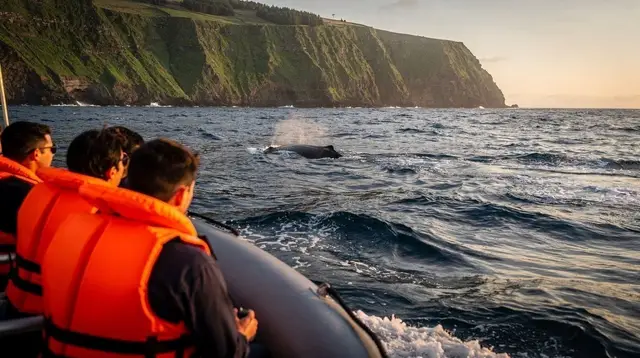
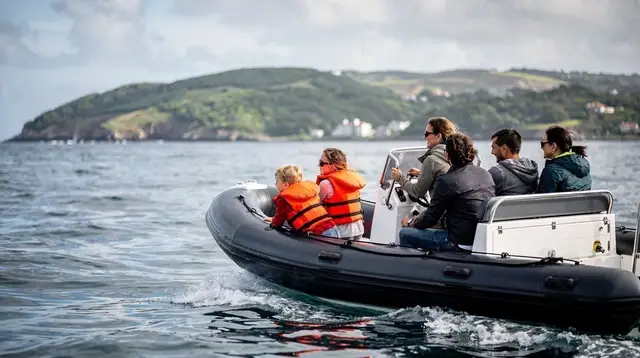
Wind and swell. Whale-watching boats on São Miguel range from small rigid-hulled inflatables to larger catamarans, and all of them are more sensitive to wind and swell than a car ferry or a cruise ship. A stiff onshore wind piling up a metre or more of swell makes a small boat uncomfortable at best and unsafe at worst, and it also makes it harder for guides to spot the surface blows, fins and splashes that a sighting depends on. Operators set their own thresholds, and a boat that sails happily in a light breeze may stay tied up when the wind swings round and picks up.
Visibility. Fog is common on São Miguel, and it behaves independently of wind and swell — a flat, glassy sea can still be sitting under a bank of fog that hides the horizon. Spotting a whale relies on sight: the vigias, the shore-based lookouts descended from the island’s whaling tradition, watch from headlands for the telltale blow or the shape of a back breaking the surface, and a boat crew depends on the same visual cues once at sea. Thick fog can cancel a trip even in otherwise calm water, because there is simply nothing to see by.
Sea state building through the day. Conditions on São Miguel often start calmer in the early morning and roughen as the day goes on, particularly when a front is moving through. This is one reason many operators run their first departure early — not for the light, but because the sea is more likely to cooperate before mid-morning.
What does not appear on that list is cold. São Miguel’s winters are mild by North Atlantic standards — daytime temperatures around 14-17°C, sea temperatures rarely below 17°C — and there is no freeze, no ice, no snow closure anywhere on the boat-tour calendar. A wet, grey December morning is not, on its own, a reason a trip gets cancelled. A choppy, windswept one is.
Why the same morning can differ by coast
São Miguel is one island, but its coasts do not share one sea state. The north coast, running past Ribeira Grande and Capelas, faces the open Atlantic and takes the brunt of north-westerly weather systems more directly. The south coast, sheltered by the island’s own bulk, is where most whale-watching departures actually operate from — Ponta Delgada’s marina and Vila Franca do Campo’s harbour both sit on this calmer side, with Caloura’s small harbour offering further shelter nearby.
The practical result: a north wind can make the water off Capelas or Ribeira Grande too rough for a comfortable outing while the south coast around Ponta Delgada is entirely workable, and vice versa when the wind swings south. This is the same principle that governs the island’s rain — it can be pouring in Furnas while Ponta Delgada stays dry — applied to the sea instead of the sky. Neither a forecast headline nor a friend’s cancelled trip from a different departure point tells you what your own boat, from your own harbour, is going to do that morning.
It also means the departure point matters more than tourists often assume. A trip booked from Ponta Delgada’s marina at Portas do Mar is working with different water than one leaving from Vila Franca do Campo or from a smaller operator further along the coast, and operators choose their base partly for the shelter it offers.
How the decision actually gets made
Weather forecasting for a specific stretch of Atlantic coastline, hours in advance, is an inexact business, and Azorean operators treat it that way. Rather than committing to a go/no-go days out, most confirm the day itself — sometimes the night before for an early departure, often within an hour or two of the boat leaving. This is not indecision; it reflects how quickly conditions on this coastline can shift, and it is the same reason a five-day forecast for the island should be read as a rough guide rather than a promise — see the general guide to São Miguel’s weather for how that plays out across seasons.
In practice this means:
| Stage | What happens |
|---|---|
| Booking | Trip is reserved for a date and time slot |
| Day before / early morning | Operator checks current wind, swell and visibility for that specific coast |
| Go decision | Confirmed by message, call, or check-in at the office/marina |
| No-go decision | Alternative slot, different day, or refund offered — terms vary by operator |
| At sea | Captain can still adjust route or, rarely, turn back if conditions worsen |
A trip that is confirmed in the morning can occasionally still be cut short or rerouted if the sea builds faster than expected once the boat is out — this is a safety call made by the captain, not a scheduling error.
Building flexibility into the trip
Because the decision is close to departure and coast-specific, the single most useful thing a visitor can do is avoid making whale-watching the one fixed event on a tight, one-day stop. A traveller with a spare morning, or a booking window rather than a single fixed slot, absorbs a cancellation far more easily than someone who has built an entire day — or an entire island visit — around one 9 a.m. departure.
This matters most for short stays. Someone on a cruise-ship stopover with a few hours in Ponta Delgada has no room to reschedule if the morning is rough; someone spending three days or more on the island can shift a whale-watching slot to the next available morning without losing the trip. If whale watching is a priority, the seven-day itinerary or any plan that treats the island as a full week rather than a checklist gives the sea more chances to cooperate.
It also helps to know that a whale-watching morning is not the only water-based activity that runs on this logic. Boat trips out to the Ilhéu de Vila Franca, harbour departures from Caloura, and other boat tours around São Miguel are all subject to the same sea-state judgment calls, so a rough morning can affect more than one booking at once — worth knowing if several water activities are stacked on the same day.
What this is not about
This page covers only the decision of whether a boat goes out at all. It does not cover:
- What the trip itself is like once it sails — the boat, the route, the role of the vigias once at sea, and what a typical outing looks like, which is covered in the guide to what a whale-watching trip actually involves.
- Whether whales will actually be seen. Sightings are never guaranteed on any trip that does go ahead, calm seas or not — that is a separate question from whether the boat sails, and no page on this site promises a sighting or a cancellation rate, because neither figure is something that can be honestly quoted in advance.
- The best months to visit for whale variety, which is a question of migration timing rather than cancellation risk — see the guide to São Miguel’s whale-watching seasons.
Choosing an operator with this in mind
Most operators leaving from Ponta Delgada, Vila Franca do Campo or the smaller harbours nearby build the same weather logic into their booking terms, but the details — how late the call is made, what the rebooking policy looks like, whether a marine biologist narrates the trip — differ.
a standard cetacean-watching trip from the south coast is the most common starting point and typically runs several times a day when conditions allow, which gives more chances of a workable slot within a single visit. For a narrated trip with a scientific focus, a whale-watching outing led by a marine biologist pairs the same sea-dependent scheduling with on-board explanation of what is being seen.
A shorter three-hour whale and dolphin trip from São Miguel is easier to fit around a single free morning, while a longer full-day tour combining whale watching with the island’s volcanic landscape is worth choosing only if the itinerary can absorb a change of day without losing the rest of the plan.
The short version
Whale watching on São Miguel is a year-round activity, not a seasonal one, because the whales and dolphins themselves are largely present year-round. What is never guaranteed on any given morning is the sea. A cancellation means wind, swell or fog made that particular coast unsafe or unworkable for a small boat and its crew that day — never that it was the “wrong time of year” or too cold to sail. Because that call is made close to departure and can differ between the north coast, the south coast, and sheltered harbours like Caloura, the most reliable way to actually get out on the water is to leave room in the schedule for the sea to have its say.
FAQ: whale-watching cancellations and weather on São Miguel
Does São Miguel have a whale-watching off season?
No. Sperm whales and dolphins are resident year-round, and operators run trips through every month. What changes across the year is the weather pattern and the odds of a calm morning, not a closed season.
What actually causes a cancellation, if not the season?
Wind strength and direction, swell height, and visibility. A gusty north wind with a metre of swell can shut down a north-coast departure while a south-coast boat sails the same morning, and fog can ground a trip even in flat calm.
Can a trip be cancelled for cold weather?
No. São Miguel has no snow season and no cold-weather closure. Winter mornings can be 14-17°C and wet, which is uncomfortable but not, by itself, a reason to cancel — sea state and visibility are what decide.
How late is the cancellation decision usually made?
Often on the day itself, sometimes within a couple of hours of departure, because coastal conditions on São Miguel can shift faster than a forecast updates. Operators check the sea in front of them, not just a weather app.
Does a cancellation on one side of the island mean the whole island is out?
Not necessarily. The north coast, the south coast around Ponta Delgada and Vila Franca do Campo, and the sheltered stretch near Caloura can have different sea states on the same morning, so a north-coast cancellation does not predict what the south coast is doing.
What happens to the booking if a trip is cancelled?
Operators normally offer a different time slot, a different day, or a refund rather than sending a boat out in conditions they judge unsafe or unproductive. Policies vary by operator, so check the cancellation terms at booking.
Should sightings be expected to be guaranteed?
No. Even when a trip goes ahead, sightings depend on wild animals and are never promised — that is separate from the weather question this page covers, and is addressed in the guide to what a trip is actually like on the water.
Is it worth building flexibility into the itinerary for this reason?
Yes. Because the decision is made close to departure and can differ from one coast to another, leaving a spare day or a flexible slot in the itinerary — rather than booking the only whale-watching morning on a tight one-day stop — improves the odds of actually going out.
Seasonal Guide on GetYourGuide
Verified deep-linked GetYourGuide tours. Book through these links and we earn a small commission at no cost to you.
GetYourGuide does not provide a product photo for this activity — the image shows the meeting point, photographed by us.