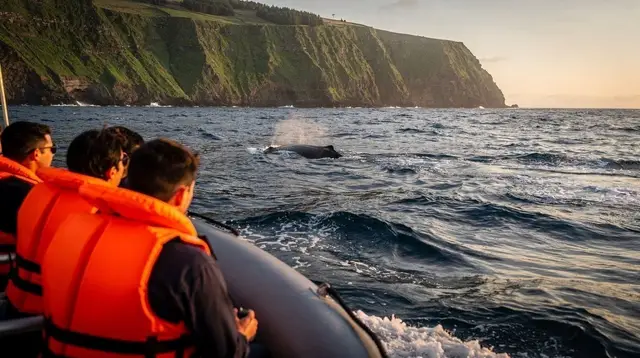
Best Time for Whale Watching on São Miguel
When is the best time for whale watching on São Miguel?
Sperm whales and dolphins live in these waters year-round, so trips run in every month. The strongest window overall runs from April to October, when seas are calmer and migratory blue, fin and sei whales pass through roughly between March and June. No sighting is ever guaranteed, in any month.
Why the answer changes depending on what you want to see
São Miguel sits above one of the deepest, most productive stretches of ocean in the North Atlantic, and that geography gives it two different whale watching seasons layered on top of one another. Sperm whales and several dolphin species live in these waters all year, diving for squid in the deep channel just off the south coast. Larger baleen whales — blue, fin and sei whales — only pass through on migration, moving north to summer feeding grounds roughly between March and June. Ask a local operator “when is the best time” and the honest answer is: it depends whether you specifically want a chance at the migratory giants, or you are happy with the residents that are out there in January as much as August.
That distinction matters more here than in destinations with a single, simple season. A trip in July can still be excellent, but for a different reason than a trip in April. This guide sets out the calendar so you can match your dates to what you actually want, without either factor being oversold.
The residents: sperm whales and dolphins, in every month
Sperm whales are the backbone of whale watching on São Miguel, and they are not migratory in the way people often assume. A resident population uses the deep water off the south coast throughout the year, which is why boats leave from Ponta Delgada and Caloura in every season, not just a peak few months.
Common dolphins, bottlenose dolphins and Risso’s dolphins are seen with similar regularity. The mechanics of how the boats find them, and which species show up on which kind of trip, are covered separately in the guide to sperm whales and dolphins as year-round residents — worth reading once you have decided when you are going, since it does not touch on timing.
The practical upshot for planning purposes: if a resident sighting is what you are after, there is no wrong month to book. Weather and sea state matter far more than the calendar.
The migrants: blue, fin and sei whales, spring only
The whales that make São Miguel a well-known name among watchers worldwide are the migratory baleen species passing on their way to summer feeding grounds further north. Blue whales, fin whales and sei whales move through the deep water off the island on a spring passage that runs roughly from March to June, with sightings generally building through April and peaking around April and May before tapering off. Outside that window, these species are essentially absent from local trips — a fin whale sighting in September would be a rare exception, not something to plan a holiday around.
The full detail on how this migration works, why it happens off São Miguel specifically, and how to read the season within a season, is in the dedicated guide to the spring migration of blue, fin and sei whales. For planning purposes, the key fact is simple: if seeing one of these three species specifically is the goal, spring is not a preference, it is a requirement.
So when is the overall best window?
Combining both patterns, the strongest all-round period for whale watching on São Miguel runs from April through October. Inside that stretch:
| Period | Resident sperm whales & dolphins | Migratory blue, fin & sei whales | Sea conditions |
|---|---|---|---|
| March – early April | Present | Migration beginning | Often still unsettled |
| Mid-April – May | Present | Migration at its strongest | Improving, still variable |
| June | Present | Migration tapering off | Increasingly calm |
| July – August | Present | Essentially absent | Calmest, most departures |
| September – early October | Present | Absent | Calm, warm, quieter boats |
| Mid-October – November | Present | Absent | Turning, more cancellations |
| December – February | Present | Absent | Roughest, most cancellations |
April, May and early June are the only months that combine both possibilities in the same trip. July through September trade the migratory whales for the calmest, most dependable conditions and the widest choice of departure times. Winter keeps resident species in play but with markedly fewer sailing days.
Month by month, in more detail
March. The spring migration is only just starting, so a blue, fin or sei whale sighting is possible but not yet likely. Sea conditions are still typically wintry. Resident sperm whales and dolphins remain the reliable draw.
April. Generally treated as the opening of the strong window. Migratory whale numbers are building, seas are improving, and resident species are unaffected. Demand for boats starts rising with the better weather.
May. Often the single best month for combining migratory and resident sightings, with the spring passage typically near its peak and conditions continuing to settle.
June. The migration is tapering off through this month — some years it extends further into June than others — while sea conditions are usually good. A transitional month rather than a guaranteed one for the migratory species.
July and August. The calmest, warmest, busiest months. Migratory baleen whales are essentially gone for the season by this point. This is the best stretch for resident sperm whale and dolphin trips purely on the basis of sea conditions and choice of sailing times, even though it is not the season most associated with the rarer migratory sightings.
September and early October. Sea conditions often remain good, crowds thin out, and resident species continue as normal. A strong choice for travellers who prioritise settled weather and don’t mind missing the migratory whales, which have already moved on by this point.
Mid-October through February. The North Atlantic turns rougher, and cancellations become more frequent. Trips still run on calm days, focused entirely on resident species, but this stretch needs more flexibility in a travel itinerary than the mid-year months.
Why nothing here is ever guaranteed
However favourable the month, whale and dolphin watching on São Miguel is wild-animal watching in open ocean, not a scheduled show. Crews work with vigias, shore-based spotters descended from the island’s whaling lookouts, who scan the coastline and radio boats toward likely activity — a system explained in full in the guide to the vigias and their history in Capelas. It raises the odds of a sighting considerably over simply heading out to sea at random, but it does not remove the basic fact that these are free-ranging animals that can move, dive deep, or simply not be in range on a given day.
Reputable operators will say this plainly, and any page or advert that promises a sighting is overstating what is possible. Treat “best season” as meaning “best odds,” never “certain result,” in every month of the year, spring included.
Sea conditions matter as much as the calendar
Because these are small boats going out into open Atlantic water, weather and swell decide whether a trip runs at all, sometimes on very short notice. Winter has the highest rate of cancellation and rescheduling; even in summer, an unsettled day can ground the fleet. The mechanics of this — how operators decide, what a cancellation or rescheduling looks like in practice, and how to build slack into a booking — are covered in the guide to weather cancellations and whale watching. If your travel dates are tight, building in a spare day before a planned trip reduces the risk of missing it altogether.
Matching the season to your own trip
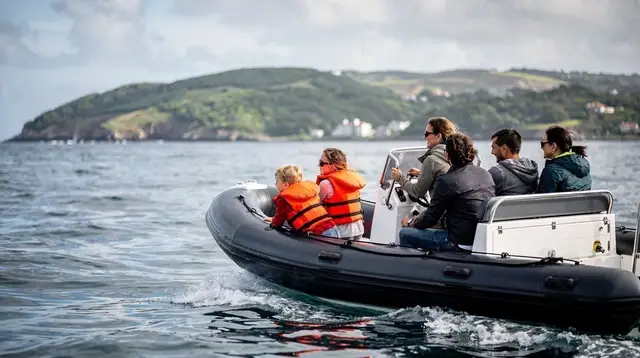
Travellers chasing the migratory blue, fin and sei whales specifically should centre their dates on April through early June and accept a higher chance of a weather-related reschedule as the trade-off. Travellers who simply want a strong, reliable chance of seeing sperm whales and dolphins, with the calmest seas and easiest logistics, do better in July through September. Either way, a short whale and dolphin watching trip from Ponta Delgada is one of the easiest half-days to fit around a longer island itinerary:
a three-hour whale and dolphin watching trip from São MiguelFor travellers who want more time on the water and the chance to enter the sea with dolphins where conditions allow, there is also a longer option:
a full-day whale watching trip with the option to swim alongside wild dolphinsWhale watching also pairs naturally with a slower look at the coastline itself. A number of operators run: a sunset boat tour along the cliffs and sea caves as a separate, calmer trip once the day’s sightings-focused outing is done — useful on a spring visit that also wants a second, more relaxed evening on the water.
Travellers assembling a fuller island itinerary around a single whale watching day sometimes prefer to combine it with: a private full-day tour combining São Miguel’s highlights by boat and by car so that a weather-dependent morning at sea is balanced by a flexible, land-based afternoon.
Whale watching alongside the rest of São Miguel’s calendar
Whale watching season overlaps loosely with other seasonal patterns on the island worth knowing about when picking dates. The hydrangeas that line so many of the island’s roads and viewpoints start flowering from June, later than the spring whale migration, so a trip built purely around April whales will generally miss them — timing for both is covered in the guide to São Miguel’s hydrangea season.
Travellers weighing a winter visit against the quieter, wetter months should read the honest account of São Miguel in the winter low season before assuming whale trips simply pause — they don’t, they just run less predictably. And for a single overview of what each month brings across the island as a whole, not only at sea, the month-by-month guide to São Miguel and the broader guide to the best time to visit São Miguel both fold whale watching into the wider picture.
Travellers building a dedicated marine-focused stay can also look at the Whales and Sea itinerary, and the category page for whale watching activities on São Miguel lists the range of trip lengths and formats on offer beyond the ones highlighted here.
For the deeper background on why boats are guided by shore lookouts in the first place, the history of whaling and the vigias is a useful companion read, and travellers bringing children should check what to expect taking kids whale watching before booking, since sea conditions that are a minor inconvenience for an adult can matter more for a young child.
Frequently asked questions about whale watching timing on São Miguel
Is whale watching possible all year on São Miguel?
Yes. Sperm whales and several dolphin species are resident in these waters year-round, so boats go out in every month the sea allows. Winter has more days lost to weather, but it is not a closed season.
What is the best month to see blue, fin or sei whales?
These large migratory whales pass São Miguel on their way north roughly between March and June, with numbers usually building through April and May. They are not present the rest of the year, which is the main reason spring gets singled out.
Do I have to visit in summer to see whales?
No. Summer brings the calmest seas and the most departures, but the migratory whales that summer is often associated with have usually already passed by June. Resident sperm whales and dolphins are seen through summer just as in other seasons.
Is a whale or dolphin sighting guaranteed if I book a trip?
No operator can guarantee a sighting in any month. Cetaceans are wild animals in open ocean, and even the best season and the most experienced crew cannot promise an encounter on a specific outing.
Why do whale watching trips get cancelled more often in winter?
The North Atlantic swell picks up from November to March, and small boats cannot safely launch in rough conditions. Operators cancel or postpone rather than take a risk, which is why winter has fewer confirmed departures than summer.
Is April or September the better choice?
April sits inside the spring migration, so it adds a chance of blue, fin or sei whales to the resident sperm whales and dolphins. September has generally calmer, warmer seas but the migratory whales have already moved on, leaving resident species as the main possibility.
How is spring whale watching different from summer whale watching?
Spring can add migratory baleen whales to the mix alongside resident sperm whales and dolphins, but seas are less settled and more trips are weather-dependent. Summer drops the migratory whales from the equation but offers calmer water and more reliable departures.
Can I still go whale watching from Ponta Delgada in winter?
Trips run from Ponta Delgada through winter whenever the sea allows, focused on resident sperm whales and dolphins. Expect more last-minute cancellations and fewer daily departures than in the warmer months.
Seasonal Guide on GetYourGuide
Verified deep-linked GetYourGuide tours. Book through these links and we earn a small commission at no cost to you.
GetYourGuide does not provide a product photo for this activity — the image shows the meeting point, photographed by us.