Vigias: From Whaling Lookouts to Whale Watching Guides
Who are the vigias and where does the tradition come from?
Vigias are coastal lookouts who scan the sea from fixed points on shore and radio sightings to boats. The role descends directly from the whaling era, when the same posts were used to spot sperm whales for hunting crews. Whaling ended in the Azores in the 1980s, and Capelas, on São Miguel's north coast, still holds one of the old whaling stations tied to that history.
A Job Invented for Hunting, Kept for Watching
Long before anyone on São Miguel sold a whale watching ticket, someone was already standing on a cliff, scanning the Atlantic for a shape breaking the surface. That person was a vigia — a lookout — and the job existed for one purpose: to find sperm whales for boats that were going to hunt them. The word survives, the posts along the coast survive, and in a quieter, radio-linked form the role survives too. What changed completely is the reason a vigia looks at all.
This page is about where that tradition comes from, not about how a modern boat trip works. If you’re planning an actual outing on the water, the practical side — what to expect, timings, what to bring — belongs on a dedicated boat trip guide, and the broader question of when sightings are most likely sits on the best-time overview. Here, the focus stays on the lookouts themselves: who they were, what whaling on this coast actually looked like, and why Capelas, on the north shore, is a reasonable place to feel that history rather than read about it in the abstract.
Whaling on a Volcanic Coast
The Azores sit in the middle of a sperm whale migration route, and for generations that made the archipelago a working whaling ground rather than a place to watch whales for pleasure. This was shore-based whaling: crews launched open boats from coastal settlements, rowed and later motored out to a sighted animal, and towed the catch back to be processed on land. It was physically demanding, dangerous work, tied closely to the rhythm of the sea and, crucially, to the eyes of a lookout on shore who could see further than any boat crew searching blind.
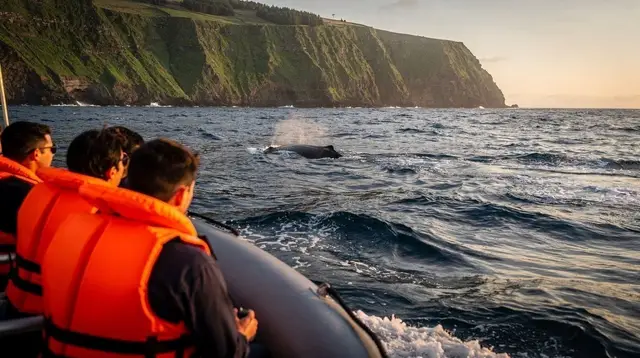
That lookout system is the direct ancestor of today’s vigias. A vigia worked from a fixed, elevated point with a clear sweep of ocean, watching for the telltale blow of a surfacing sperm whale. Spotting an animal from land and then directing a boat toward it was far more efficient than sending boats out to search at random — the same logic, in fact, that still underpins how whale watching operators find animals today, just aimed at a completely different outcome.
Whaling continued on São Miguel and elsewhere in the Azores well into the twentieth century, longer than in many other parts of Europe, before finally ending across the archipelago in the 1980s. That end date matters: it is recent enough that people alive today remember the industry directly, which is part of why the vigia tradition didn’t simply vanish along with it. The knowledge — how to read the sea, how to recognise a whale’s behaviour at a distance, where animals tend to pass — did not become useless. It became useful for something else.
Capelas and Its Old Whaling Station
On São Miguel’s north coast, west of Ribeira Grande, the settlement of Capelas is one of the points on the island where this history is physically present. Capelas held a whaling station tied to the shore-whaling industry described above, and remnants connected to that period can still be seen along its waterfront today. This isn’t presented here as a formal museum stop with fixed opening hours — treat it instead as a place with a story attached to its coastline, worth a slow look if you’re already exploring the north-coast trail or passing through on a wider loop of the island.
What makes Capelas a fitting anchor for this story isn’t a single building or plaque; it’s the combination of an exposed vantage point over open Atlantic water and a settlement whose working life was, for a long stretch, organised around what happened just offshore. Standing on that coast, it’s not hard to picture why a fixed lookout post made sense here specifically: good sightlines, a clear run of sea, and a community close enough to launch boats quickly once something was spotted.
For a fuller account of the buildings and setting themselves, the dedicated guide to Capelas’ old whaling station goes into more detail than belongs on this page, which is concerned with the lookout tradition rather than the site’s architecture.
From Harpoon to Radio: What Actually Changed
It’s worth being precise about what carried over from the whaling era into whale watching, because the two activities are not related in purpose — only in method.
| Element | Whaling era (ended 1980s) | Whale watching today |
|---|---|---|
| Purpose | Hunting for meat, oil and other products | Wildlife observation, non-invasive |
| Who looks | Vigia on a fixed shore post | Vigia or spotter, often radio-linked to operators |
| How sightings travel | Signal to waiting boat crews | Radio or phone to licensed tour boats |
| What happens after a sighting | Boat launched to pursue and take the animal | Boat approaches at a regulated, respectful distance |
| Status today | Ended across the Azores in the 1980s | Ongoing, regulated marine tourism activity |
The table makes the point plainly: the observation skill is the inheritance, not the outcome. A vigia’s ability to read the sea’s surface, judge distance and direction, and recognise a whale’s blow or fluke before most people would even notice something was there — that expertise didn’t need to be reinvented when whaling stopped. It needed a new employer.
It’s also worth being clear about what this page is not claiming. Whaling is not an activity that continues anywhere in the Azores today; it ended fully in the 1980s and has not resumed in any form. And while shore-based spotting for whale watching does still happen around São Miguel, it is not a formal visitor attraction with a named site or scheduled public access in Capelas specifically — the historical station is a place to look at and think about, not a working operation you can book into.
Why the Method Outlasted the Industry
Sperm whales, along with dolphins, are present in Azorean waters year-round — a point covered in more depth on the guide to resident sperm whales and dolphins — while other species pass seasonally, including the blue, fin and sei whales that migrate through roughly between March and June, detailed on the spring migration guide. That year-round presence is part of why shore-based spotting kept its value after the shift from hunting to watching: there was still a reliable reason to keep watching the water closely, every day, from land.
A boat searching alone covers a narrow strip of ocean at a time. A lookout on a headland, scanning with binoculars from height, can watch a far wider stretch of sea and catch a distant blow that a boat crew, sitting low on the water, would likely miss entirely. Radioing that sighting in means a boat travels with purpose instead of running a search pattern and hoping. It’s the same efficiency argument that justified stationing lookouts on this coast in the whaling era in the first place — only now the boat that gets the call approaches to observe, not to take.
This is also why sightings, while common, are never something a page like this — or any operator — can honestly promise. Whales are wild animals moving through open ocean, not a fixed attraction on a schedule, and weather and sea conditions affect what a lookout can even see on a given day. The guide on why whale watching is never guaranteed goes further into that honesty, and it applies to the vigia system as much as to the boats it feeds information to.
Visiting Capelas for the History, Not Just the Coast
If the whaling-to-whale-watching story is what draws you to Capelas, plan the visit around a slow walk rather than a single stop. The settlement sits on an exposed stretch of the north coast, and its working relationship with the sea shows up as much in the layout of the place — how close the older buildings sit to the water, the shape of the small harbour — as in any single structure. Pair it with time on the Capelas coastal trail if you want the fuller sense of the terrain a historical lookout would have actually worked from.
Language is a small but real part of this too. Older residents in coastal villages like Capelas may describe this history in Azorean Portuguese, which sounds noticeably different from mainland Portuguese — a detail covered on the guide to Azorean Portuguese and everyday customs, useful context if you get a chance to hear the story told locally rather than read.
For a more structured way to experience this heritage directly, a guided route built specifically around Capelas and the neighbouring village of Fenais da Luz walks the whaling-era sites with context provided along the way, which does more of the interpretive work than a self-guided stop can.
a guided cultural route through Capelas and Fenais da Luz that walks the whaling-era history on the groundIf you’d rather take in Capelas as part of a longer north-coast day that also covers Rabo de Peixe and Mosteiros, a wider tour along that stretch of coast folds the village into a bigger loop.
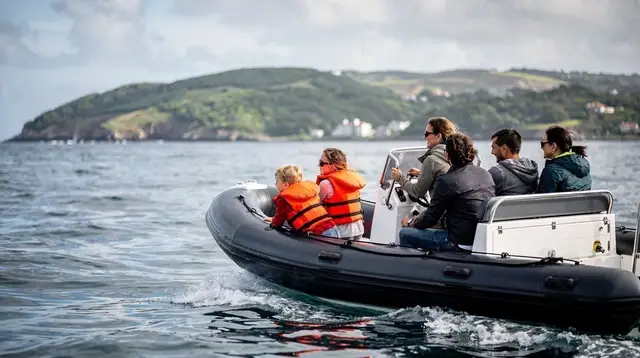
a full north-coast expedition taking in Rabo de Peixe, Mosteiros and Capelas in one dayAnd if what actually draws you is getting out on the water where the vigias’ calls once sent whaling boats — now sending watching boats instead — a relaxed sunset outing is a gentler way to feel that connection than a dedicated whale watching trip.
a traditional boat sunset tour along the coast the old lookouts once watchedPutting the Story in Context
None of this sits in isolation. São Miguel’s whaling past connects to a wider set of coastal traditions and to how the island’s relationship with the Atlantic has shifted over the past half-century, from an extractive industry to one built on observation and low-impact tourism. The broader guide to whaling heritage and vigias draws those island-wide threads together if Capelas has left you wanting the fuller picture, and the 1980s end of whaling in the Azores is worth reading on its own for the specific timeline.
For the modern side of the story — what a trip on the water actually involves once a vigia’s call goes out to a boat — the whale and dolphin watching overview for São Miguel is the right next stop, and travellers building a longer stay around the coast and the sea might also look at the whales-and-sea itinerary or browse the island’s whale watching category page for the range of ways to get out on the water.
FAQ: Vigias, Whaling History and Capelas
What is a vigia in the Azores?
A vigia is a shore-based lookout who watches the sea from an elevated, fixed vantage point and reports what they see, traditionally by radio. Before whale watching existed as tourism, the same skill was used to locate whales for hunting boats.
Did people in Capelas hunt whales?
Capelas was one of several points on São Miguel’s north coast tied to the island’s shore-whaling industry, and it still holds an old whaling station from that period. Whaling in the Azores continued into the twentieth century and ended in the 1980s.
Is whaling still practised in the Azores today?
No. Whaling ended across the Azores in the 1980s and has not resumed. The vigia tradition continued afterwards in a different form, feeding sightings to whale watching boats instead of hunting crews.
How did vigias move from whaling to whale watching?
When whaling stopped, some of the same lookouts and their descendants kept using their knowledge of the coast, the currents and whale behaviour, but for tour boats instead of harpoon crews. The observation skill carried over even though the purpose changed completely.
Can visitors see the old whaling station in Capelas?
Capelas retains physical traces of its whaling-era buildings on the coast, and the settlement is a easy stop on a north-coast drive. Condition and access to individual structures can vary, so treat it as a place to walk and look rather than a formal, staffed site.
Do vigias still work today, and can visitors meet one?
The lookout role continues in a modified, radio-linked form supporting whale watching operators around the island, though it is not typically a public-facing job with scheduled visitor access. Most visitors encounter the vigia system indirectly, through a boat trip that is guided by information a lookout has radioed in.
Why does São Miguel still use shore lookouts instead of just searching by boat?
A lookout on high ground can cover far more sea surface than a boat can, and can direct a boat straight to an animal instead of searching blind. That efficiency is why the method outlasted the industry it was built for.
Where else on São Miguel is the whaling history visible?
Traces and stories connected to whaling turn up at several north-coast points beyond Capelas, and the wider theme is covered island-wide rather than at one single site.
Whale Watching on GetYourGuide
Verified deep-linked GetYourGuide tours. Book through these links and we earn a small commission at no cost to you.
GetYourGuide does not provide a product photo for this activity — the image shows the meeting point, photographed by us.