Explore São Miguel & the Azores by area
Six areas worth building a São Miguel trip around, from Ponta Delgada itself and the caldera lakes of Sete Cidades to the thermal village of Furnas, the north coast around Ribeira Grande, the crater lake of Lagoa do Fogo, and the quieter south coast around Vila Franca do Campo.
Must-visit areas
The areas every first-time visitor should build a trip around — Ponta Delgada itself, the caldera at Sete Cidades with its twin lakes, and Ribeira Grande and Vila Franca do Campo as the island's other two towns.

Furnas: The Caldera Village Where Lunch Cooks Underground
Furnas is São Miguel's inland caldera village: steaming ground, underground cozido, thermal gardens and mineral springs, not a beach.

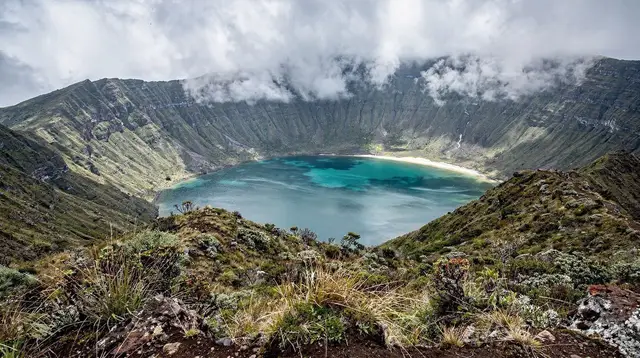
Lagoa do Fogo: São Miguel's Crater Lake Reserve
Lagoa do Fogo: São Miguel's crater lake reserve, with no facilities and frequently in cloud. What to expect, and when to skip the drive up.

Nordeste: São Miguel's Wild Eastern Tip
Nordeste is São Miguel's wild eastern tip: clifftop viewpoints, the Arnel lighthouse, waterfall trails and Pico da Vara, the island's high point.

Ponta Delgada
Ponta Delgada travel guide: historic centre, Portas do Mar cruise front, Gruta do Carvão lava tube, and how to use the Azores' capital as a base.
10 guides →
São Miguel Island Guide
São Miguel is the Azores' largest island: 744 km², 137,000 people, reachable only by air, about 2h15 from Lisbon.

Sete Cidades
Sete Cidades: a caldera village around twin lakes Lagoa Azul and Lagoa Verde, viewed from Vista do Rei, Boca do Inferno and Grota do Inferno.
More to explore
Areas for a second trip or a longer first one — Furnas with its steaming caldeiras, the coast and viewpoints around Nordeste, and the villages and crater lake of Sete Cidades in the west.

Caldeira Velha: Thermal Waterfall and Hot Pools on São Miguel
A hot waterfall and mineral pools on the road to Lagoa do Fogo: what Caldeira Velha is, when the road closes, and how to visit safely.

Gorreana & Porto Formoso Tea Plantations
Europe's last working tea gardens, on São Miguel's north coast: Gorreana (1883, free) and Porto Formoso (paid), what to see, and how to visit.

Ilhéu de Vila Franca: São Miguel's Sunken Crater Islet
A capped-visitor swim inside a sunken crater islet, reached by boat from Vila Franca do Campo in summer only, sea permitting.

Mosteiros
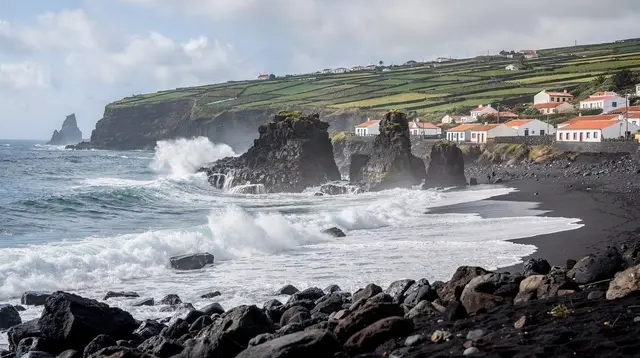
Mosteiros: São Miguel's black-sand village with sea stacks, on the Sete Cidades coast near Ginetes and Ponta da Ferraria.

Ponta da Ferraria
A volcanic hot spring meets the Atlantic at Ponta da Ferraria — swimmable only around low tide, with a paid spa above it.

Ribeira Grande
Ribeira Grande travel guide: São Miguel's second town, gateway to Caldeira Velha, Gorreana tea and Santa Bárbara's surf beach.

Terra Nostra Park, Furnas
Terra Nostra Park in Furnas pairs a subtropical botanical garden with an iron-rich, orange thermal pool around 35-40°C that stains light swimwear.

Vila Franca do Campo
Vila Franca do Campo was Azores' capital until a 1522 landslide. Now: a chapel-topped hillside, a harbour town, and a seasonal islet swim nearby.
Off the beaten path

Água de Pau
A quiet south-coast village on São Miguel, not to be confused with the volcanic massif of the same name that rises inland toward Lagoa do Fogo.

Caloura
Caloura is a quiet fishing harbour on São Miguel's south coast, between Ponta Delgada and Vila Franca do Campo, built around the sea rather than a resort.

Capelas: São Miguel's Former Whaling Village
A quiet north-coast village near Ribeira Grande, once a whaling station, now a calm stop on São Miguel's coastal drive.

Faial da Terra
Faial da Terra is the trailhead village for the Salto do Prego waterfall walk and the restored hamlet of Sanguinho, on São Miguel's east coast.

Lagoa, São Miguel
Lagoa is a south-coast town on São Miguel, not a lake — between Ponta Delgada and Vila Franca do Campo, near Caloura and Água de Pau.

Povoação
Povoação is a small east-coast town on São Miguel between Furnas and Nordeste, set in steep caldera valleys en route to Ribeira Quente.

Praia de Santa Bárbara
Praia de Santa Bárbara is São Miguel's main surf beach near Ribeira Grande: dark volcanic sand, cool Atlantic swell, and a break for every level.

Rabo de Peixe: A Working Fishing Village
São Miguel's largest fishing village, on the north coast between Ribeira Grande and Capelas — a working harbour, not a beach resort.

Ribeira Quente
Ribeira Quente is Furnas' beach on the far side of the ridge — a coastal village and black-sand shore, not a thermal site like Furnas itself.

Serra da Tronqueira
Serra da Tronqueira is São Miguel's laurel forest reserve near Nordeste, the only home of the priolo — a rare bird you must walk in to find.
Good to know about destinations across São Miguel
Ponta Delgada anchors this hub, and everything else on the site fans out from it across six regions of São Miguel, the Azores — Ponta Delgada itself sits on the south coast, the island's capital and largest town, home to roughly 68,000 people in the municipality. Ponta Delgada & the old town covers the town itself: the Portas da Cidade arches, the Forte de São Brás, the Igreja Matriz de São Sebastião, the Mercado da Graça, and the Portas do Mar cruise and marina front, with the Gruta do Carvão lava tube on the edge of town.
Sete Cidades & the west groups the twin-lake caldera village with Lagoa Azul and Lagoa Verde, seen from Vista do Rei and the Boca do Inferno viewpoint, plus Mosteiros and its black-sand beach and Ponta da Ferraria, where a hot spring meets the sea. Ribeira Grande & the north coast covers the island's second town, the surf beach Praia de Santa Bárbara, the thermal waterfall at Caldeira Velha, and the tea plantations of Gorreana, founded in 1883, and Porto Formoso. Furnas & the caldera is built around the steaming caldeiras, the Lagoa das Furnas where cozido is cooked underground, and the Terra Nostra garden's iron-rich thermal pool.
Nordeste & the eastern tip closes in with the Ponta do Sossego and Ponta da Madrugada viewpoints, the Farol do Arnel lighthouse, and Pico da Vara, the island's high point at 1,103 m. Vila Franca do Campo & the south coast completes the hub with the Ilhéu de Vila Franca and Caloura's small harbour.
Frequently asked questions about destinations across São Miguel
What are the six regions on this hub?
Ponta Delgada & the old town; Sete Cidades & the west; Ribeira Grande & the north coast; Furnas & the caldera; Nordeste & the eastern tip; and Vila Franca do Campo & the south coast.
Is São Miguel part of mainland Portugal?
No — São Miguel is the largest island of the Azores, an autonomous region of Portugal in the North Atlantic, about 1,400 km west of Lisbon.
What's the difference between Sete Cidades and Lagoa do Fogo?
Sete Cidades sits inside a caldera in the west, holding the twin lakes Lagoa Azul and Lagoa Verde and framed by the Vista do Rei viewpoint; Lagoa do Fogo, in the middle of the island, is a crater lake reserve with no facilities, often lost in cloud, and reached by a quieter, higher road.
Do I need a car to reach Ribeira Grande?
No — Ribeira Grande sits a short drive east of Ponta Delgada, reached in around 15-20 minutes by bus or car, so a rental car is not strictly required for this trip.
Why might the road to Lagoa do Fogo be closed when I visit?
The pass up to Lagoa do Fogo can close for fog, wind or maintenance even when the coast roads nearby are clear. Checking conditions before heading up is worthwhile, particularly outside the summer season.
Day Trips on GetYourGuide
Verified deep-linked GetYourGuide tours. Book through these links and we earn a small commission at no cost to you.
GetYourGuide does not provide a product photo for this activity — the image shows the meeting point, photographed by us.