A Village Built Inside an Active Volcano
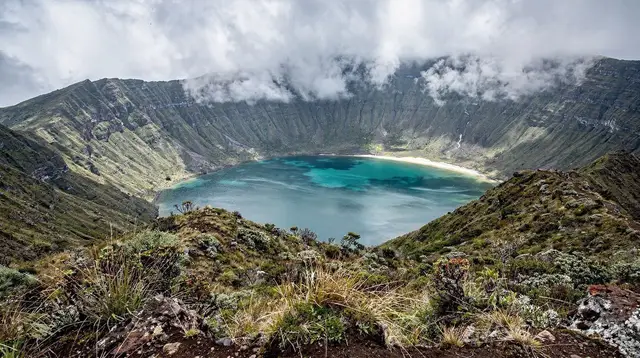
Furnas does not look like a typical Azorean settlement from the road in. The approach drops off the island’s central ridge into a wide, green bowl, and before the houses come into view, the smell arrives first: sulphur, drifting from vents that never stop. This is the floor of an active caldera, one of São Miguel’s three main volcanic centres, and the village has been built directly on top of it, around a scatter of hot ground, mineral springs and steaming pools that locals have used for cooking, bathing and healing for well over a century.
Furnas is inland. That single fact trips up more visitors than any other on this side of the island. There is no sea view here, no promenade, no boats. The coast lies over the ridge to the south, at Ribeira Quente, which functions as Furnas’ beach but is a separate drive and a separate destination in its own right. What Furnas offers instead is heat from below: a village where the ground itself does the work that a stove would do anywhere else.
Where Furnas Sits on São Miguel
Furnas occupies the eastern third of the island, roughly 45 minutes from Ponta Delgada by the EN1-1A, the road that loops the island’s edge before climbing inland through the hills. The drive itself is part of the experience: it rises out of the capital, passes above Vila Franca do Campo and Lagoa on the south coast, then turns uphill into cloud forest and pasture before dropping into the caldera. In clear weather the descent gives a long view down over the whole basin; in cloud, which is common, the village can simply appear out of nowhere.
Two smaller caldeira villages frame Furnas on the wider eastern circuit: Povoação, the older settlement to the south where the caldera meets a river valley, and Faial da Terra, a fishing hamlet further along that serves as the trailhead for the Salto do Prego waterfall. North and east of Furnas the land climbs again toward Nordeste and the laurel forest of the Serra da Tronqueira, the last refuge of the priolo, Europe’s rarest songbird. None of these places are Furnas itself, but together they make up the eastern quarter of São Miguel that this guide covers.
Furnas sits at a lower altitude than the ridge around it, which is part of why cloud collects here so readily: warm, moist air rolls in off the Atlantic, rises over the hills, and stalls in the bowl. Locals will tell you it is normal for Ponta Delgada to be dry while Furnas is under a fine drizzle, and the reverse happens just as often.
The Cozido That Cooks Itself
The dish that put Furnas on the map, cozido das Furnas, is not grilled, barbecued or cooked over any flame. It is boiled, slowly, by geothermal heat alone. Early each morning, kitchen staff from the village’s restaurants and hotels pack heavy metal pots with a mix of beef, pork, chicken, blood sausage, cabbage, carrots, potatoes and sweet potato, seal them, and carry them out to a patch of bare, steaming ground close to the shore of the Lagoa das Furnas. There, wooden lids mark a set of holes dug into the volcanic soil. The pots go down into the holes, are covered with soil and canvas, and are left.
For the next five to seven hours, nothing visible happens above ground. Below it, heat radiating from the caldera’s magma chamber, carried up through cracked, mineral-stained rock, simmers the contents exactly as a slow oven would. There is no fire anywhere in the process, no coals, no gas. By late morning, the same staff return, dig the pots back out with ropes and long hooks, and haul them, still sealed and scalding, back to the village kitchens to be plated for lunch. The result is a dense, smoky-tasting stew that owes its particular flavour to the minerals in the steam as much as to the ingredients themselves.
Watching the pots come up is one of the more striking things to see in Furnas, and several restaurants time their booking slots so that diners can walk the short distance to the cooking ground beforehand. The catch is that the holes themselves are private, allocated to specific establishments; there is no public site where an independent visitor can lower their own pot. Booking a cozido lunch, not a cooking slot, is how the experience actually works, and at busy periods it needs to be arranged a day or more ahead.
Travellers who want the process explained fully, including the history of who controls which holes and how the timing is managed, can read the dedicated cozido guide; a themed day out built around the meal is covered in the Furnas day trip guide. For a version that folds the meal into a wider loop of the caldera and a thermal pool in one booking, a cozido lunch paired with a thermal-pool afternoon covers both without needing separate reservations.
Lagoa das Furnas and the Steaming Ground
The Lagoa das Furnas, the lake that gives the cooking ground its edge, sits at the low point of the caldera, ringed by hydrangea hedges, pasture and patches of forest. It is not a swimming lake; its role is geological and culinary rather than recreational. Along its northern shore, the fumarole field where the cozido pots are buried also vents jets of sulphurous steam through cracked rock and shallow, bubbling mud pools, some of them fenced for safety, all of them worth a slow walk rather than a quick photo stop.
The wider caldera floor around the lake carries dozens of individual hot springs and vents, far more than any single visit can take in, ranging from barely-warm seeps in the grass to pools too hot to touch. A short, well-marked walking route threads between the main fumarole groups near the lake, and a longer circuit continues around the water itself.
Travellers who want the geology explained in more depth, including how this caldera relates to the volcanic history of the rest of the island, can follow the Furnas fumaroles and caldeiras walking guide. For those who prefer the caldera on two wheels rather than on foot, an e-bike or walking route around the lake and Terra Nostra combined covers the same ground with a guide.
Terra Nostra, Poça da Dona Beija and the Village’s Thermal Pools
Furnas is not short of places to actually get into the hot water, and this page deliberately does not try to cover them all in depth. The best known is the Terra Nostra botanical garden, whose orange, iron-rich thermal pool sits at the centre of a nineteenth-century park of ferns, camellias and mature trees; the water stains pale swimwear permanently, and the garden has its own dedicated page at Terra Nostra Park, with the practicalities laid out in the thermal pool guide.
A second option, quieter and smaller, is Poça da Dona Beija, a set of outdoor pools on the edge of the village fed by a different spring, popular in the early morning and at dusk. Beyond these two there are further mineral springs and smaller pools scattered through Furnas and along its access roads, some free, some informal, some attached to guesthouses.
A full comparison of which pool suits which kind of visit, temperature, crowd levels, cost, is covered separately in Poça da Dona Beija versus Terra Nostra and in the island-wide thermal pools compared guide. The short version for this page: budget at least ninety minutes for whichever pool you pick, bring a swimsuit you are willing to sacrifice to the iron stain, and treat Terra Nostra and Dona Beija as separate outings rather than something to squeeze into the same afternoon as the caldeiras walk.
Where to Eat, and Why You Book Ahead
Cozido dominates the conversation around Furnas food, but it is not the only reason to eat here. The village’s restaurants, several attached to hotels built around their own private thermal grounds, also serve trout from the local streams, Azorean cheese and bread, and the tea and pineapple that define the wider region’s agriculture. What ties almost every kitchen in Furnas together is the same lesson: booking ahead matters more here than almost anywhere else on the island, because the cozido supply chain starts with a hole in the ground at dawn, not with an order at the till. A restaurant that has not been told how many cozido plates to prepare that morning simply will not have them by lunchtime.
For a full rundown of which restaurants take cozido bookings, how far ahead to call, and what to expect on the bill, see where to eat near Furnas. Travellers who would rather not manage the booking themselves, or who want the cooking process explained hands-on rather than just eaten, have hands-on options too: an interactive cozido workshop where you help prepare and plate the meal yourself runs at one of the village hotels, folding the explanation and the eating into a single sitting.
Villages and Trails Around Furnas
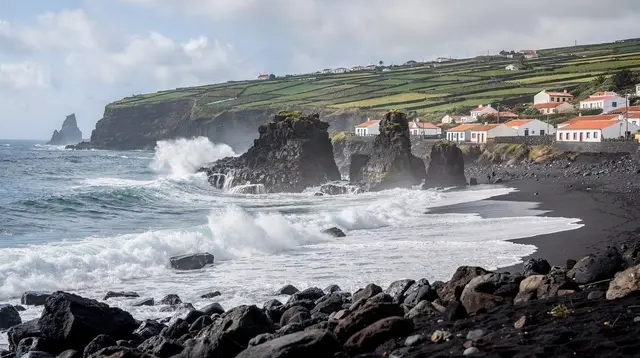
The caldera village sits at the centre of a wider network of paths and neighbouring settlements that reward a second visit, or a longer one. To the south, over the ridge, Ribeira Quente is Furnas’ functional beach, a black-sand fishing village reached by its own road rather than on foot; it is covered together with Povoação in the Povoação and Ribeira Quente day trip. To the east, Faial da Terra is the starting point for the walk to the Salto do Prego waterfall and the restored hamlet of Sanguinho, detailed in the Salto do Prego hike guide.
Cyclists based in the village have their own way of covering this ground: an e-bike route that strings together the thermal springs and volcanic landscape around Furnas into one loop is a practical alternative to a car for exploring the caldera at a slower pace, with stops built in rather than rushed past.
Further north, the road climbs out of the caldera toward the laurel forest of the Serra da Tronqueira and on to Nordeste, home to the priolo and to some of the island’s most dramatic coastal viewpoints; the trail through that forest is covered in the priolo trail guide. Furnas functions well as a base for reaching all of this without doubling back to Ponta Delgada each night.
When to Visit Furnas
Furnas is a year-round destination in the sense that the pots go into the ground and the pools stay warm regardless of the calendar. What changes with the season is comfort and visibility. Between June and September, roads over the central ridge are driest and least likely to be closed by fog, and the hydrangea hedges that line the caldera walls are in bloom from June with a peak in July. This is also the busiest period for restaurant bookings, so reserve the cozido lunch a day or more ahead.
From April to June and September to October, the caldera is at its greenest, crowds thin out, and the drive in is usually still manageable. November through March brings the honest low season: mild but often wet and windy, daytime temperatures around 14-17°C, and a real chance of low cloud sitting over the village for a full day. None of that closes anything that matters here. The thermal pools, the cozido kitchens and Terra Nostra’s gardens operate through the winter; only the odd fog-bound morning on the approach road is worth building slack into your plans for.
Getting To and Around Furnas
A rental car is the practical way to reach Furnas; public buses run on limited timetables that do not suit a day built around a booked lunch. The EN1-1A from Ponta Delgada takes roughly 45 minutes in good conditions, climbing steadily before the descent into the caldera. Once in the village, most of what matters, the lake, the fumarole field, the main pools and the restaurants, sits within easy walking distance of the centre, so a car is for getting to Furnas rather than around it.
Travellers who prefer not to drive the mountain road themselves can join a guided run out from the capital: a half-day tour from Ponta Delgada that covers the caldera, the lake and a cozido lunch handles the driving and the restaurant booking together, which removes the single biggest planning headache of a Furnas visit. However you arrive, allow extra time on the way in if cloud is sitting on the ridge; it is common, it usually lifts by midday, and it is not a reason to skip the village.
Furnas Questions Travellers Ask
Is Furnas on the coast?
No. Furnas sits inland, inside a volcanic caldera in the hills of eastern São Miguel. The nearest beach, Ribeira Quente, is on the other side of the ridge, a separate drive of about 15 minutes.
How is the cozido das Furnas actually cooked?
Pots of meat, sausage and vegetables are lowered into a hole dug in the hot ground near the Lagoa das Furnas. They cook for 5 to 7 hours using only the heat rising from the volcanic soil, with no fire or coals, then are winched back up and delivered to the restaurant that booked the spot.
Can I book my own hole to cook a cozido?
No. The cooking holes belong to specific Furnas restaurants and hotels, who take the booking, prepare the pots and manage the schedule. Visitors book a lunch, not a hole.
How much time should I set aside for Furnas?
A half day covers the caldeiras, the lake and lunch. A full day lets you add a thermal pool, such as Terra Nostra or Poça da Dona Beija, and a short walk without rushing.
Do I need to book the cozido lunch in advance?
Yes, especially in July and August and around midday. Restaurants need to know numbers before the pots go into the ground in the morning, so same-day walk-ins are unreliable at peak times.
Is Furnas worth visiting if it’s raining?
Often yes. The caldeiras steam more visibly in damp weather, and the thermal pools stay open regardless of rain, but the mountain road in can be foggy, so drive carefully and check conditions before setting out.
What should I pack for a day in Furnas?
A swimsuit you don’t mind staining, a towel, closed shoes for walking near the caldeiras, and a layer for cooler, damper air than the coast.