The Terra Nostra Thermal Pool, Explained
What is the Terra Nostra thermal pool like?
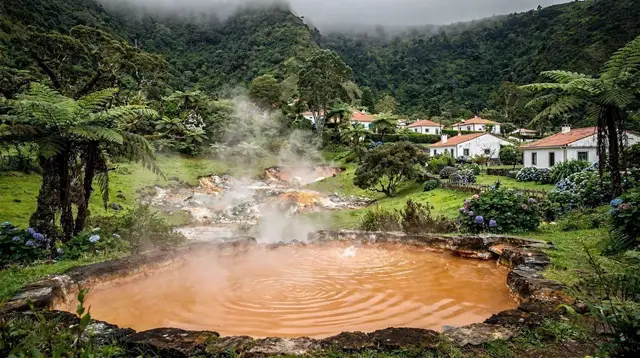
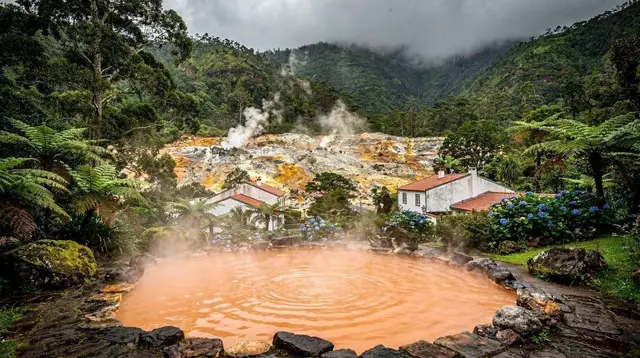
It is a large, iron-orange outdoor pool inside the Terra Nostra botanical garden in Furnas, fed by mineral springs at roughly 35-40°C. The water is opaque and tannin-dark, sits inside a landscaped park rather than a seaside spa, and permanently stains light-coloured swimwear, so an old suit is essential.
Most people arrive at Terra Nostra expecting something closer to a resort pool — tiled edges, clear turquoise water, sun loungers in rows. What they find instead is a wide, irregularly shaped pool the colour of strong tea, steaming gently under tree ferns, tucked inside one of Europe’s more unusual botanical gardens. Knowing that in advance changes what you pack, what you wear, and what you expect once you are standing at the edge deciding whether to get in.
A pool the colour of tea, not turquoise
The Terra Nostra pool sits at the heart of the Terra Nostra Park, a 12-hectare botanical garden on the edge of Furnas village. The water is fed directly by mineral springs rising through the volcanic ground beneath the caldera, and it carries a heavy dissolved-iron content that gives it an opaque, rust-orange to dark amber colour. You cannot see your feet once you are more than knee-deep. This is not a filtration problem or a maintenance lapse — it is the natural mineral chemistry of the spring, and it is the same colour every day of the year.
The pool itself is large and free-form, closer to a landscaped lagoon than a rectangular municipal pool. Palms, tree ferns and camphor trees lean over parts of it, and steam drifts off the surface most mornings, especially when the air is cool. Depth varies across the pool, from shin-deep shallows near the entry steps to areas where an adult can comfortably swim. The floor is natural and mineral-crusted rather than smooth tile, so aqua shoes or old sandals are worth having even though bare feet are common.
Because the garden itself is large — worth exploring in its own right, with camellias, ginger lilies and one of the most complete botanical collections in the Azores — most visitors treat the pool as one stop within a longer walk, not the entire visit. Anyone planning a Furnas day trip should build in real time for both.
Why the water stains, and what to do about it
This is the detail that catches first-time visitors out. The pool’s high iron content oxidises on contact with fabric, and the resulting stain is genuinely permanent — not a wash that fades after a cycle or two, but a rust mark that stays in the fibres of the suit for good. Light-coloured swimwear, especially white, pale grey or pastel fabric, comes out visibly orange-tinted after a single soak.
The practical response is simple: bring a swimsuit you are prepared to retire afterwards, ideally something already dark or patterned. Some travellers keep one “Terra Nostra suit” specifically for this pool and the Azores’ other iron-rich springs, and never wear it again outside them. It is also worth packing a dark towel for the same reason, since damp swimwear touching a light towel can transfer a faint tint. For a fuller packing rundown built around this exact problem, see what to pack for the Azores’ iron-rich thermal water.
Jewellery is worth removing before getting in too. Silver in particular can dull or discolour after contact with mineral-rich thermal water, and it is easy to lose a ring in a pool where you cannot see the bottom.
| What to bring | Why |
|---|---|
| An old or dark swimsuit | The iron-rich water stains light fabric permanently |
| Sandals or aqua shoes | The pool floor is uneven and mineral-crusted, not smooth tile |
| A dark towel | Prevents faint staining from damp swimwear |
| A dry bag or plastic bag | For carrying the wet, stained suit home separately |
| No valuable jewellery | Silver can dull or discolour in mineral water |
Terra Nostra is a garden with a pool, not a seaside spa
It is worth being direct about this because the name and the marketing photography can suggest otherwise: Terra Nostra is inland, in the caldera village of Furnas, not on the coast. There is no sea view, no beach access, and no connection to salt water at all. The pool sits within a public botanical garden that was laid out from the 18th century onward around a former private estate, and the thermal pool was added into that landscaped setting rather than the other way around.
That distinction matters for expectations. This is not a wellness resort with treatment menus, robes and poolside service. Facilities are functional: changing rooms, lockers and showers are available, and there is a modest entrance fee to the garden that includes pool access, but nothing about the experience is polished or hotel-like. The appeal is the setting — steaming mineral water inside a genuinely impressive botanical collection, with the sulphur smell of the wider Furnas caldera drifting in from the fumaroles nearby — not spa luxury. Visitors expecting tiled infinity edges or a reception desk with towel service are usually surprised, and not always pleasantly.
For a broader sense of what a caldera village built on active geology actually involves, Furnas’s fumaroles and caldeiras are a five-minute walk from the garden gate, and the village’s famous underground-cooked stew is covered separately in how cozido das Furnas is cooked.
Temperature and what the soak actually feels like
Water temperature across the pool runs roughly 35-40°C, which is warm rather than scalding, but it is not uniform. Because several separate springs feed the pool at different points, some corners run noticeably hotter than others, and the temperature can shift slightly through the day. Most visitors find a spot near an inflow when they want more heat, and drift toward the cooler, shadier end after ten or fifteen minutes.
The sulphur smell that hangs over the wider Furnas caldera is present here too, though milder inside the garden than at the open fumarole fields nearer the village centre. It fades from clothes and hair with an ordinary shower and shampoo — it is a smell that visitors notice and then largely stop noticing within the first few minutes.
Because the pool is outdoors and unheated beyond what the springs themselves provide, it works in every season. Steam rising off warm water into cool, damp winter air is, if anything, more atmospheric than a hot summer afternoon, and the garden stays open through the island’s wetter months. For how this fits into a wider seasonal plan, see São Miguel’s honest low season and the best time to visit São Miguel.
Getting there and avoiding the busiest hours
Terra Nostra Park sits at the edge of Furnas village, roughly 45 minutes to an hour’s drive from Ponta Delgada depending on the route and traffic through Ribeira Grande. There is no train on the island, buses run on limited schedules rather than sightseeing timetables, and a rental car remains the practical way to reach Furnas independently — see the island’s guide to renting a car if this is a first visit.
The garden gets its busiest crowds around midday, when day-trip groups from Ponta Delgada and cruise excursions tend to arrive together. Early morning, shortly after opening, and the last couple of hours before closing are noticeably quieter, with more room in the pool itself and a calmer walk through the wider garden. If cozido is also on the agenda for the same day — the underground-cooked stew that Furnas is equally known for — building the pool visit around the midday collection of the pots from the ground gives the day a natural shape; the Furnas day trip guide lays out a workable order for both.
| Detail | What to expect |
|---|---|
| Location | Inland, inside Terra Nostra Park, Furnas village |
| Water temperature | Roughly 35-40°C, varies by spot in the pool |
| Water appearance | Opaque, tea-dark to rust-orange, from dissolved iron |
| Facilities | Changing rooms, lockers, showers; no spa treatments |
| Busiest hours | Late morning to early afternoon, with day-trip groups |
| Best for | A slow soak plus a genuine botanical garden walk |
Visiting with a guide, or on your own
Independent entry to the garden and pool is straightforward and does not usually require advance booking, which suits travellers who are self-driving around the island and want to set their own pace. For a fuller structured visit, a guided option adds context that is easy to miss walking through alone — a biologist-led walk through Terra Nostra’s plant collections paired with garden and pool access, such as the Terra Nostra Gardens biologist-guided tour with lunch, is worth considering if the botanical side of the park interests you as much as the water.
Furnas is also the village where cozido comes out of the ground at midday, and pairing that with the thermal pool makes for a full, well-paced day without much driving between stops. The Cozido das Furnas and Thermal Pools experience combines the two directly, while the Eat Like a King breakfast and thermal pools tour is built around an earlier start, useful for reaching the pool before the midday crowds arrive.
Terra Nostra is one thermal experience among several on the island, and it is deliberately not the whole story here — the shore-level hot spring at Ponta da Ferraria, which only works around low tide, is a genuinely different kind of soak, and a fuller side-by-side sits in the comparison of São Miguel’s thermal pools and the more focused Terra Nostra versus Poça da Dona Beija breakdown.
Anyone weighing up how much of a visit to give Furnas overall might also find the general how many days do you need on São Miguel guide useful for fitting the caldera village into a wider island plan, and a longer read on why the stain is unavoidable sits in why the Terra Nostra pool stains swimwear.
For activities across the wider hot springs and thermal category on the island, the hot springs and thermal pools hub and the things to do in Furnas page both list options beyond this single pool, and a dedicated thermal springs itinerary strings several together across a longer stay.
Frequently asked questions about the Terra Nostra thermal pool
How hot is the Terra Nostra pool?
It runs around 35-40°C depending on where you stand, since the mineral springs feed it unevenly. Corners near the inflow can feel noticeably warmer than the far end of the pool.
Will the water really ruin my swimsuit?
Yes, and permanently. The water is rich in dissolved iron, which oxidises on contact with fabric and leaves a rust-orange stain that does not wash out. Bring a suit you are willing to sacrifice, ideally an older, darker one.
Is Terra Nostra a spa?
No. It is one thermal pool set inside a large public botanical garden in the village of Furnas, inland on São Miguel. There are changing rooms and lockers, but no treatments, robes or spa service — it is closer to a public bathing garden than a resort spa.
Can I see the bottom of the pool?
No, and that is normal. The water is naturally cloudy and tea-dark from dissolved minerals, so visibility is a few centimetres at most. Sandals help on the uneven, mineral-crusted floor.
Is the pool suitable for children?
Most of the pool is shallow enough for children to stand, and families do swim there together, but supervise closely — footing on the bottom is uneven and the water is opaque, so you cannot see a child’s feet below the surface.
Do I need to book ahead?
Independent entry does not usually require booking, but the garden can be busy with day-trip groups around midday. Going early morning or late afternoon avoids the crowds; a guided tour bundles entry with a garden walkthrough and a fixed time slot.
How long should I plan for a visit?
Budget at least two to three hours: the botanical garden alone rewards an unhurried walk, and most visitors soak for 30-60 minutes once they are in the water.
Hot Springs on GetYourGuide
Verified deep-linked GetYourGuide tours. Book through these links and we earn a small commission at no cost to you.
GetYourGuide does not provide a product photo for this activity — the image shows the meeting point, photographed by us.