A Capital Built From a Buried One
Ponta Delgada is the largest town in the entire Azores archipelago, with roughly 68,000 people living in its municipality — more than a third of São Miguel’s population in one urban stretch along the south coast. It did not start out as the island’s capital. Until 1522, that role belonged to Vila Franca do Campo, a smaller town further east, until an earthquake-triggered landslide buried much of it.
What followed was not a planning decision so much as a necessity: the surviving town on the sheltered south coast, with a workable harbour, took over. Ponta Delgada has been the seat of island and regional government ever since, and its street plan and older buildings still read as a town that grew steadily rather than one laid out at once.
Today it functions as the working capital of the Azores as a whole, not just of São Miguel. Government offices, the region’s main hospital, its university and its principal airport all sit here, and most visitors to any of the nine islands pass through it at least once, even if only in transit. That gives the town a slightly different feel from the rest of the island: more traffic, more shopfronts, more people going about ordinary weekday business alongside the tourism.
Getting There and Getting Around
João Paulo II airport, code PDL, is the main gateway to the whole island and sits only 2-3 km from the centre — close enough that a taxi or hotel transfer rarely takes more than ten minutes outside rush hour. That short distance is one of Ponta Delgada’s real advantages: unlike many island capitals, there is no long transfer between the runway and the town, which makes it a natural place to spend a first or last night of a trip. For the practicalities of the flight itself, how to get to São Miguel covers routes and timings from Lisbon and beyond.
Inside the historic centre, everything worth walking to is within a few streets of everything else, and the old town is genuinely pedestrian-friendly, with the harbour, cathedral, market and main squares all reachable on foot; a dedicated old town walking guide lays out a sensible route. Once you want to leave town, the picture changes.
There is no railway anywhere on São Miguel or anywhere in the Azores, so a rental car is the practical default for reaching Sete Cidades, Furnas, the north coast or Nordeste — see renting a car on São Miguel for what that involves, and parking in Ponta Delgada for where to leave it once you are back in town. Local operators such as Auto Viação Micaelense do run buses out to the rest of the island, but on school and work schedules rather than sightseeing ones; the bus guide explains what is realistic without a car and what is not.
The Historic Centre
The old town centres on the Portas da Cidade, three white basalt arches that once marked the entrance to the town from the harbour and now frame its main square, Praça Gonçalo Velho Cabral. They are the single most photographed spot in Ponta Delgada and a natural place to start any walk through the centre.
A short walk away, the Forte de São Brás guards the western end of the waterfront, a squat coastal fortress dating to the 16th century that has watched over the harbour for as long as Ponta Delgada has needed defending — pirate raids were a real threat to Azorean ports for centuries. Inland from the main square stands the Igreja Matriz de São Sebastião, the town’s principal church, with a Manueline stone doorway that survives from the earliest phase of the building despite later additions, and an interior heavy with gilt woodwork typical of Azorean parish churches.
For a working rather than ceremonial side of the centre, the Mercado da Graça is the town’s covered market, close to the harbour and worth timing for a weekday morning when stalls are fullest — fish brought in that morning, cheeses, and the tropical fruit the island grows in its own microclimates, pineapple included. A dedicated food market guide covers what to expect stall by stall. Together, the Portas da Cidade, the fort, the church and the market make a loop that fits comfortably into two or three unhurried hours, longer if you stop to eat.
Portas do Mar: Cruise Berths and Marina
Where the old town meets the sea, the modern Portas do Mar development has reshaped the waterfront into cruise berths, a marina and a promenade, and it is now the point of arrival for most seaborne visitors to the island. Ships dock directly alongside, close enough to the historic centre that cruise passengers on a single shore day can walk straight into the old town without arranging transport — a route the cruise shore excursion guide sets out in more detail.
The marina side of Portas do Mar is also where a good share of the island’s boat-based activity starts, from whale-watching trips to short harbour cruises; the Portas do Mar boat tours guide is the reference for what leaves from where. For an evening on the water rather than a day trip, an evening sailing trip out of the marina is a low-key way to see the town’s waterfront and the coastline beyond it from the sea as the light drops, without committing a full day.
Gruta do Carvão, a Lava Tube on the Edge of Town
Not every volcanic feature on São Miguel requires a drive into the countryside. The Gruta do Carvão is a lava tube formed by an ancient eruption and sits within the urban fringe of Ponta Delgada itself, a reminder that the town everyone treats as the island’s civilised, built-up base is standing on the same volcanic ground as Furnas or Sete Cidades. Access is controlled and usually guided rather than a casual walk-in, since the tunnel is a fragile geological formation rather than a shaped tourist attraction, and it makes a genuinely different half-day out from the harbour and church circuit in the centre.
Where Ponta Delgada Fits in an Azores Trip
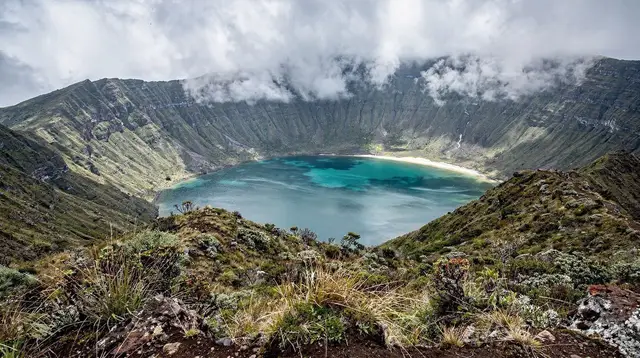
Ponta Delgada is a city page, not a rural one, and it is worth being clear about what it does not cover. The caldera lakes and viewpoints of Sete Cidades, in the island’s west, have their own separate destination page and are not part of a Ponta Delgada day — a half-day tour of Sete Cidades is the natural next stop once the town itself is covered. The same goes for Furnas, Lagoa do Fogo and the rest of the island’s rural and coastal areas: they sit outside the municipality and belong to their own pages.
What that means in practice is that Ponta Delgada works best as two things at once: a destination with real content of its own — the old town, Portas do Mar, the lava tube — and the base most visitors return to each evening while they explore the rest of São Miguel by rental car. The Ponta Delgada or Furnas as your base guide weighs that choice directly, and where to stay on São Miguel covers the wider picture.
For a single day built entirely around the town’s own sights, the Ponta Delgada city day trip guide is the most direct route through everything above, and a car-free day itinerary is built specifically around what is reachable on foot. Cruise passengers with a fixed number of hours should start with the cruise ship stopover itinerary, which is built around the Portas do Mar berths.
Visitors who want to see more of the town’s history than a walk alone reveals often add a guided option. An open-top historic tour through Ponta Delgada’s centre and along the coast covers the same landmarks — Portas da Cidade, the fort, the churches — with commentary and a wider loop than most people would walk unguided, and it is a reasonable way to get oriented on an arrival day before venturing further.
For visitors basing themselves in town but ready to head inland the same day, a day trip out to the Furnas valley departs from Ponta Delgada and returns the same evening, and a full-day 4x4 tour circling the island from Ponta Delgada covers a wider loop in a single outing for anyone without a rental car of their own.
Eating and Staying in Ponta Delgada
Ponta Delgada has the widest range of restaurants on the island by a clear margin, from simple tascas near the market to more formal dining rooms along the waterfront, and it is the one town on São Miguel where booking ahead is rarely essential outside peak summer weeks — a contrast with Furnas, where the famous cozido lunches need reservations well in advance.
Seafood dominates menus close to the harbour, and the town’s cafés are a good place to try local bakes such as bolo lêvedo, a griddled muffin-like bread usually served split and buttered. Prices in the Azores are displayed VAT included, at a regional rate below mainland Portugal’s, and a service round-up of roughly 5-10 percent is the local norm rather than a larger North American-style tip.
As the largest town on the island, Ponta Delgada also has by far the widest choice of accommodation, from harbourfront hotels to smaller guesthouses in the old town, which is part of why so many multi-day itineraries use it as a fixed base rather than moving hotels each night.
Best Time to Visit Ponta Delgada
Because the town itself is largely indoor and pedestrian — churches, a market, a fort, cafés — it holds up reasonably well across seasons compared with more weather-dependent parts of the island. June through September brings the driest, warmest weather and the busiest streets and restaurants; April to June and September to October offer a quieter, greener town with lower prices and still-solid conditions for whale-watching trips out of the marina; November to March is milder than many visitors expect but wetter and windier, with sights in town staying open even as boat trips out of the harbour are cancelled more often.
Because the town sits on the coast, weather here does not always match conditions inland — it is entirely possible for Ponta Delgada to be dry and sunny while Furnas, in its caldera, sits under cloud.
Frequently Asked Questions About Ponta Delgada
Is Ponta Delgada worth visiting on its own, or only as a base?
Both. The historic centre, Portas do Mar waterfront and Gruta do Carvão lava tube fill a full day on their own, and the town’s restaurants, market and marina reward an evening or two even if you are mainly using it as a base for the rest of São Miguel.
How far is the airport from Ponta Delgada’s centre?
João Paulo II airport (PDL) sits about 2-3 km from the centre, roughly a 10-minute taxi or transfer ride, which makes Ponta Delgada the easiest place on the island to arrive into and leave from.
Do I need a car to get around Ponta Delgada itself?
No. The historic centre is compact and walkable, with the Portas da Cidade, the cathedral and the market all within a few minutes of each other. A rental car becomes useful once you want to reach Sete Cidades, Furnas or the north coast.
Can I get around São Miguel by train from Ponta Delgada?
No. There is no railway on São Miguel or anywhere in the Azores. A rental car is the practical default for reaching other towns, with buses running on school and work timetables rather than sightseeing ones.
Why was Ponta Delgada made the capital of the island?
Ponta Delgada took over as the island’s main town after 1522, when an earthquake-triggered landslide buried Vila Franca do Campo, the previous capital. It was not an original administrative choice but a consequence of that disaster.
Is Ponta Delgada a good cruise stop?
Yes. Cruise ships berth directly at Portas do Mar, within walking distance of the historic centre, so a shore day can cover the old town, the market and the lava tube without needing transport.
What is the Gruta do Carvão and is it inside the city?
It is a lava tube formed by an ancient eruption, reachable within the urban area on the edge of town rather than out in the countryside, and it is usually visited with a guide as part of a scheduled tour.
How many days should I spend in Ponta Delgada before exploring the rest of São Miguel?
Most itineraries give the town one to two days, either at the start of a trip to settle in near the airport or spread across arrival and departure, with the balance of a week spent based here or moving around the island.