Mercado da Graça: Ponta Delgada's Covered Food Market
What is the Mercado da Graça in Ponta Delgada?
It is the covered municipal market of Ponta Delgada, São Miguel's capital, a short walk from the Portas do Mar waterfront. Stalls sell fresh produce, fish, cheese, bread, wine and other Azorean products for local shoppers, not a ticketed tourist attraction.
A market for the island, not for visitors
Ponta Delgada is São Miguel’s capital, a municipality of roughly 68,000 people, and like most Portuguese towns of its size it has a covered municipal market: the Mercado da Graça. This is not a curated food hall built for tourism, and it is not part of the ticketed sights that cluster around the old town. It is a working market building where people from the town and the surrounding parishes come to buy fresh food, the way they have for generations. Understanding that distinction changes how you should approach it: there is nothing to book, nothing to queue for, and no performance laid on for visitors. What you see is simply what the island eats.
The building itself sits close to the historic centre, within a short walk of the Portas do Mar waterfront where cruise ships dock and the marina fills with sailboats. That makes it an easy addition to a morning spent around the Portas da Cidade arches, the Igreja Matriz de São Sebastião and the Forte de São Brás — you can fold ten or fifteen minutes at the market into a longer walk through the centre without a detour that eats up your day.
What you will actually find inside
A municipal market in the Azores follows a familiar rhythm even where it differs in detail from mainland Portugal: stalls selling whatever is in season, arranged by type rather than by brand. At the Mercado da Graça you should expect to see fresh fruit and vegetables grown on the island, much of it far more regionally specific than anything in a mainland supermarket — Azorean produce shaped by volcanic soil, high rainfall and a mild, damp climate rather than the drier growing conditions of the Portuguese mainland.
Fish is a central part of any Azorean market, and São Miguel’s markets are no exception. The island’s fleets land a range of Atlantic species, and a fish counter at a market like this gives you a far more honest read on what is actually being caught and eaten locally than a restaurant menu written for visitors. If you are curious about what shows up on the plate once it leaves a market stall, the separate guide to limpets and Azorean seafood covers how these ingredients turn up on menus around the island.
Cheese is another strong thread. The Azores, and São Miguel in particular, produce a range of cow’s-milk cheeses, some young and mild, others aged and considerably sharper, sold in wheels or wedges rather than pre-packaged wedges shipped in from elsewhere. Bread, including the island’s soft, slightly sweet bolo lêvedo, cured meats, honey, wine and bottled products round out what you would typically expect from stalls at a market of this kind. If bolo lêvedo and its sweeter cousin, the queijada, are new to you, the dedicated page on bolo lêvedo and queijadas da Vila explains the baking tradition behind them in more depth than this page has room for.
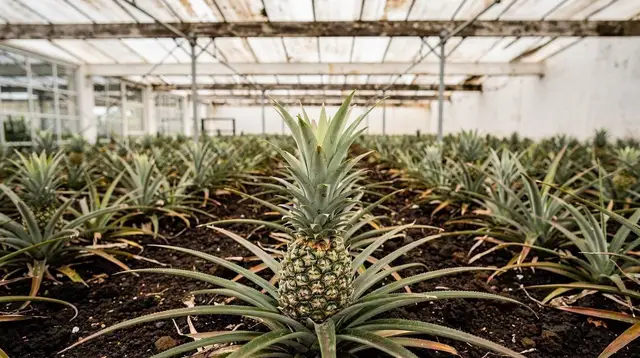
Two ingredients that define Azorean cuisine in a way visitors rarely expect are tea and pineapple, both grown on São Miguel rather than imported, and both liable to show up in some form among the market’s packaged goods — tea from the plantations around Gorreana, pineapple from the greenhouses near Fajã de Baixo. The page on tea and pineapple as local ingredients goes into how these two unlikely island crops ended up on Azorean tables, and the pineapple growing method itself — under glass, not in open fields — is explained on its own page about the pineapple greenhouses.
What this page will not do is hand you a list of named stalls, a floor plan, or a promise that a particular vendor will be there on a particular day. Markets like this turn over: stallholders retire, stalls change hands, and what is available shifts with the season and even the week. A list written today would be stale within months, and an inaccurate one is worse than no list at all — so treat the market as a place to explore on foot rather than a checklist to tick off.
Because everything on sale depends on season and weather as much as on tradition, what fills the stalls in a wet Azorean winter looks different from a warm, dry stretch in summer. The site’s broader month-by-month guide and weather guide both go into how conditions shift across the year on São Miguel, which indirectly shapes what you will find piled on a stall on any given visit — more greens and citrus in one season, different fruit and different fish in another.
Hours, days and the honest gap in this page
This is deliberately the least specific part of the page, and that is on purpose. Municipal markets across Portugal typically run in the morning hours and slow down or close by early afternoon, and many are shut, or open only briefly, on Sundays — but this page will not print a specific opening time, closing time or weekly closing day for the Mercado da Graça, because none has been verified for this page and getting it wrong would send someone to a shuttered building.
If your visit depends on a precise window — say, you are stepping off a cruise ship for only a few hours — confirm the current hours locally, through your accommodation or at the tourism office near the Portas do Mar, rather than relying on any printed schedule, including this one.
The safest general approach is to treat the market as a morning activity. Fresh produce and fish sell fastest early in the day, stalls are more fully stocked, and the atmosphere is livelier before the town’s own errands wind down toward midday. Arriving mid-afternoon risks finding a much quieter, partly packed-up version of the same space.
How to visit without getting in the way
Because this is a working market and not a tourist site, a little awareness goes further here than at a monument. Stallholders are there to sell to their regular customers, not to pose for photographs, so ask before photographing a vendor directly, and be mindful that narrow aisles crowded with shopping trolleys are not the place to stop and block the way for an extended browse. If you plan to buy, small bills and coins are appreciated, as with most market trading across Portugal, and prices are quoted in euros with VAT already included, as they are everywhere on the island.
Language is rarely a serious obstacle. English is widely used in Ponta Delgada’s restaurants, hotels and tour operators, but a small municipal market leans more heavily on Portuguese, and specifically on the distinct sound of Azorean Portuguese rather than the mainland accent you may have heard in a phrasebook recording. Numbers, a smile, and pointing at what you want cover most transactions comfortably.
If you are shopping to eat rather than to cook — for example picking up cheese, bread and fruit for a picnic on a day trip toward Sete Cidades or along the coast — the market is a genuinely useful, inexpensive stop before you leave town. If you are staying somewhere with a kitchen, it is one of the more honest ways to see what is actually in season on the island, at prices set for locals rather than for visitors.
Getting to the market without a car
Because the Mercado da Graça sits inside Ponta Delgada’s compact centre, most visitors reach it on foot rather than by car. If you are staying in or near the historic centre, walking is straightforward and often the fastest option, threading the same few streets that link the market to the old town and the waterfront beyond it.
If you are driving in from elsewhere on the island — after a morning at Sete Cidades or along the north coast, say — central Ponta Delgada is not somewhere you want to be hunting for a space on a narrow one-way street near the market itself. The dedicated guide to parking in Ponta Delgada sets out where to leave a rental car before continuing on foot, and the broader page on driving on São Miguel covers what to expect on the island’s roads more generally, from narrow village streets to roundabout etiquette.
Travellers relying on public transport rather than a rental car can reach the market just as easily: central Ponta Delgada is the hub of the island’s bus network, and the São Miguel bus guide explains how routes converge on the capital, making the market a natural stop on a car-free day built around the city itself.
Pairing the market with a wider Ponta Delgada visit
The Mercado da Graça works best as one stop within a longer walk through the capital rather than a destination in its own right. A natural route links the old town’s historic core — the Portas da Cidade, the parish church, the fort — with the market, and finishes down at the Portas do Mar waterfront, where the marina and cruise terminal give a different, more modern face of the same town. None of this needs a car: central Ponta Delgada is compact and walkable, an approach covered in more detail on the site’s car-free day in Ponta Delgada itinerary.
Travellers arriving by cruise ship, whose time in port is fixed and short, may find the market a useful low-key addition to a shore day — it sits close enough to the terminal to fit into a half-day loop without cutting into time reserved for a boat trip or an excursion further afield. If you are planning shore time around the market and the old town together, the dedicated cruise shore excursion guide sets out how much can realistically be covered on foot before your ship departs.
For visitors putting together a first itinerary rather than filling a single afternoon, the market fits naturally into a broader first-time guide to São Miguel or a dedicated Ponta Delgada city day trip, both of which treat the capital as a base rather than a single stop — useful if you are still deciding how much time in the city itself is worth setting aside before heading out to the rest of the island, a question also addressed in the site’s classic two days itinerary.
For a more structured, guided introduction to what Ponta Delgada eats and drinks, a walking food tour built around tapas-style tastings gives you context and commentary that a solo wander through the market cannot.
a guided tapas-style food walk through Ponta Delgada covers several stops around the capital with a local guide explaining what you are tasting, which suits travellers who want the food culture explained rather than self-navigated.
If your interest in Azorean food extends beyond the capital, the island’s most famous dish — cozido das Furnas, cooked underground on volcanic heat — is a separate experience entirely, explained fully on its own page rather than repeated here, and reachable as part of a combined thermal-and-food day trip out of town.
a private day trip pairing Furnas’ thermal springs with a tasting of local food is one way to combine the two threads — the volcanic cooking tradition and the everyday produce you have just seen at the market — into a single day.
Honey is another market staple worth knowing the source of. São Miguel’s pasture and hedgerow landscape supports a modest but genuine beekeeping tradition, and seeing it firsthand adds context to any honey jar you might pick up at a market stall.
a guided visit to a working apiary with honey tasting is a small, focused way to connect a market purchase back to where it actually came from.
The market in the wider Azorean food picture
Zoom out from the stalls themselves and the Mercado da Graça sits at one end of a food culture that runs across all of São Miguel. Wine on the market’s shelves usually comes from mainland Portugal or elsewhere in the archipelago rather than from the island itself — São Miguel’s own vineyards are a much smaller story than Pico’s famous volcanic-soil wine, and travellers curious about Azorean wine more broadly are better served by the separate page on São Miguel’s wine and the vineyards of Pico than by anything sold at a market stall.
Tea and pineapple, by contrast, are genuinely local crops, and choosing between visiting the plantations behind them is its own small decision, covered on the tea versus pineapple comparison page — useful if a market sample of either leaves you wanting to see where it is actually grown.
If you want a wider sense of what islanders eat day to day, beyond a hotel breakfast buffet or a menu written for visitors, the what locals actually eat piece and the short explanation of why cozido is cooked underground in Furnas both fill in context a single market visit cannot.
Eating out afterwards, whether at a market-adjacent café or a proper restaurant, also comes with its own local etiquette around service charges and rounding up a bill, covered on the dedicated page about tipping, VAT and restaurant etiquette in the Azores — useful background before your first restaurant bill on the island.
Setting expectations correctly
It is worth repeating what the market is not, because the gap between expectation and reality is where disappointment usually comes from. It is not a food festival, not a tourist market with souvenir stalls, and not somewhere you will find a menu of prepared dishes to sit and eat. It sells ingredients, not meals.
If you want a cooked introduction to Azorean cuisine — grilled fish, cozido, limpets, local cheese boards — that happens in the town’s restaurants and on organised food tours, not inside the market hall itself. Treating the Mercado da Graça as what it is — a genuine, everyday working market — rather than what it is not tends to make for a far more satisfying short visit than arriving with expectations built for a bigger, more polished attraction.
Because opening patterns, individual stallholders and even the building’s layout can change over time in ways this page cannot track in real time, use this guide for orientation and context rather than as a fixed itinerary, and check current, practical details locally once you are in Ponta Delgada.
Food & Gastronomy on GetYourGuide
Verified deep-linked GetYourGuide tours. Book through these links and we earn a small commission at no cost to you.
GetYourGuide does not provide a product photo for this activity — the image shows the meeting point, photographed by us.