Can You Taste Wine on São Miguel Island?
Can you do a wine tasting on São Miguel itself?
Not from São Miguel's own vineyards — the UNESCO-listed wine country belongs to Pico island, reached only by flight or a long seasonal ferry, never as a day trip from Ponta Delgada. What São Miguel does offer is pineapple wine, a fortified drink made from greenhouse-grown pineapples, which visitors can taste and buy on the island itself.
Two islands, two very different answers
Search for wine tasting in the Azores and the results will often show up under a São Miguel itinerary, next to Furnas and Sete Cidades, as if it were one more stop on the same day. It isn’t, and the honest version of this page has to say so before anything else: the vineyards that earned UNESCO recognition belong to Pico island, not to São Miguel. They sit roughly a flight or a long seasonal ferry crossing away, in the middle of the archipelago, on a different island with its own airport and its own rhythm.
That distance matters because it’s exactly the kind of detail that gets smoothed over in a rush to build a tidy day plan. São Miguel is big enough, and its own list of things to do is long enough — Ponta Delgada, Furnas, Sete Cidades, the north coast tea estates — that it’s tempting to assume everything Azorean fits inside it. Wine doesn’t. If a tour, a blog post, or a well-meaning recommendation implies you can pop over to a Pico vineyard on a free afternoon from Ponta Delgada, that recommendation is wrong, and this page exists partly to correct it.
What São Miguel does have, and what actually deserves the word “tasting” attached to it, is pineapple wine — a fortified drink made from the island’s own greenhouse-grown fruit. It’s a different product from grape wine, made a different way, and it’s genuinely of this island rather than borrowed from another one. The rest of this guide separates the two clearly: what Pico is and why it’s out of reach for a day, and what São Miguel actually offers in its place.
Why the vineyards are on Pico, not here
The UNESCO-listed wine landscape sits entirely on Pico, one of the nine Azorean islands, distinct from São Miguel in geology, history, and everything that follows from both. It is the recognised centre of Azorean grape-growing and the reason “Azores wine” appears on wine lists at all. Nothing comparable exists on São Miguel: no protected vine landscape, no historic wine district, no verified working vineyard open for visits here. That’s not a gap in this guide — it’s simply the geography of the archipelago. Wine growing concentrated on Pico; São Miguel’s farmland went into pasture, tea, and, more recently, pineapples under glass.
It’s worth being blunt about why this confusion happens so often. São Miguel is the archipelago’s largest island and its main international gateway, so most visitors’ entire Azores trip happens here, and it’s natural to assume the island can supply every experience associated with the region’s name. The Azores are bigger than São Miguel alone, and wine is one of the clearest examples of an experience that belongs to a different island entirely — alongside the fajãs of São Jorge or the old town of Terceira, none of which are reachable on a São Miguel day trip either.
Getting from São Miguel to Pico: not a day trip
There is no direct ferry linking São Miguel to any other Azorean island — inter-island travel from São Miguel runs by air, or by seasonal boat services that connect the central-group islands to each other, not to São Miguel. Reaching Pico from Ponta Delgada realistically means an inter-island flight, and even then a same-day return with meaningful time among the vines is not a sensible plan once you add transfer time, flight schedules, and the fact that Pico’s vineyards deserve unhurried time to see properly.
| Route | How | Realistic time commitment |
|---|---|---|
| Ponta Delgada to Pico | Inter-island flight | A dedicated travel day each way |
| Ponta Delgada to Pico | Seasonal ferry (via other central-group islands) | Multi-day, connection-dependent |
| Vineyards on Pico, once there | On foot / short drives around the island | Best given a full day or more, not squeezed in |
The practical conclusion is simple: if a Pico wine visit matters to your Azores trip, plan it as its own leg — a few nights on or around Pico, ideally paired with the other central-group islands — rather than hoping to bolt it onto a São Miguel base. Trying to compress it into a single day from Ponta Delgada means arriving tired, seeing little, and missing the return flight margin that inter-island travel in the Azores always needs.
What São Miguel actually offers: pineapple wine
Set the grape aside and São Miguel does have a fermented, bottled drink worth trying, made from a crop the island genuinely grows in quantity: pineapple. Pineapple wine is a fortified, sweet drink produced from São Miguel’s own greenhouse pineapples rather than from grapes, and it sits closer to a liqueur or a dessert wine than to a dry table wine from Pico. It isn’t a substitute for the UNESCO vineyards, and this guide won’t pretend it is — but it is a real, locally made product tied to an agricultural tradition that’s actually rooted here.
a guided pineapple wine tasting and greenhouse visit near Ponta Delgada is the most direct way to try it alongside seeing where the fruit is grown, rather than buying a bottle cold off a shelf with no context.
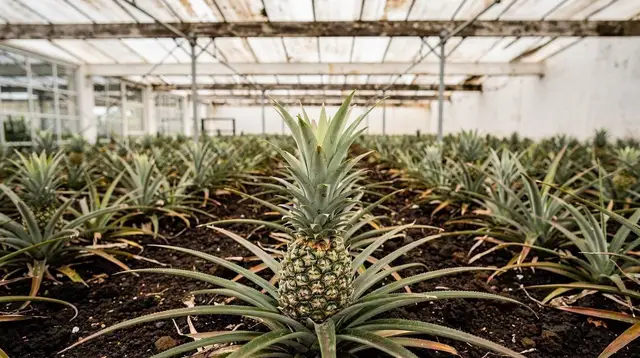
Pineapple wine’s story starts with the greenhouses themselves. Pineapples on São Miguel are grown under glass, not in open fields, in the estufas concentrated around Fajã de Baixo on the edge of Ponta Delgada, and a single fruit takes roughly two years to reach maturity — a slow, labour-heavy process that shapes the price and the pride attached to anything made from it, wine included. It’s worth seeing the greenhouses themselves as part of understanding the drink, not just tasting it in isolation; the greenhouse tour of Fajã de Baixo covers that side in more depth.
Where to taste it, and where not to expect it
Tastings of pineapple wine turn up in a few honest places on São Miguel: guided greenhouse visits built specifically around the fruit, some restaurants and cafés around Ponta Delgada that stock it as a local specialty, and stalls at the Mercado da Graça food market, where local producers sell it alongside other island goods. None of that is grape wine, and none of it should be marketed as such — a distinction worth holding onto if a tour description gets vague about what “wine tasting” actually means on this island.
What you won’t find, and shouldn’t go looking for, is a vineyard tour on São Miguel itself, a cellar door experience modelled on Pico’s, or a “local winery” that turns out to be an invented stop with no verified operation behind it. If a listing promises exactly that on São Miguel, treat it with the same scepticism you’d apply to any claim that doesn’t match what’s actually on the ground here.
The rest of São Miguel’s food and drink identity
Wine aside, São Miguel’s food culture has plenty that is entirely its own and doesn’t need borrowing from another island. Cozido das Furnas, cooked slowly underground in the volcanic heat around the Lagoa das Furnas, is the dish most identified with the island, and it needs advance booking through a restaurant rather than a same-day decision.
Tea is the other agricultural specialty worth knowing about: Gorreana, founded in 1883, is the oldest working tea plantation in Europe, and together with the smaller Porto Formoso estate it makes São Miguel one of only two places left on the European continent still growing tea commercially. Between tea and pineapple, the island has two genuinely distinctive agricultural stories, and travellers deciding how to split limited time between the two estates might find the tea versus pineapple comparison useful for planning.
None of this is a consolation prize for missing out on Pico’s vineyards — it’s simply what São Miguel actually grows and makes, and it stands on its own. A three-day itinerary built around the island has room for a tea estate, a pineapple greenhouse and tasting, and a proper Furnas meal without ever needing to invent a wine stop that doesn’t exist here.
Planning a real Pico add-on, if wine matters to you
For travellers who do want the UNESCO vineyards as part of their Azores trip, the honest planning move is to treat Pico as a separate destination with its own itinerary, not a side quest from São Miguel. That means booking inter-island flights with enough buffer either side, allowing at least a couple of nights on or near Pico rather than a single rushed pass, and accepting that this is an extension to a São Miguel trip rather than something that fits inside one.
Travellers comparing how much of the wider Azores to see against how much time they have on São Miguel alone may find it useful to weigh São Miguel against a second island stop directly — see São Miguel compared with Terceira for how that trade-off tends to play out for a typical two-island Azores trip, and apply the same logic to a Pico extension.
Whichever way that decision goes, the wine-tasting category on São Miguel will keep reflecting what’s actually verifiable here — pineapple wine, its greenhouse origins, and where to try it — rather than borrowing Pico’s reputation for an island that grows a different crop entirely.
Wine and Pico questions people actually ask
Is there a vineyard you can actually visit on São Miguel?
No verified working vineyard is open to visitors on São Miguel. The island’s agricultural showpieces are its tea plantations and pineapple greenhouses, not grapevines. Grape wine country in the Azores is on Pico, a separate island.
Where exactly are the UNESCO vineyards, and how far is that from São Miguel?
They are on Pico island, reached by an inter-island flight or a seasonal ferry crossing connecting the central-group islands — never directly and never quickly from Ponta Delgada.
Can you do a Pico wine day trip from Ponta Delgada?
No. There is no direct ferry from São Miguel to Pico, and even the flight connection plus a look at the vineyards would consume most of a day before any return leg. Treat Pico as its own multi-day stop, not an add-on.
What is pineapple wine, and is it real wine?
It’s a fortified drink made by fermenting and sweetening São Miguel-grown pineapple rather than grapes — closer in spirit to a liqueur or a port-style drink than to a dry table wine, and it’s a genuine island product, not a marketing label.
Where can you taste pineapple wine on São Miguel?
At greenhouse and shop stops around Ponta Delgada, including tastings built into guided pineapple-focused tours, and at some restaurants and markets on the island where it’s sold as a local specialty alongside the fruit itself.
Is São Miguel wine country at all?
No. It has no equivalent to Pico’s UNESCO-listed vine landscape. Its agricultural identity runs through tea, pineapples, dairy pasture, and the volcanic-cooked cuisine of Furnas — worth exploring on its own terms rather than as a stand-in for wine country.
How long does a genuine trip to Pico actually take from São Miguel?
Realistically it needs its own itinerary: a flight or ferry connection each way, plus time on Pico itself to see the vineyards properly, which pushes it toward a multi-day extension of an Azores trip rather than anything squeezed into a São Miguel holiday.
What else grows in São Miguel’s greenhouses besides pineapples?
Pineapple is the greenhouse crop most associated with the island, grown in the estufas around Fajã de Baixo near Ponta Delgada, where a single fruit takes roughly two years to ripen under glass. For a broader look at getting around the island while exploring these agricultural stops, the self-drive jeep route across São Miguel and the guided tea plantation walk with lunch both work as ways to pair greenhouse and estate visits with the rest of the island’s landscape.
Wine Tasting on GetYourGuide
Verified deep-linked GetYourGuide tours. Book through these links and we earn a small commission at no cost to you.
GetYourGuide does not provide a product photo for this activity — the image shows the meeting point, photographed by us.