São Miguel vs Terceira: Which Azores Island Should You Visit?
Should I visit São Miguel or Terceira in the Azores?
São Miguel is the largest and most populated of the nine Azores islands, with craters, thermal pools and the widest range of activities in one place. Terceira is smaller and centres on Angra do Heroísmo, its UNESCO-listed old town. There is no ferry from the mainland to either island, and no ferry between them either — only a short inter-island flight.
The Azores are nine islands, not one, and two names come up more than any other when people plan a first trip: São Miguel and Terceira. They sit in the same archipelago, fly the same airline network, and share a volcanic origin, but they are not interchangeable stops on the same itinerary. This guide compares them on the points that actually change a trip — size, landscape, what each is historically known for, and how you move between them — without wandering into flight logistics or budget breakdowns, which belong elsewhere.
Two islands, two different Azores
It helps to drop the idea that “the Azores” is one destination with two entry points. São Miguel and Terceira grew differently, and the archipelago’s tourism has grown around that difference rather than smoothing it over.
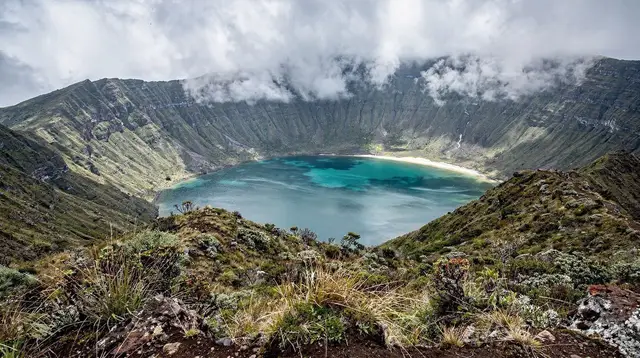
São Miguel is the largest island in the group, both in land area and in population, and it is where most visitors land first because its airport carries the bulk of international traffic. It packs an unusual range of terrain into 744 km²: an active caldera village, a crater lake with no visitor facilities, hot springs where a lava flow meets the open sea, a tea plantation that is the oldest working one in Europe, and a coastline that runs from black sand in the west to a sunken crater islet in the south.
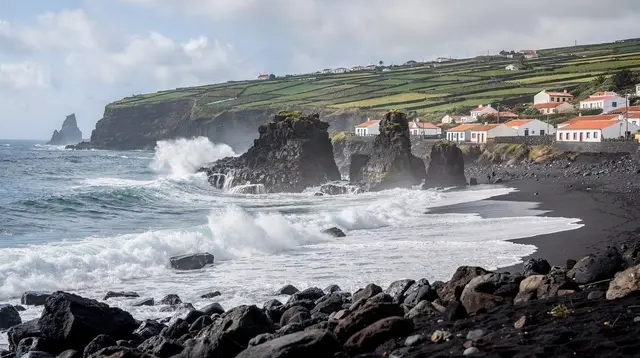
Terceira is a different kind of island altogether. It is smaller, more compact, and organised around a single historic centre rather than a scattered set of natural sites. Its identity is civic and architectural before it is volcanic — a walled port city with centuries of Atlantic trading history behind it, not a landscape of craters strung along a ring road.
Neither island is a smaller or larger version of the other. They are built for different kinds of days.
Size and population: São Miguel is the big one
The numbers settle this quickly. São Miguel covers 744 km², runs roughly 65 km end to end, and is home to around 137,000 people — more than half the entire population of the Azores living on one island. Ponta Delgada, the island capital, alone holds close to 68,000 people across its municipality, more than most entire islands in the group.
Terceira is meaningfully smaller in both area and population, and its tourism geography reflects that: rather than a dozen distinct regions each with their own villages and viewpoints, Terceira revolves far more around Angra do Heroísmo, its historic capital, with the rest of the island filling in around it.
This isn’t a value judgment — smaller islands in the Azores can feel more contained and easier to get your head around in a short stay. But if you are choosing based on breadth of landscape and the number of distinct places you can string into a road trip, São Miguel is built for that in a way Terceira, by its size, is not.
Old town vs volcanic landscape: what each island is known for
This is the comparison that trips people up most often, because it involves a genuine geographic fact rather than a matter of taste: the UNESCO World Heritage old town is on Terceira, not on São Miguel.
Angra do Heroísmo, Terceira’s capital, has been inscribed by UNESCO for its historic centre — a fortified Atlantic port town with a layout and architecture shaped by centuries as a stopover between Europe, Africa and the Americas. If a classified historic townscape, walked street by street, is what you are looking for in the Azores, that experience is on Terceira, and no amount of researching São Miguel will turn one of its towns into that.
São Miguel’s strength runs the other way — into landscape rather than heritage architecture. Its list of natural sites reads long by the standards of a single island: the caldera and twin lakes at Sete Cidades, the steaming ground and thermal park of Furnas, the crater lake at Lagoa do Fogo, thermal waterfalls, an iron-rich orange thermal pool, a lava tube you can walk into, and whale-watching waters that hold resident sperm whales and dolphins year-round with migratory blue, fin and sei whales passing through in spring.
Ponta Delgada has its own old-town core too, with the Portas da Cidade arches and a walkable historic centre — respectable, but it is not what pulls Azores-bound travellers toward São Miguel. The landscape does that.
So the honest framing is: choose Terceira if a UNESCO-listed historic city, explored on foot, is close to the point of the trip. Choose São Miguel if what you want is volcanic landscape, thermal water, and a wide spread of nature-based days.
Getting between them: no ferry, only a short flight
This is the point most worth getting right before you build an itinerary. There is no ferry service from mainland Portugal to either São Miguel or Terceira — flying is the only way in from the continent. That fact catches people out on its own. What catches out even more people is assuming the two islands must therefore be linked by boat to each other, since they’re in the same small archipelago.
They are not. There is no scheduled ferry between São Miguel and Terceira. Moving from one island to the other means an inter-island flight, and that changes how a two-island trip should be planned. It is not a bridge you cross casually mid-morning and cross back before dinner — it is a short flight, subject to the same booking, timing and occasional weather delay as any other flight in the region.
The practical consequence: do not build a plan around visiting Terceira as a day trip from São Miguel, or the other way round. Treat each island as its own leg of the journey, arriving with your bags, staying a real stretch of days, and flying onward when you’re done with that island — not commuting between them. A trip that tries to squeeze a Terceira day into a São Miguel-based week will spend more of the day travelling than seeing anything, and it puts real pressure on connections if weather shifts a flight.
Where to stay and how many days each needs
Because São Miguel’s sites are spread across the whole island, a base matters more there than on Terceira. Most visitors split their nights, using Ponta Delgada for the west and centre and Furnas for the east, rather than commuting long distances each day from a single hotel — the same logic covered in our guide to choosing a São Miguel base. A first visit to São Miguel alone is usually planned around four to seven days; our how many days you need guide breaks that down by pace and interest.
Terceira’s more compact geography means a single base near or in Angra do Heroísmo covers far more of the island without the same driving distances. Visitors tend to plan shorter stays there relative to São Miguel, often as an add-on to a longer Azores trip rather than the sole destination — though how long is right for you depends on how much of the island beyond the old town you want to see.
Either way, the split matters more than the total: a rushed 36 hours split across two islands sees less of both than a full stay on one, followed by a full stay on the other, on a separate trip if needed.
| São Miguel | Terceira | |
|---|---|---|
| Land area | 744 km² | Smaller |
| Population | ~137,000 | Smaller |
| Known chiefly for | Craters, thermal pools, whale watching | UNESCO old town, Angra do Heroísmo |
| Historic heritage listing | None | Angra do Heroísmo, UNESCO World Heritage |
| Main hub | Ponta Delgada | Angra do Heroísmo |
| Typical first-visit length | 4–7 days | Shorter, often paired with another island |
| Ferry from mainland Portugal | None — flight only | None — flight only |
| Ferry between the two islands | None — flight only | None — flight only |
Activities compared
Both islands offer whale watching, hiking and coastal scenery, but the weight of each activity differs. On São Miguel, the range is unusually wide for one island: crater hikes, thermal pools fed by volcanic heat, jeep routes across the interior, and boat trips out to a sunken crater islet you can swim inside in season.
a full day covering Sete Cidades and the island’s western viewpoints is a common way to take in São Miguel’s caldera landscape in a single outing, and for travellers who want to cover more ground without driving themselves, a jeep tour across the island’s interior reaches spots a rental car alone would miss.
Hikers gravitate to a guided walk around the Lagoa do Fogo crater lake, one of the island’s most demanding and least developed landscapes — there are no facilities up there at all. For the east of the island, a half-day tour through Furnas’ steaming caldeiras and thermal park covers the caldera village most visitors put near the top of their list.
Terceira leans differently: its natural sites include the Algar do Carvão volcanic cave, and its activities are shaped more around exploring Angra do Heroísmo on foot and touring the surrounding countryside than around a dense trail of thermal pools and crater walks. If your interest runs toward whale watching, both islands sit in Azorean waters that support it, but São Miguel’s operators and shore access points are the most developed in the archipelago — see our guide to when to go whale watching for timing.
For a broader sense of how São Miguel’s own regions differ from each other before you even bring Terceira into it, east coast versus west coast is worth reading, as is our comparison of the island’s thermal pools and hikes.
Which island fits which traveller
A few patterns hold up in practice:
- If you have one trip to the Azores and want the widest spread of landscape, thermal water and wildlife in a single place, São Miguel is the stronger single-island choice, and our first-time guide and is São Miguel worth visiting both go deeper on why.
- If a UNESCO-listed historic town, walked at a slower pace, is close to the point of the trip, that experience belongs to Terceira, not São Miguel — no itinerary on São Miguel substitutes for it.
- If you want both islands, plan them as two separate legs of one trip or as two separate trips, connected by a short inter-island flight — never as a day trip from one to the other. Our seven-day and three-day itineraries are built for a single-island stay on São Miguel and don’t assume an island-hop.
- If you’re weighing self-drive against guided touring on whichever island you choose, our guided tours versus self-drive guide covers that decision for São Miguel specifically.
It’s also worth reading why São Miguel is not the whole Azores before you finalise a plan — the same logic that separates São Miguel from Terceira applies across the other seven islands too, each with its own single defining feature rather than a shared substitute for the others.
São Miguel vs Terceira: your questions answered
Is São Miguel or Terceira bigger?
São Miguel is bigger by a wide margin. It covers 744 km² and holds roughly 137,000 residents, more than half the population of the entire Azores archipelago. Terceira is a smaller, quieter island built around a single historic city.
Is Terceira part of São Miguel?
No. They are two separate islands in the Azores, an autonomous region of Portugal, over 150 km apart by air. Each has its own airport, its own towns, and its own character.
Where is the UNESCO World Heritage site in the Azores?
The UNESCO-listed old town is Angra do Heroísmo, on Terceira, not on São Miguel. São Miguel has no UNESCO World Heritage inscription of its own.
Can I take a ferry between São Miguel and Terceira?
There is no scheduled passenger ferry linking São Miguel and Terceira, and none from mainland Portugal to either island. Inter-island travel within the Azores runs on short flights.
Can I visit São Miguel and Terceira on a day trip from one to the other?
That is not a realistic plan. Reaching Terceira from São Miguel means booking a separate inter-island flight, and doing it there and back in a single day leaves no real time on the ground. Treat the two islands as separate legs of a trip, not a day excursion from one to the other.
Which island is better for first-time visitors to the Azores?
São Miguel is the more common first choice: it has the main international airport, the widest spread of landscapes and activities, and enough to fill a week on its own. Terceira suits visitors who specifically want its old town and a slower, single-town pace, often as a second island once São Miguel has been covered.
Does Terceira have thermal pools and craters like São Miguel?
Terceira has its own volcanic features, including the Algar do Carvão cave and crater. São Miguel’s cluster of accessible thermal pools, active caldeiras and crater lakes across several regions is denser and easier to combine in a single itinerary.
How many days should I plan if I want to see both islands?
Most visitors who want both treat them as two separate stays rather than one loop, since there is no ferry and each island rewards several unhurried days rather than a rushed stopover.
Comparison on GetYourGuide
Verified deep-linked GetYourGuide tours. Book through these links and we earn a small commission at no cost to you.
GetYourGuide does not provide a product photo for this activity — the image shows the meeting point, photographed by us.