Is São Miguel Worth Visiting?
Is São Miguel worth visiting?
Yes, for travellers who want green volcanic scenery, thermal springs and genuinely wild whale watching without a long flight from Europe. It suits people happy to self-drive and take changeable Atlantic weather in stride; it suits sun-and-sand travellers far less.
Who São Miguel actually suits
São Miguel is the largest and most populous island of the Azores: about 137,000 residents on 744 square kilometres, more than half the archipelago’s entire population packed into a single, oddly shaped landmass roughly 65 kilometres long. Locals call it the Ilha Verde, the green island, and the name is not marketing. Pasture runs down almost every slope, hedgerows of hydrangea mark the old field boundaries, and cattle outnumber people by a wide margin. That single fact answers most of the “is it worth it” question before anything else does: this is a working, inhabited island, not a curated resort strip, and whether that appeals to you matters more than any single attraction on it.
The island rewards travellers who like variety packed close together and are willing to drive to find it. Within an hour of Ponta Delgada you can be standing above the twin caldera lakes of Sete Cidades, soaking in an iron-orange thermal pool in Furnas, or watching a pot of cozido come out of ground that has been cooking it since morning. It suits people who are comfortable with a rental car, unbothered by narrow roads and sudden fog, and genuinely curious about geology, farming, and small-town Atlantic life rather than a fixed idea of what a beach holiday should look like.
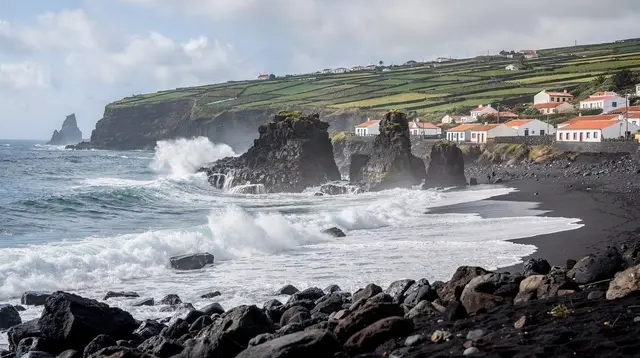
It suits less well the traveller picturing white sand and turquoise, flat-calm water. That image belongs to a different ocean. This is worth stating plainly, because it is the single most common disappointment among first-time visitors: read Why São Miguel Isn’t the Caribbean before you pack, and set expectations around volcanic coastline rather than resort beach.
What makes it genuinely rare in Europe
Set aside the caldera lakes and thermal pools for a moment, because São Miguel’s strongest claim on your time may be underwater rather than on land. Few places in Europe put you within a short boat ride of both resident deep-diving whales and a seasonal migration of the largest animals on the planet. Sperm whales and various dolphin species live off the island’s coast year-round, hunting the steep drop-off just offshore where the seabed falls away fast. Between roughly March and June, blue, fin and sei whales pass through on their spring migration north, drawing whale researchers as well as tourists.
That combination, resident deep-divers plus a genuine baleen migration, is not something most of Europe’s coastline can offer, and it is arguably the single strongest argument for choosing São Miguel over a more conventional island break. For the detail on when and how, see Whale and Dolphin Watching on São Miguel, and for the migration window specifically, Blue, Fin and Sei Whales: São Miguel’s Spring Migration.
The system behind the sightings is worth knowing too, because it shapes what a trip actually looks like. Boats are still guided by vigias, the shore lookouts descended from the island’s whaling history, who scan the water from fixed stations and radio boats toward activity. Whaling itself ended in the Azores only in the 1980s, and the same skill set that once found whales to kill now finds them to watch.
No responsible operator will promise a sighting, and no honest guide should tell you otherwise; sightings are usual, not guaranteed. If you want the fullest sense of what a trip involves before booking, Best Time for Whale Watching on São Miguel covers the seasonal odds in more detail than any single-day forecast could.
The volcanic core of the appeal
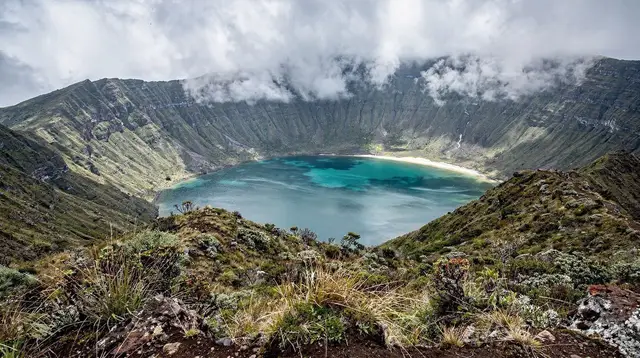
Almost everything else that makes São Miguel distinctive traces back to the same cause: it is an active volcanic island, and the ground itself is part of the attraction rather than a backdrop to it. Furnas sits inside a caldera that still steams, its caldeiras venting sulphurous gas at the surface while cozido pots cook underground on nothing but that heat for five to seven hours.
Sete Cidades is a village built inside another caldera, its twin lakes fed by the same crater that shapes the land around them. Lagoa do Fogo, the crater lake at the island’s centre, has no café, no ticket booth, and often no view at all when cloud sits in the bowl, which is part of its appeal to anyone tired of manicured viewpoints.
This is not scenery you drive past and photograph from a car window, though you can certainly do that too. It rewards getting out and walking a short trail, soaking in a thermal pool that stains your swimsuit orange, or timing a coastal hot spring to the tide. If a trip built around genuinely active geology, rather than a beach with a volcano somewhere behind it, sounds appealing, that answers the “worth it” question on its own.
Where it falls short of expectations
Fairness cuts both ways, and a few honest caveats belong here rather than buried in the fine print. The weather is the biggest one: it changes hour by hour and can differ sharply between one side of the island and another, so it is entirely possible to leave rain in Ponta Delgada and find it dry in Furnas, or the reverse. No page, including this one, can promise a forecast; the island simply asks for flexibility in your itinerary. Boat trips, in particular, get cancelled for sea conditions more often than sun-seekers expect, especially outside the June-to-September stretch.
The infrastructure for sightseeing is thinner than a well-worn Mediterranean island’s. Buses run on school and work timetables rather than tourist ones, there is no train, and several coastal trails close after landslides without much warning. A rental car is not a nice-to-have here; it is close to essential for seeing more than Ponta Delgada itself. And Vila Franca do Campo’s crater islet, one of the island’s best swimming spots, has a daily visitor cap and only runs in season, so it cannot simply be added to a plan at the last minute.
None of this makes the island not worth visiting. It makes it a destination better suited to travellers who enjoy planning around real conditions than to those wanting a guaranteed, weatherproof week.
Who should visit, and who might skip it
| Traveller type | Verdict | Why |
|---|---|---|
| Wants reliable sun and calm, warm sea | Skip or reconsider | Atlantic water runs 17-24 degrees Celsius; black-sand, swell-dependent coastline |
| Curious about volcanoes, hot springs, geology | Strong fit | Active caldeiras, crater lakes and thermal pools throughout the island |
| Wants wildlife watching without a long-haul flight | Strong fit | Resident sperm whales and dolphins, seasonal blue, fin and sei whale migration |
| Prefers fixed, resort-style itineraries | Weaker fit | Weather and boat schedules shift day to day; self-drive is close to essential |
| Enjoys hiking and coastal walking | Strong fit | Caldera rims, waterfall trails and laurel forest paths across the island |
| Travelling with young children | Reasonable fit with planning | Thermal pools and short trails work well; some hikes and boat trips are adult-paced |
How much time it deserves
Two full days cover the essentials: a morning at Sete Cidades, an afternoon around Ponta Delgada, and a day given over to Furnas and its thermal valley. But the island rewards a longer stay more than most, because its regions genuinely differ from one another rather than repeating variations on the same coastline.
Four to seven days lets you add Nordeste’s viewpoints and laurel forest, a proper whale-watching morning, and time at Lagoa do Fogo with a chance of clear skies rather than a rushed glimpse through cloud. For a structured breakdown by trip length, see How Many Days Do You Need on São Miguel? and, for a ready-made three-day frame, A Classic Three-Day São Miguel Road Trip.
Booking a guided day out removes some of the planning weight, particularly for first-time visitors still working out the island’s roads and weather. A west-side tour through Sete Cidades’ viewpoints is a practical way to see the island’s best-known caldera without navigating the passes yourself: a guided day trip around the western caldera and lakes covers the ground efficiently on a first visit.
For the volcanic interior and Furnas together, a half-day tour through the Furnas caldera and thermal valley handles the cozido logistics and thermal pool timing that are easy to get wrong alone. Travellers who want more ground covered with less driving often choose a full jeep circuit instead: an island-wide jeep tour reaching viewpoints a standard rental car itinerary tends to miss is a reasonable way to see Nordeste and the interior in one go.
Setting expectations before you book
The island’s month-by-month character shifts more than a first glance suggests: June to September is driest and busiest, with hydrangeas in bloom and the Vila Franca islet boat running; April to June and September to October balance green scenery, lower prices and the strongest whale-watching odds; November to March is mild but wet, with thermal pools and museums open while boat trips cancel more often.
A first visit benefits from reading that rhythm before fixing dates, since it changes what a trip should include as much as how many days it needs. São Miguel Month by Month: What to Expect lays out each stretch in full, and A First-Time Guide to São Miguel, Azores is the wider starting point for anyone still deciding whether this trip fits what they want from a holiday.
The honest summary is this: São Miguel is worth visiting for travellers drawn to volcanic landscapes, thermal water, and wildlife watching that is rare by European standards, and who are willing to let weather and terrain set some of the pace. It is a weaker fit for anyone set on flat, warm, tropical-style beaches, or unwilling to drive. Neither answer is wrong; they simply describe different trips, and this island is decidedly the first one. It is also, worth remembering, only one piece of a nine-island archipelago; São Miguel Is Not the Azores is a useful reminder that a single visit here is not the whole story of the region, even as it stands comfortably on its own.
Frequently asked questions about visiting São Miguel
Is São Miguel worth visiting if I only have a weekend?
A long weekend covers Ponta Delgada, Sete Cidades and Furnas comfortably, but three days lets the schedule breathe around the island’s changeable weather. See how-many-days-do-you-need-on-sao-miguel for the full breakdown.
Is São Miguel like the Caribbean?
No. The Atlantic here runs 17-24 degrees Celsius, beaches are volcanic black sand, and swell often decides what is swimmable that day. It is a farmed, inhabited green island, not a tropical resort destination.
Is whale watching on São Miguel reliable?
Sightings are usual rather than guaranteed. Sperm whales and dolphins are resident year-round, while blue, fin and sei whales pass through on their spring migration, roughly March to June, making the island an unusually strong base for cetacean watching by European standards.
Is São Miguel good for people who don’t want to hike?
Yes. A rental car reaches Sete Cidades’ viewpoints, Furnas’ thermal pools and the coastal towns without any walking beyond short paths, though the island rewards those willing to add a trail or two.
Is São Miguel worth visiting in winter?
It is genuinely low season rather than dead. Thermal pools, caldeiras and tea plantations stay open through the wet, windy months, though boat trips are cancelled more often and the sea drops to around 17-18 degrees Celsius.
Is São Miguel worth visiting for non-hikers who want nature?
The island’s caldera lakes, steaming Furnas valley and coastal viewpoints are all reachable by car, so a strong appetite for scenery matters more than fitness.
Is one island in the Azores enough, or should I add another?
São Miguel alone fills four to seven days without repetition, since its caldera towns and coastlines differ sharply from each other; adding a second island means a flight or seasonal ferry, not a day trip.
Planning on GetYourGuide
Verified deep-linked GetYourGuide tours. Book through these links and we earn a small commission at no cost to you.
GetYourGuide does not provide a product photo for this activity — the image shows the meeting point, photographed by us.