São Miguel Is Not the Azores
An island, not a base camp
I get some version of the same message every summer: a reader has booked six nights on São Miguel and wants to know which day to give to Pico’s vineyards, which afternoon works for Angra do Heroísmo, and whether the fajãs of São Jorge are doable “as a quick loop.” None of that is doable, and I’d rather say so plainly here than let someone build an itinerary around it.
The Azores are nine islands, not one island with nine neighbourhoods. São Miguel is the largest and the busiest, which is exactly why it gets mistaken for the whole archipelago. It isn’t. The UNESCO-listed vineyard landscape is on Pico. The UNESCO old town, Angra do Heroísmo, is on Terceira. The stepped lava fields locals call fajãs are the signature of São Jorge. The Caldeirão, the archipelago’s most dramatic crater, is on Corvo. Every one of those is a separate island, reached by a separate flight or a long, seasonal ferry crossing — never by a morning boat and an afternoon back.
Why the day-trip plan doesn’t survive contact with the map
There is no ferry from mainland Portugal to any Azorean island, and there is no fast, dependable hop from São Miguel to the others either. Inter-island connections in season run mostly among the central group — Terceira, Pico, Faial, São Jorge and Graciosa — and even those are built around staying a night or more, not popping over and back. From São Miguel specifically, the realistic way to reach another island is a short regional flight, and flights get cancelled or rescheduled around Atlantic weather often enough that I never build a same-day return around one.
If Pico or Terceira genuinely matter to your trip, they earn their own days, their own hotel, and their own line in the budget — read São Miguel versus Terceira before you decide, and if wine is the draw, the Pico vineyards are explained here rather than folded into a São Miguel week.
I understand the instinct. Island-hopping sounds efficient on a map, and the names blur together for anyone planning from outside Portugal — Azores, São Miguel, Terceira, Pico, all filed under the same tag. But the ocean between these islands is real, and so is the extra logistics and cost of treating this as a multi-island trip rather than a São Miguel trip with one island’s worth of time to spend.
What one island actually gives you
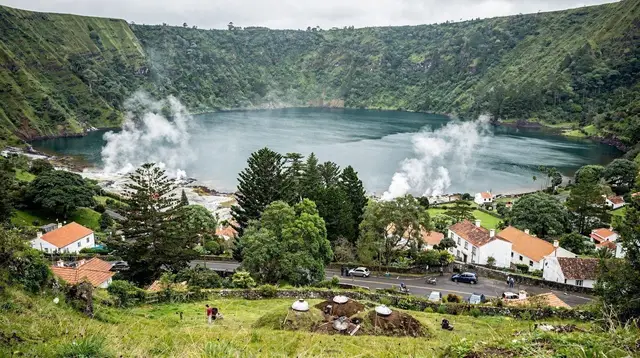
Here’s what changes my mind every time I second-guess whether staying put on São Miguel is enough: it isn’t a thin substitute for the archipelago, it’s a full, strange, self-contained landscape on its own. Sete Cidades is a village living inside a collapsed volcano, with twin lakes in the caldera floor that you look down on from the rim before driving into it. A guide who grew up on that road will point out things a rental car alone would miss — the Sete Cidades guided tour with a local is the version of that morning I’d book if I only had one shot at the caldera.
Furnas, on the other side of the island, is its own kind of strange: a village built inside an active caldera, steaming vents at the roadside, a lake where restaurants bury pots of cozido to cook on volcanic heat alone. Spending a slow afternoon there — the thermal park, the springs, the food — is a better use of a day than rushing between two islands would ever be, and a half-day Furnas tour covers the caldeiras and the cooking pits properly rather than as a drive-through stop.
Then there’s Lagoa do Fogo, the crater lake in the island’s dead centre with no café, no ticket booth, nothing but the rim, the water and whatever cloud happens to be sitting on it that hour. It’s the closest São Miguel gets to true wilderness, and it rewards walking, not driving past — the full-day hike to Lagoa do Fogo is built for exactly that. If you’d rather cover more ground on wheels than on foot, an island-wide tour of São Miguel’s hidden corners strings the calderas, coastline and viewpoints together in one loop.
None of that touches Ponta Delgada, the north coast’s tea plantations, or the eastern viewpoints past Nordeste. Stack it up honestly and a single island stops feeling like a consolation prize. It’s a full trip. I’ve written about why this holds even beyond the volcanic sites — the island is farmed rather than a wilderness postcard, and it is very much not the Caribbean, which is its own useful reset for anyone arriving with the wrong reference photo in mind.
When another island really is the goal
None of this is an argument against ever visiting Pico, Terceira, São Jorge or the rest — some readers’ actual trip is about the wine, the old town, or the fajãs, and São Miguel is only the airport they land at first. If that’s you, plan for it honestly: treat it as two trips stitched together, book the inter-island flight early since seats on the smaller routes sell out in summer, and give the second island enough nights to be worth the flight rather than squeezing it into a spare afternoon.
For most readers, though, the better fix is smaller than a second flight: stop treating São Miguel as a base camp and start treating it as the destination. Give it the days that a 744-square-kilometre island with a caldera village, a thermal village and an unspoilt crater lake actually deserves — how many days you need is the honest version of that math, and a seven-day itinerary or a tighter three-day route both work better than a week split thin across islands that were never a day trip apart.
São Miguel and the rest of the Azores
Can I visit Pico or Terceira on a day trip from São Miguel?
No. There’s no ferry from the mainland and nothing that functions as a quick inter-island hop. Reaching Pico, Terceira, São Jorge or Corvo means a separate flight or a long, weather-dependent ferry, and neither fits into a single day out and back.
How many islands are in the Azores, and where does São Miguel fit?
Nine. São Miguel is the largest and the one most visitors land on first, but Terceira, Pico, Faial, São Jorge, Graciosa, Flores, Corvo and Santa Maria are all separate islands, each with its own character and its own way of getting there.
Where exactly are the UNESCO sites people ask about?
The vineyard landscape is on Pico; the historic centre, Angra do Heroísmo, is on Terceira. Both are genuine UNESCO World Heritage listings, and both require leaving São Miguel to see.
Is there any ferry connecting São Miguel to the other islands?
Seasonal inter-island ferries link some of the central group islands to each other, but none run on a schedule that makes a same-day trip from São Miguel realistic. Most people fly between islands instead.
Is it worth splitting a one-week trip between São Miguel and another island?
Only if visiting a second island is a real priority, not a box to tick. A split week usually means thinner time in Sete Cidades, Furnas and the east of São Miguel without gaining enough on the other island to justify it — two focused trips work better than one diluted one.
So how many days does São Miguel deserve on its own?
Most first-time visitors are glad of five to seven days. Between the caldera villages, the thermal areas, the north coast and the eastern tip, the island fills a week comfortably without ever feeling padded.
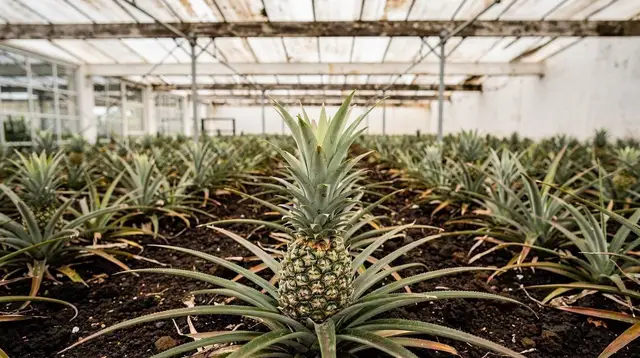
Tea & Pineapple Plantations on GetYourGuide
Verified deep-linked GetYourGuide tours. Book through these links and we earn a small commission at no cost to you.
GetYourGuide does not provide a product photo for this activity — the image shows the meeting point, photographed by us.