Best Thermal Pools on São Miguel, Compared
Which thermal pool should I choose on São Miguel?
Terra Nostra Park in Furnas is the classic, warm, orange-water garden pool; Poça da Dona Beija nearby is smaller and less crowded; Caldeira Velha on the north side is a cooler waterfall pool in forest; Ponta da Ferraria is a natural hot spring inside the sea, swimmable only around low tide. Most visitors base a day around Furnas and treat Ponta da Ferraria as a separate, tide-dependent trip.
Four pools, four very different swims
São Miguel has thermal water almost everywhere the ground is warm, but four pools account for nearly all of the visits: Terra Nostra Park and Poça da Dona Beija in and around Furnas, Caldeira Velha on the north side near Ribeira Grande, and Ponta da Ferraria in the far west, where a hot spring meets the open Atlantic.
They are not interchangeable. Two are ferruginous and will stain a swimsuit, one is a forest waterfall, and one is only safe to enter for part of the tide cycle. This guide sets out what separates them so you spend your soak, not your drive time, on the one that suits your day.
None of these are wild, undeveloped springs in the way Lagoa do Fogo is undeveloped — three of the four are landscaped, ticketed, and maintained. Only Ponta da Ferraria keeps the raw, tide-governed character of a spring meeting open sea.
At a glance
| Pool | Setting | Temperature | Water colour | Best for |
|---|---|---|---|---|
| Terra Nostra Park | Botanical garden, Furnas | ~35-40°C | Orange, iron-rich | First-timers, photos, all-day access |
| Poça da Dona Beija | Riverside pools, Furnas | ~35-39°C | Orange-brown, iron-rich | Fewer crowds, still central to Furnas |
| Caldeira Velha | Forest waterfall, north coast | ~30-35°C | Clear to lightly mineral | Cooler dip, waterfall, shorter visit |
| Ponta da Ferraria | Open sea, lava-flow coast | Varies with tide | Clear seawater | Tide-timed, wilder, no crowds outside season |
Prices, opening hours and exact tide-safe windows change with the season, so treat the table as a way to choose between the four rather than a booking reference — check each pool’s own page before you go.
Terra Nostra Park: the classic, and the one that stains
Terra Nostra Park is the pool most people picture when they think of São Miguel. It sits inside a 12-hectare botanical garden planted from the nineteenth century onward, and its main pool is large enough to swim slow laps in, fed continuously by mineral-rich spring water that runs a distinct rust-orange from dissolved iron. The water sits roughly 35-40°C depending on where you stand relative to the inflow, warmer near the source and cooler at the garden edges.
The one fact every visitor needs before getting in: this water is genuinely ferruginous, and it will stain light-coloured swimwear permanently. Pack an old, dark suit you don’t mind discolouring rather than a favourite one — no amount of washing reverses it. The same applies at Poça da Dona Beija, and to a lesser extent at Caldeira Velha.
Terra Nostra charges an entry fee, sells tickets at the gate in most of the year, and gets busy in July and August, particularly around midday. Arriving near opening time or later in the afternoon avoids the worst of it. The garden itself — camellias, tree ferns, a collection from across the subtropics — is worth walking even for visitors who skip the pool.
Poça da Dona Beija: Furnas’ quieter option
A short drive from Terra Nostra, Poça da Dona Beija is a set of smaller riverside pools fed by the same volcanic system that heats the rest of Furnas. The water runs a similar orange-brown and a similar temperature band, roughly 35-39°C, but the setting is more intimate — terraced pools along a stream rather than one large garden basin — and it tends to draw a smaller crowd than Terra Nostra, especially outside peak summer weeks.
Because it sits within Furnas itself, Poça da Dona Beija pairs naturally with a cozido lunch and a walk around the caldeira fumaroles on the same day. Bring the same old swimsuit you’d bring to Terra Nostra — the staining risk is the same.
a guided day combining the Furnas thermal pools with a traditional cozido lunch is the simplest way to see both without working out logistics yourself, and it removes the guesswork around which pool to prioritise if time is short.
Caldeira Velha: a waterfall in the forest
Caldeira Velha sits on the slope of the Água de Pau massif, a short detour off the road between Ponta Delgada and Ribeira Grande, and it is the odd one out among the four. Instead of a garden basin, the water arrives as a genuine thermal waterfall dropping into a series of pools set among tree ferns and moss-covered rock. It’s milder than Terra Nostra, typically 30-35°C, and the water is clearer, with far less of the ferruginous staining that defines the two Furnas pools.
It’s also the fastest of the four to visit properly — most people are in and out within an hour or two, which makes it easy to combine with a short walk on the same site or fold into a wider north coast day that also takes in Ribeira Grande and the tea plantations further along the coast. Caldeira Velha charges a modest entry fee and sells tickets on site; queues build on the busiest summer days but rarely to the extent Terra Nostra sees.
a day tour along the volcanic route that stops at thermal baths on the way works well if you’d rather see Caldeira Velha as part of a guided loop than drive there independently.
Ponta da Ferraria: a hot spring in the sea, tide permitting
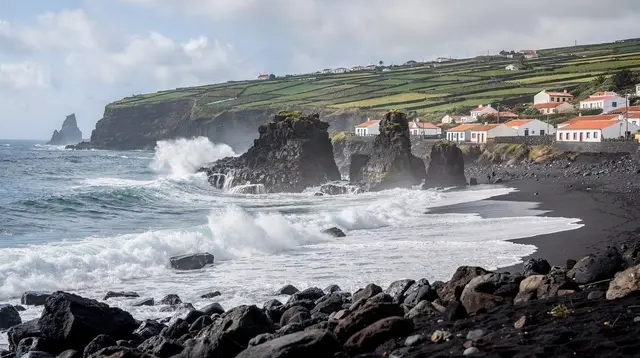
Ponta da Ferraria is a different kind of thermal pool altogether. Here, a hot spring rises at the base of a lava flow on the island’s western tip and mixes directly with the Atlantic, so the water is genuinely seawater warmed from below rather than a piped or channelled spring. There’s no garden, no ticket booth for the sea pools themselves, and no fixed basin — the “pool” is a set of natural rock hollows the tide fills and empties.
This is the fact that matters most: Ponta da Ferraria is only safely swimmable around low tide. As the tide rises, waves surge across the lava shelf and the calm hollows disappear under open swell — at high tide, or whenever there’s any real sea running, it is not a swimming spot at all, it’s a dangerous stretch of coast. Never treat it as swimmable on arrival without checking where the tide stands first; conditions that were calm an hour earlier can turn quickly.
There is also a paid spa built above the natural sea pools, which is a separate facility with its own hours and its own pool fed from the same spring — a useful fallback if the tide is wrong for the sea pools themselves, and worth understanding as a distinct option from the free tidal pools before you plan around it.
a guided tour of the island’s west that includes Ponta da Ferraria takes tide timing off your hands, since operators plan the stop around the day’s low tide rather than a fixed itinerary slot.
Families, wellness days, and what to pack
Three of the four pools are easy with children under supervision; only Ponta da Ferraria asks for a judgment call on tide and swell before anyone young gets in the water. If you’re travelling with kids and want a shortlist matched to that constraint, the family-friendly thermal pools guide ranks Terra Nostra, Poça da Dona Beija and Caldeira Velha specifically for that use.
Building a slower day around soaking rather than sightseeing is its own kind of plan, and the wellness day guide covers pacing a visit so you’re not driving between pools back to back. a breakfast-and-thermal-pools tour out of Furnas is one way to fold a soak into a slower morning rather than treating it as a stop squeezed between other sights.
Whichever pool you choose, pack for staining rather than hope around it. The what-to-pack guide for iron-rich thermal water goes into more detail than the swimwear warning above — footwear for the slippery rock at Ponta da Ferraria, a towel you don’t mind discolouring, and a dry bag for anything that has to sit poolside at Terra Nostra or Poça da Dona Beija.
Getting to each pool without a rental car
Terra Nostra and Poça da Dona Beija both sit inside Furnas itself, so a Furnas-based stay or a bus service into the village reaches them without a car. Caldeira Velha and Ponta da Ferraria are harder without one: both sit off the main roads, in the north and the far west respectively, and neither is a quick taxi hop from Ponta Delgada.
If you’re deciding whether to rent for the trip, the car rental guide and the driving guide cover what independent driving actually involves here, and the bus guide sets out where public routes do and don’t reach. Each of the guided tours linked earlier on this page — the Furnas cozido tour, the volcanic route, and the west tour — already builds its pool stop into the itinerary, which is the simplest way around the question for anyone not renting a car at all.
Choosing between them
If you only have time for one, Terra Nostra is the safest choice for a first visit — warm, reliably open, and the most complete experience of the four. If Furnas is already your base for the day, add Poça da Dona Beija rather than choosing between them; they’re close enough to do both. Caldeira Velha suits a north-coast day or anyone who prefers a shorter, cooler dip over a long soak. Ponta da Ferraria rewards planning: check the tide table before you leave, and treat it as its own outing rather than a stop squeezed onto the end of a Furnas day.
Season matters too, even though the water itself doesn’t run warmer or cooler with the calendar. Crowds, tour bus timing, and even the cliffside approach to Ponta da Ferraria all shift through the year. The best time to visit guide and the month-by-month guide both cover how pool visits fit into the wider seasonal picture, including when Terra Nostra’s queues tend to be shortest.
| If you want… | Choose |
|---|---|
| The classic, most complete pool | Terra Nostra Park |
| Fewer crowds, same setting | Poça da Dona Beija |
| A cooler waterfall, shorter visit | Caldeira Velha |
| A sea-level hot spring, wilder feel | Ponta da Ferraria (low tide only) |
| To combine two pools in one day | Terra Nostra + Poça da Dona Beija |
For a broader look at how these fit into a full itinerary, see the thermal springs itinerary and the hot springs and thermal category, which cover booking windows and seasonal notes for all four pools together. Anyone deciding between Furnas and Ponta Delgada as a home base for pool-focused days may also find this comparison useful, and travellers wanting the practical background on cooking underground before their Furnas visit can read how cozido is actually cooked and where to eat near Furnas.
Thermal pools on São Miguel: the questions people ask most
Which is the best thermal pool on São Miguel for a first visit?
Terra Nostra Park is the one to see first — it is the largest, warmest, and most photographed, set inside a 12-hectare botanical garden in Furnas. Pair it with Poça da Dona Beija if you have half a day free, since the two are minutes apart.
Is Ponta da Ferraria safe to swim at any time?
No. Ponta da Ferraria is a hot spring emerging directly into the Atlantic at the foot of a lava flow, and it is only calm and swimmable around low tide. At high tide or in any swell, waves surge over the rocks and it becomes dangerous — check tide times before going, not after arriving.
Will the thermal water stain my swimwear?
At Terra Nostra and Poça da Dona Beija, yes — both pools are iron-rich and run orange to rust-brown, and the mineral content permanently discolours light-coloured fabric. Caldeira Velha’s water is clearer and less likely to stain. Bring an old, dark swimsuit for any of the ferruginous pools.
What temperature is the water at each pool?
Terra Nostra runs roughly 35-40°C, Poça da Dona Beija is similar at around 35-39°C, Caldeira Velha’s waterfall pools are milder at roughly 30-35°C, and Ponta da Ferraria’s sea-mixed spring varies with the tide, often in the high 20s to low 30s°C where it blends with the ocean.
Can I visit more than one thermal pool in a day?
Terra Nostra and Poça da Dona Beija sit close together in and around Furnas and combine easily in a single day. Caldeira Velha is on the north side near Ribeira Grande, and Ponta da Ferraria is in the far west — either can be paired with Furnas only with a long day and an early start.
Do I need to book in advance?
Terra Nostra and Caldeira Velha sell same-day tickets at the gate in most seasons, though queues build in July and August. Poça da Dona Beija is a municipal pool with entry tickets on site. Ponta da Ferraria needs no ticket for the sea pools, but the paid spa above it can fill up and is worth calling ahead.
Are these pools suitable for children?
Terra Nostra, Poça da Dona Beija and Caldeira Velha are shallow, calm and generally fine for supervised children. Ponta da Ferraria is not a children’s pool — its safety depends entirely on tide and swell, and adults should judge conditions before anyone enters the water.
Comparison on GetYourGuide
Verified deep-linked GetYourGuide tours. Book through these links and we earn a small commission at no cost to you.
GetYourGuide does not provide a product photo for this activity — the image shows the meeting point, photographed by us.