Furnas Caldera and Fumaroles: A Living Volcano Explained
What are the Furnas fumaroles and why is the ground so hot?
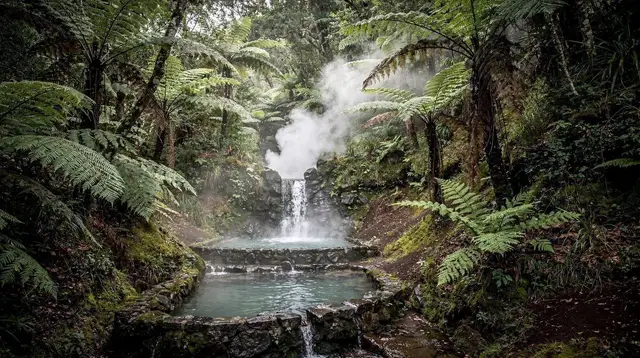
Furnas sits inside an active volcanic caldera, so rainwater seeping down meets rock heated by shallow magma and returns to the surface as steam vents, boiling springs and bubbling mud. The heat is genuine and can scald, which is why the marked paths and fenced viewing areas around the village and Lagoa das Furnas exist and should never be left.
Why the Ground Steams in Furnas
Furnas is not a metaphor for a volcanic village — it sits inside one of São Miguel’s three active central volcanic systems, and the caldera it occupies is still doing what calderas do. Rain falling on the surrounding slopes works down through fractured rock, meets heat close to a shallow magma body, and comes back up as steam, boiling water and gas. That cycle is visible in the open, in the middle of the village, in a way it is not anywhere else on the island.
This page is about that phenomenon: what the fumaroles are, where to see them, how the caldera behaves, and how to walk near it without getting hurt. It does not walk through a full day out with the cozido lunch and the Terra Nostra garden step by step — that itinerary lives on its own page, Furnas day trip: cozido and thermal park. Here the focus stays on the geology itself.
Reading a Caldera: What You’re Actually Standing In
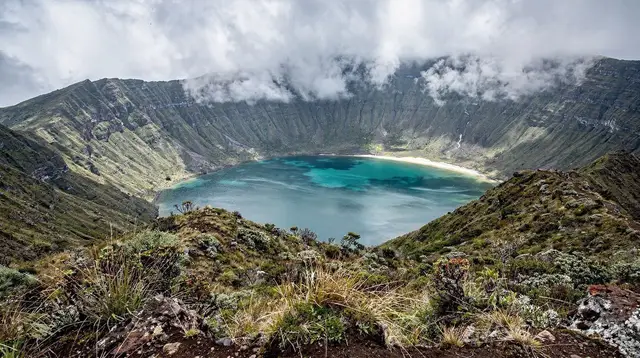
A caldera is not a crater left by a single blast. It forms when a volcano’s magma chamber partly empties during an eruption and the ground above collapses into the space left behind, leaving a wide depression rather than a peak. Furnas’ caldera is several kilometres across, and the village, the Lagoa das Furnas, the surrounding hills and the geothermal field all sit inside that collapsed basin.
The volcano has erupted within recorded history — most recently in 1630, an explosive event that reshaped part of the caldera floor. Since then, activity has stayed geothermal rather than eruptive: no lava, no ash, but a steady, visible release of heat through steam vents, hot springs and gas seeps. That is the difference worth holding onto for the rest of this page — Furnas today is quiet in the sense that matters for safety, but it is not dormant in the sense that matters for understanding it.
For the island’s broader volcanic picture — how Furnas relates to Sete Cidades, Lagoa do Fogo and the fissure zones that built the rest of São Miguel — the overview page São Miguel’s volcanic history sets the whole system out. A related question worth separating out on its own: how a caldera like this differs from the lava tube at Gruta do Carvão, which is a very different kind of volcanic feature. That comparison is covered in caldeiras versus lava tubes explained.
Where the Ground Steams: The Village Fumaroles
Furnas’ most accessible geothermal field sits at the northern edge of the village, a short walk from the centre and well signposted. Here, clustered vents send up steam continuously, mud pools bubble in slow, thick pulses, and the smell of sulphur is unmistakable well before you reach the fenced viewing area. Paths and boardwalks run around and between the vents, close enough to feel the heat on your skin and hear the water moving underground, but kept back from the ground that is actually dangerous.
This is the field most visitors picture when they think of Furnas, and it rewards slow walking rather than a quick photo stop — the vents vary in temperature, colour and behaviour from one metre to the next, and the ground itself changes underfoot from ordinary soil to bare, mineral-stained rock in the space of a few steps. A dedicated walking guide to this and the lakeside field, fumaroles and caldeiras on foot, covers both areas in more route detail than fits here.
Lagoa das Furnas: Boiling Water at the Lake’s Edge
A second, quieter geothermal field lies along the southern shore of Lagoa das Furnas, a short drive or a longer walk from the village centre. This is where the caldera’s heat meets the lake directly: steam vents rise a few metres from the waterline, and several roadside pools reach temperatures close to boiling. It is also where the village’s cozido pots go into the ground each morning — not as a separate attraction laid on for visitors, but because this specific patch of shoreline has reliably usable heat close to the surface, and has done for generations.
The pots themselves cook for five to seven hours on that heat alone, with no fire lit anywhere near them, and are lifted out around midday by the restaurant staff who buried them. The mechanism is worth understanding in its own right, and it is covered in more depth on how cozido das Furnas actually cooks — this page’s purpose is the geothermal field that makes it possible, not the meal that results from it.
Away from the cooking pits, the lakeside vents are open to view from a short path and a car park, and this is usually the quieter of Furnas’ two geothermal stops, since most day-trip itineraries spend longer at the village field and the Terra Nostra gardens. The pools here are not for bathing — this is a different kind of thermal water from the swimmable pools at Poça da Dona Beija, which sit on a separate, cooler spring elsewhere in the caldera.
Why the Marked Paths Are Not a Suggestion
The single fact worth carrying out of Furnas is that the ground can be genuinely dangerous a very short distance from where it looks completely ordinary. Surface pools around the fumarole fields regularly sit close to boiling point, and the crust between a visible vent and hidden, superheated ground beneath it can be thin enough to break underfoot. There is no visual cue reliable enough to judge this by eye — solid-looking earth a metre from a marked path can be no safer than the vent itself.
That is why every geothermal area in Furnas is fenced, boardwalked or otherwise marked, and why stepping past a barrier for a closer look, a better photograph or a shortcut is never worth it. This applies at the village field, at the lakeside vents, and anywhere else steam is visible along the caldera floor — the paths exist because people have been badly burned by ignoring them, not as an overcautious formality. A wider look at how this risk compares to the island’s other genuine hazards — sea conditions, cliff edges, fog — sits in is São Miguel safe: wildlife and hazards; geothermal ground is the one that catches visitors most often, precisely because it looks so tame.
Weather adds a second layer worth planning around. Furnas sits low in its caldera and clouds settle over it more often than over the coast, so the fumarole fields can be damp, humid and low-visibility even on a clear day at Ponta Delgada. None of that changes the ground’s temperature, only how far you can see it — reason enough to keep to the paths even when the steam itself is the only thing visible ahead.
How Furnas Compares to São Miguel’s Other Volcanic Ground
a full-day guided tour that walks the fumarole fields with a local guide before a cozido lunch is the most complete way to see the geology explained on the ground, rather than read about it afterwards. For a shorter visit focused specifically on the caldera and vents rather than a full day out, a half-day Furnas tour covers the village fumaroles and lakeside field without the longer commitment.
Furnas is one stop on a wider volcanic map. Lagoa do Fogo, the crater lake in the island’s centre, is a different kind of active caldera again — one with no geothermal field at the surface, no facilities and frequent cloud cover, described in full in the Lagoa do Fogo crater lake guide. Sete Cidades, in the west, is a third caldera with its own twin lakes and none of Furnas’ visible heat. Seeing more than one in a single visit gives a much clearer sense of how varied “volcanic ground” actually looks across a single island barely 65 kilometres long.
For visitors combining the geology with the wider thermal landscape of the caldera — pools, gardens and springs together rather than the vents alone — a full-day tour of Furnas’ thermal springs and volcanic landscapes covers both in one outing, and a private tour pairing a lakeside hike with Terra Nostra park suits travellers who want a smaller group and a slower pace around the same ground.
Furnas in the Wider Volcanic Story of São Miguel
Furnas is one of three central volcanoes that, together with a long fissure zone running through the middle of the island, built São Miguel over the last several hundred thousand years. Sete Cidades and Lagoa do Fogo are the other two, and all three remain classified as active — meaning monitored, not meaning imminent. The Azores sit on the boundary of three tectonic plates, and geothermal activity of exactly this kind — steam, hot springs, warm ground — shows up across several of the nine islands, though Furnas is the clearest and most walkable example anywhere in the archipelago.
That context matters for how to read what you’re seeing at the vents. The steam rising from the ground in Furnas is not a leftover from an eruption centuries ago; it is a continuous process, driven by rainwater cycling down to hot rock and back up again, that has been running for as long as the caldera has existed and will keep running long after any visit ends. Nothing about it needs an eruption to explain it, and nothing about it should be mistaken for the volcano being dormant.
Planning a Visit to the Furnas Fumaroles
Both geothermal fields — the village vents and the lakeside pools — are free to visit and open year-round, with no ticket office and no fixed hours, though early morning and late afternoon tend to be quieter than the middle of the day. Good, closed footwear matters more here than almost anywhere else on the island; the ground around the vents is uneven, sometimes wet with condensation, and not a place for sandals. A jacket is worth carrying even in summer, since the caldera sits higher and damper than the coast and cloud can settle in with little warning.
Furnas combines naturally with a night or two based in or near the village, given how much sits within walking distance — the fumaroles, Terra Nostra, and the lake itself. For visitors basing themselves elsewhere on the island, it also works well as a single long day trip from Ponta Delgada or from the south coast, roughly forty minutes to an hour’s drive depending on the route taken. A structured single-day plan that covers the caldera without trying to add every other stop on the island sits at Furnas day trip itinerary.
Two short reads worth having in mind before setting out: why the ground at Furnas cooks a cozido without a fire, and, for contrast elsewhere on the island, why Lagoa do Fogo has no facilities at all — both are reminders that São Miguel’s volcanic ground rewards respect rather than assumptions, wherever you meet it.
Furnas Caldera and Fumaroles: Common Questions
Is Furnas an active volcano?
Yes. Furnas is one of three active central volcanoes on São Miguel, and its caldera has erupted within recorded history, most recently in 1630. The current activity is geothermal rather than eruptive: steam, hot springs and gas rather than lava.
Is it safe to walk near the fumaroles?
It is safe on the marked paths and boardwalks, which keep visitors back from vents where the ground can exceed boiling point just beneath the crust. It is not safe to step past a fence or barrier for a closer look or a photo, however solid the ground appears.
Does the water in Lagoa das Furnas actually boil?
At several points along the lake’s southern shore, yes. Steam vents and bubbling pools sit right at the waterline, and some of the shoreline pools reach close to boiling point. It is this same heat that cooks the village’s cozido pots underground nearby.
Can you smell the fumaroles from the village?
Yes, sulphur is noticeable through much of central Furnas, strongest near the vent clusters at the northern edge of the village and along the lake’s edge. It fades away from the geothermal fields, which sit within walking distance of the centre.
How hot does the ground get around Furnas?
Surface pools regularly sit at 90 to nearly 100 degrees Celsius, and the ground itself can be far hotter a short distance down. There is no way to judge this by sight, which is the core reason to stay on the paths.
Is Furnas the same as the cozido meal?
No. Furnas is the caldera and village; cozido das Furnas is one specific dish cooked in its geothermal heat. The dish depends on the ground here, but the geology and the meal are two separate things to plan for.
Do you need a guide to see the fumaroles?
No guide is required to walk the public geothermal areas, which are open and signposted. A guide adds context on the volcanic history and can combine the fumaroles with the wider caldera and Terra Nostra in a single half or full day.
Volcanoes & Craters on GetYourGuide
Verified deep-linked GetYourGuide tours. Book through these links and we earn a small commission at no cost to you.
GetYourGuide does not provide a product photo for this activity — the image shows the meeting point, photographed by us.