Is São Miguel Safe? Wildlife, Livestock and Real Hazards
Are there dangerous animals on São Miguel?
No. São Miguel has no snakes and no dangerous land animals. The real hazards for visitors are the Atlantic sea, cliff edges, sudden fog on the high roads and sun exposure between showers, on an island that is farmed and inhabited rather than wild.
People arrive with the same short list of worries they would bring to any subtropical-looking island: snakes in the undergrowth, something venomous under a rock, a warning sign they can’t read at a trailhead. São Miguel answers all of that with a shrug. What it does not answer with a shrug is the Atlantic, the fog, the cliff edges and the sun — ordinary hazards, easy to manage, and worth taking seriously precisely because nothing more dramatic is competing for your attention.
So, is São Miguel dangerous?
Not in the way the question usually means. There is no animal on this island that visitors need to plan a trip around. What there is, instead, is a volcanic Atlantic island with a working coastline, changeable weather and a farmed interior — and the accidents that happen here follow directly from those three facts, not from wildlife. This guide separates the two clearly: what genuinely is not a risk, and what genuinely is.
No snakes, and nothing venomous to worry about
Start with the question everyone actually has, even if they don’t say it out loud: no, there is nothing to watch for in the grass. The Azores as a whole have no native reptiles of concern, and São Miguel is no exception — you can walk through the hedgerows around Furnas, sit down on a stone wall near Nordeste, or push through overgrown grass on an old PR trail without a single thought for what might be underfoot. There is nothing venomous in the undergrowth, nothing that stings seriously, no land creature that bites. Long trousers on overgrown paths are about brambles and nettles, not defence.
This is worth stating plainly because the island’s volcanic scenery — steaming ground at Furnas, dense laurel forest around the Serra da Tronqueira, a crater lake at Lagoa do Fogo — can look, from a photograph, like the kind of place that comes with a hazard list. It doesn’t. The Azores were never connected to a mainland, and most of what colonised them arrived by wind, water or bird, which is exactly why the archipelago’s land animal life is so thin and so harmless.
The wildlife you actually share the island with
That thinness cuts both ways. São Miguel is not a wildlife destination in the way a rainforest or savanna is; what lives here is mostly small, quiet and easy to miss unless you know where to look. Cattle are the animal you will see most, grazing the green interior in numbers that outweigh the human population many times over — they are livestock, not wildlife, and they are the reason for the one genuine animal-related habit worth adopting on this island: driving with your speed down on rural roads.
Among the wild species, one stands out precisely because it is so hard to find. The priolo, or Azores bullfinch, survives nowhere on Earth except the laurel forest of the Serra da Tronqueira in the island’s east, and it is one of the rarest birds in Europe. Seeing one takes a guided walk with someone who knows the calls and the feeding trees, not a drive-by — the full story, and how to actually try, is in the priolo guide.
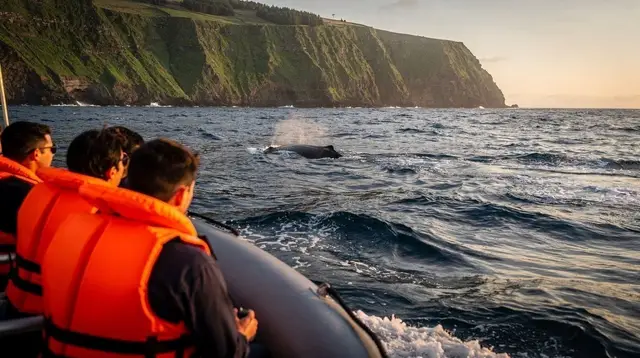
Offshore, the island’s best-known animals are whales and dolphins, watched from boats guided by vigias, the old whale-spotting lookouts — covered separately in the whale watching guide, and never something a page here should promise you will see, since sightings are wild-animal encounters, not a schedule.
The real hazards: sea, cliffs, fog and sun
With animals off the list, the actual hazards on São Miguel come down to four things, and every one of them is manageable with ordinary caution rather than special equipment.
The sea is the Atlantic, not a swimming pool. Currents, submerged rocks and swell decide what is safe on any given day, and conditions change with the tide and the wind. This page won’t repeat the specifics of any one bathing spot — the tidal rules at the coast’s best-known sea pool, for instance, are covered fully in the Ponta da Ferraria guide — but the general rule holds everywhere on the coast: black volcanic rock is often slick, waves arrive in sets, and a calm-looking sea can still carry a strong pull close to shore.
Cliff edges are frequently unfenced. Viewpoints across the island — the caldera rim above Sete Cidades, the eastern lookouts around Nordeste, the drop above Vila Franca do Campo — are working landscape features, not tourist installations with railings on every edge. Wind gusts on exposed headlands, and wet grass at the lip of a crater is more slippery than it looks. Stay back from edges in wind or rain, and keep an eye on children at any lookout without a barrier.
Fog closes roads with little warning. The two passes most affected are the climb to Lagoa do Fogo and the road up to the Sete Cidades caldera rim — both can go from clear to zero-visibility inside an hour, and both are sometimes closed by the authorities for exactly that reason. If you arrive and the pass is socked in, the right move is to come back another day, not to push on slowly hoping it clears; a guided full-island jeep tour hands that judgment call to a driver who checks conditions daily and knows every alternative route on the island. For the general pattern of driving here, see the driving guide.
The sun is stronger than the clouds suggest. São Miguel’s weather genuinely does change hour to hour and side to side — sun in Ponta Delgada while Furnas sits under a shower, then the reverse an hour later — and the gaps between showers carry real Atlantic UV. Sunburn on a day that felt overcast is one of the most common minor injuries visitors report. Carry sun protection even when packing a rain jacket, on any month of the year.
Water sports and boat trips: the ocean decides, not the itinerary
Most of the hazards above are things you manage yourself, on foot or in a car. Get into the water and the calculus changes, because open Atlantic conditions and calm caldera lakes are not the same activity wearing different gear. Kayaking on Sete Cidades’s twin lakes or the crater at Lagoa do Fogo is sheltered, flat-water paddling; kayaking along the open south coast is a different sport in different water, and outfitters plan routes and cancellations accordingly — the distinction is covered in full in the kayaking safety guide.
Canyoning carries its own risk profile, tied to rainfall and fitness rather than to the sea — rope work in a ravine after heavy rain is a different proposition to the same route in a dry spell, which is why operators check conditions before confirming a booking rather than after, as covered in the canyoning season and rainfall guide. Divers face a milder version of the same Atlantic-not-a-pool point above; water temperature shapes what you can comfortably do and for how long, detailed in the diving guide.
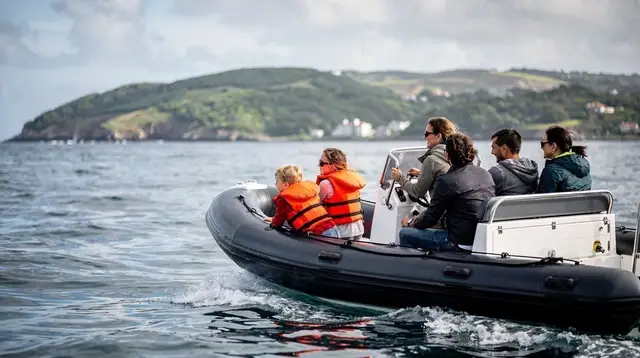
Boat trips — whale watching, and the seasonal swim inside the Ilhéu de Vila Franca — get cancelled or rerouted for sea state far more often than a first-time visitor expects, and that is the system working correctly rather than a company letting you down. The pattern, and how to plan around it rather than be surprised by it, is set out in the boat tours and weather guide and, for whale watching specifically, this guide to cancellations.
Underground and underfoot: lava tubes and hot ground
Two more settings deserve a specific word, because they look more dramatic than they are risky, provided you follow the marked route. The Gruta do Carvão lava tube, on the edge of Ponta Delgada, is a guided walk underground with low ceilings and an uneven, sometimes wet floor rather than open exploration — a hard hat and a guide’s pace handle the actual risk, covered in the lava tube guide.
At Furnas, the ground itself is the attraction: fumaroles vent steam beside the path, and the earth around the caldeiras where cozido is buried to cook is genuinely hot underfoot just off the marked walkway. Staying on the path is not a formality here — see the Furnas caldeiras walking guide for exactly where that path runs.
The iron-rich thermal water in the pools nearby, from Terra Nostra to Poça da Dona Beija, isn’t dangerous to swim in, but it does stain pale swimwear on contact — a packing note rather than a safety one, covered in the thermal water packing guide.
Cattle on the road: a farmed island, not a wilderness
It bears repeating because it changes how you should drive and walk here: São Miguel is not wilderness. Away from a handful of protected pockets — the laurel forest of the Serra da Tronqueira, the reserve at Lagoa do Fogo with no facilities of any kind — this is a farmed, inhabited island of pasture, hedgerow and small towns. Dairy cattle are everywhere in the green interior, and on some rural stretches, particularly around Nordeste and the lanes leading toward Sete Cidades, they are moved along the road itself between fields or milking sheds.
That means slowing well down on blind bends outside the main towns, expecting a herd around any corner on the smaller EN and local roads, and never assuming a rural lane is empty just because it looks quiet. A local guide on a full-day hike up to Lagoa do Fogo will read this landscape for you — where a path crosses working pasture, where an electric fence line runs, which gate needs closing behind you — the kind of local knowledge that turns a farmed island from a source of minor uncertainty into simply part of the scenery.
The wider point matters for how you picture the whole trip: this is closer to rural Ireland or the Scottish hills than to an untouched tropical forest, and the practicalities that follow from that — see what to expect from canyoning and the Nordeste hiking itinerary for two examples — are about terrain and weather, not encounters with wildlife.
Practical habits that keep a trip safe
None of this requires special gear or a change of plans, just a short list of habits worth adopting from day one.
| Hazard | Where it matters most | What actually helps |
|---|---|---|
| Sea state and currents | Any coastal swimming spot, black-sand beaches | Check conditions locally before entering; never turn your back on the sea |
| Unfenced cliff edges | Caldera rims, headland viewpoints | Stay back in wind or rain; watch children closely at open lookouts |
| Fog on high roads | Lagoa do Fogo pass, Sete Cidades rim road | Turn back if socked in; check conditions before committing to the climb |
| Sun between showers | Everywhere, all year | Carry sun protection even on grey-looking days |
| Livestock on rural roads | Nordeste, interior lanes, Sete Cidades approaches | Slow down on blind bends; expect cattle around any corner |
| Slippery volcanic rock | Coastal paths, lava tube entrances, wet trails | Solid footwear with grip; take extra care after rain |
A few of these are easiest to hand off entirely. A guided coasteering trip along the volcanic coastline puts sea judgment in the hands of an instructor who reads the swell for a living, which is the safest way to get close to the water rather than assess it yourself from a rock.
The same logic applies inland: a supported walk such as the Ribeira Funda hike through the tea plantation keeps you on a known route with someone who already knows which gates are for livestock and which stretches turn slick after rain. None of this is about danger management in a dramatic sense — it’s the same low-key competence you’d want on any hike through working farmland, anywhere.
Beyond that, the standard travel habits cover almost everything else: drinkable tap water across the island, mobile signal in all but the deepest valleys, and the emergency number 112 if anything does go wrong. Villages close early and on Sundays, so plan fuel and food around town hours rather than around the idea that something will always be open.
Renting a car remains the easiest way to reach most of what’s described above on your own schedule rather than a fixed pickup time — see the car rental guide — and the packing list covers the sun protection, grippy footwear and rain layer this page keeps coming back to. For the wider context of what to bring and book, the wildlife and nature activities on the island are a good place to see how these habits play out across different tours.
São Miguel safety questions, answered
Are there snakes on São Miguel?
No. There are no native snakes anywhere in the Azores archipelago, and none have established themselves on São Miguel. It is one of the few places in Europe where a walk through long grass or old stone walls carries no snake risk at all.
Are there any dangerous land animals on the island?
No large predators, no venomous spiders and nothing that bites or stings in a way visitors need to plan around. The largest land animal you will meet is cattle, grazing open pasture and sometimes standing in the road.
What are the real safety risks for visitors?
The Atlantic sea state, unfenced cliff edges at coastal viewpoints, fog that can close mountain roads with little warning, and sunburn from strong light that returns within minutes of a shower passing.
Is it safe to hike alone on São Miguel?
Generally yes on marked PR trails, provided you check for closures after landslides, watch the weather on caldera rims and coastal paths, and tell someone your route on longer routes such as the Nordeste coast or the Serra da Tronqueira.
Do I need to worry about livestock on the roads?
Yes, in the sense of driving carefully. Cattle graze unfenced pasture across the interior and are sometimes led along narrow lanes, especially around Nordeste and the Sete Cidades caldera. Slow down on blind bends.
Can the fog actually be dangerous?
It can, mainly by cutting visibility on narrow roads and coastal paths with drops. The passes up to Lagoa do Fogo and the Sete Cidades rim are the two places most often closed or socked in — turn back and try another day rather than push through.
Wildlife & Nature on GetYourGuide
Verified deep-linked GetYourGuide tours. Book through these links and we earn a small commission at no cost to you.
GetYourGuide does not provide a product photo for this activity — the image shows the meeting point, photographed by us.