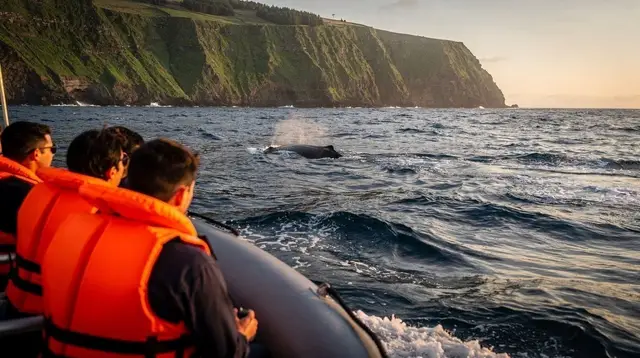
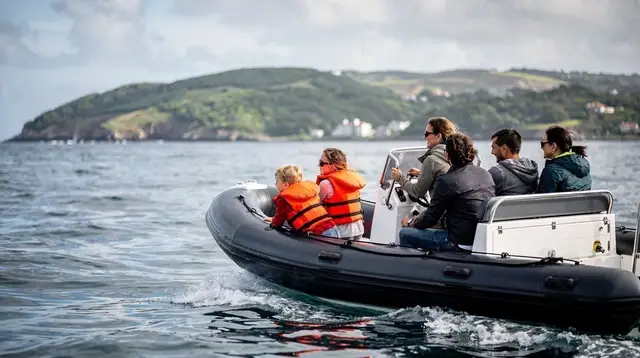
Why Boat Tours on São Miguel Get Cancelled
Why do boat tours on São Miguel get cancelled?
They are cancelled for sea and sky conditions, not the calendar — swell, wind or poor visibility, never a winter closure, since the island has no fixed boating off-season. Cancellations can happen in any month, and conditions often differ between the north and south coasts on the same morning, so no operator can promise a sailing in advance.
Every visitor who books a boat trip on São Miguel eventually asks the same question, usually after an email from the operator lands the night before: why has my sailing been cancelled when the sky over Ponta Delgada looks fine? The honest answer is that a boat trip here is never cancelled for the calendar. There is no winter closure, no ski-style off-season, and no month when boats simply stop running. What decides a sailing, every single time, is the state of the sea and the sky on that particular morning, along that particular stretch of coast — and both can change faster than most visitors expect on an island this small, this far out in the Atlantic.
Weather runs the schedule, not the season
It helps to separate two things that get confused: when São Miguel is a good place to visit, and when a specific boat is able to leave the harbour. The island itself is visited comfortably in every month of the year — the thermal pools, the tea plantations, the caldeiras of Furnas and the viewpoints above Sete Cidades are all open in January as much as in July.
What moves with the seasons is not a switch that turns boating off, but the odds. From roughly April to October the sea is calmer and drier weather more common, which is also the stretch when whale and dolphin watching runs at its busiest. From November to March the Atlantic is rougher and fronts pass more often, so a booked boat trip is more likely to be postponed — but it is never automatically off the table.
That distinction matters for planning. A trip built around thermal pools, hiking and a rental car survives a rainy or blustery week without much compromise. A trip built entirely around a single boat departure does not, because the one variable that decides whether that boat sails is exactly the one you cannot control from home.
Why the sky over one small island moves so fast
São Miguel sits roughly 1,400 km out in the North Atlantic, with nothing but open ocean for hundreds of kilometres in most directions. That exposure is part of what makes the island green, and part of what makes its weather change quickly: fronts that would take a day to cross a continent can sweep over the island, and back out again, within a few hours. The island’s own shape adds to it. A chain of volcanic massifs runs down the middle — through Sete Cidades, the Água de Pau massif above Caldeira Velha, and the Furnas caldera — and cloud builds and clears against those slopes on its own schedule, independent of what the coast below is doing.
The result is a place where forecasts describe an average, not a guarantee for any one harbour at any one hour. Locals expect it: a fisherman leaving Caloura at seven can radio back a completely different sea state than a boat sitting in Ribeira Grande at the same moment, twenty-odd kilometres away.
Swell, wind and visibility: three separate reasons to stay in port
Cancellations get lumped together as “bad weather,” but skippers around São Miguel are usually weighing three different things, and any one of them on its own can be enough to keep a boat tied up.
Swell is the big one. It is not the same as rain — a dry, sunny morning can still carry a swell left over from a storm system that passed hundreds of kilometres away days earlier, and it is swell, not rainfall, that decides most boating cancellations here. Activities that involve getting close to rock, caves or a crater islet, like the volcanic coastline and cave tours out of Ponta Delgada, are more sensitive to swell than a simple crossing on open water.
Wind is the second factor, and it matters most for smaller boats and for anything involving snorkelling, diving or getting in and out of the water, such as trips inside the Ilhéu de Vila Franca crater. Strong wind can make a technically calm sea unpleasant or unsafe to work in, even without much swell.
Visibility is the third, and the one visitors underestimate most. Fog and low cloud can sit over a single bay while the rest of the island is clear, and a skipper who cannot see the coastline or other traffic will not take a boat out, whale watching or otherwise, regardless of how flat the water looks underneath the mist.
None of these three lines up neatly with a rainy-day-versus-sunny-day view of the weather, which is exactly why a cancellation can arrive on a morning that, from a hotel window in Ponta Delgada, looks perfectly fine.
North coast, south coast: two different seas on the same morning
Most boat departures on São Miguel leave from a small number of points: the marina at Portas do Mar in Ponta Delgada, the harbour at Caloura on the sheltered south coast, and the marina at Vila Franca do Campo, gateway to the crater islet. All three sit on the island’s south side, in the partial lee of the land, which is one reason south-coast departures are the ones most visitors experience.
The open north coast, around Ribeira Grande, Rabo de Peixe and Capelas, takes the Atlantic swell far more directly, and boat activity there is thinner and more weather-dependent as a result — surf breaks like Praia de Santa Bárbara exist precisely because that coast faces the open ocean. On a day when the south harbours are working normally, the north coast can already be unworkable for anything but the surf itself. It also runs the other way: a swell arriving from the northwest can leave the south coast calm while the north is closed out for days.
This asymmetry is worth knowing before you book, because it means a cancelled tour on one side of São Miguel says very little about conditions on the other. If a south-coast operator postpones your sailing, an activity based in Ponta Delgada itself, or a land-based alternative near Furnas, is a more useful backup than assuming the whole island is shut down.
Which boat trips are the most weather-sensitive
Not every activity on the water reacts to conditions in the same way. A full-day boat trip covering open water and calmer coves tolerates a moderate sea better than a snorkelling stop does, and a sunset cruise close to shore is less exposed than a route that hugs sea caves along the volcanic coastline.
| Activity | What it needs from the sea | Typical sensitivity |
|---|---|---|
| Full-day boat tour, mixed coastline | Moderate open-water conditions | Medium — can adapt route if one stretch is rough |
| Sunset cruise, near-shore route | Calm water, clear horizon for visibility | Medium — wind and fog matter more than swell |
| Volcanic coastline and cave route | Low swell close to rock | High — caves are the first stops dropped in marginal seas |
| Glass-bottom and snorkelling trip | Calm water and decent underwater visibility | High — wind-chopped water ends snorkelling even if the boat can still sail |
| Guided diving off Vila Franca do Campo | Low swell and clear water | High — diving is cancelled well before a boat trip would be |
A private full-day boat tour has the advantage of a route that can be adjusted on the day, favouring whichever coastline is behaving better that morning. That flexibility is one reason operators sometimes offer it as an alternative when a fixed-route trip has to be scrapped:
a private full-day boat tour that can shift its route to whichever coast is calmer that dayA shorter evening trip along the coast near Ponta Delgada carries a lighter weather requirement than anything involving caves or the water itself:
a relaxing sunset cruise along the coast, one of the least weather-dependent options on the waterTrips that head specifically for sea caves and volcanic rock formations are usually the first to be shortened or postponed once any swell builds:
a boat tour through the island’s volcanic sea caves and coastal historyAnd anything that puts you in the water, glass-bottom viewing included, needs the calmest conditions of all:
a glass-bottom boat trip with a snorkelling stop, which needs the flattest water of the groupWhat a cancellation actually looks like in practice
There is no single, island-wide cut-off that triggers a cancellation — no published wind speed or wave height that visitors can check against a forecast and know in advance. The decision sits with the skipper running that specific boat, on that specific morning, weighing swell, wind and visibility together against the size of the boat and the nature of the route. That is why two operators leaving from the same harbour on the same day can reach different conclusions, and why a trip that ran yesterday can be off today.
In practice, notice ranges from an email the evening before to a call made at the dock itself, because conditions along this coast can still shift in the few hours before departure. Neither pattern is wrong; it simply reflects how quickly the Atlantic here changes its mind. What every credible operator has in common is that safety, not the itinerary, drives the call — no page on this site, and no operator worth booking, will promise a sailing that the sea has not agreed to.
Rebooking, refunds and what operators can promise
Weather cancellations are a normal, recurring part of boating around São Miguel, and most operators have a standard way of handling them: typically a move to another available slot, or a refund, laid out in the booking terms you agree to at the time of purchase. Those terms differ by operator and by activity, particularly between a boat tour, which can sometimes still run in slightly marginal conditions, and diving or snorkelling, which generally cannot.
What no operator can promise, however carefully worded the listing, is a guaranteed sailing on a fixed date months in advance. The honest baseline for any boat trip here — a sunset cruise, a full-day tour, a dive off Vila Franca do Campo — is that the booking secures a slot, not a certainty, and that the final decision belongs to conditions on the day, not to the calendar you booked from.
Building slack into your itinerary
The simplest way to protect a boat trip from São Miguel’s weather is to stop treating it as a fixed appointment. Booking it for an early morning in your stay, rather than your last full day, leaves room to shift to another slot if the sea says no. Pairing the coast with an inland day — Furnas, the tea plantations, or the drive up toward Lagoa do Fogo — gives you somewhere useful to be on a morning when the harbour is closed to boats but the rest of the island is entirely open.
It is also worth knowing that a swell shutting down the south coast does not necessarily touch a hike, a thermal pool, or a museum, and vice versa: fog that grounds a boat in Ponta Delgada can sit twenty minutes away from clear skies over Furnas. Multi-day plans that already mix boats, hikes and thermal springs, such as those covering a full week on the island or built specifically around whales and the sea, absorb a cancelled morning far more comfortably than a single day trip built around one departure.
For anyone weighing whether the water is even worth chasing that day, it helps to remember that diving carries the tightest weather margin of any activity here:
guided boat diving off Vila Franca do Campo, which needs calmer water than most surface trips
None of this means booking a boat trip on São Miguel is a gamble — most sailings go ahead as planned, especially from April through October. It simply means the sea, not the brochure, has the final word, on an island where the weather can turn between one bay and the next.
Boat Tour Cancellations on São Miguel: Common Questions
Why do boat tours get cancelled on São Miguel?
Boats stay in port for sea and sky conditions, not for a season on the calendar. Swell, strong wind and low visibility are the three real reasons a skipper cancels or postpones a departure, and any of them can appear with only a few hours’ warning.
Is there a closed season for boat tours on São Miguel?
No. São Miguel has no ski season and no fixed nautical off-season, so boats can in principle run in January as much as in August. What changes month to month is how often the sea cooperates, which is why cancellations are simply more frequent from November to March.
Can a tour be cancelled for fog even if it isn’t raining?
Yes. Fog and low cloud can sit over a harbour or a stretch of coast on an otherwise dry, calm day, cutting visibility enough that a skipper will not take a boat out. Rain and swell are separate problems again, so a cancelled morning does not always look stormy from land.
How much notice do operators give before cancelling?
It varies by operator and by how far out the forecast is trusted. Some calls are made the evening before, others only at the harbour on the morning of departure, because Atlantic conditions around São Miguel can still shift in the hours before a boat is due to leave.
Do I get a refund or a rebooking if my boat trip is cancelled?
Weather cancellations are normally rescheduled to another slot or refunded, but the exact policy belongs to the operator you book with, not to this guide. Read the cancellation terms shown at booking, and build a spare day into your trip rather than relying on same-day rebooking.
Is the south coast calmer than the north coast?
The south coast, sheltered around Ponta Delgada, Caloura and Vila Franca do Campo, is generally the more forgiving side, while the open north coast around Ribeira Grande and Rabo de Peixe takes the swell more directly. Even so, conditions can flip within a day, so neither coast is a guaranteed sailing.
Should I book my boat tour early or late in my trip?
Early, if you have the choice. Booking a boat trip for the first free morning of your stay, rather than the last, leaves a spare day to rebook if the sea does not cooperate, instead of losing the activity altogether.
Can I check sea conditions myself before booking?
You can watch general marine forecasts, but they describe the open Atlantic, not the specific harbour or cove a tour departs from, and conditions change quickly around the island. The operator’s own morning-of decision is a more reliable signal than any forecast you read the night before.
Seasonal Guide on GetYourGuide
Verified deep-linked GetYourGuide tours. Book through these links and we earn a small commission at no cost to you.
GetYourGuide does not provide a product photo for this activity — the image shows the meeting point, photographed by us.