Caldera Lake or Open Atlantic: São Miguel Kayaking Safety
Is it more dangerous to kayak on São Miguel's caldera lakes or on the open Atlantic?
Yes — the two are not comparable risks. The caldera lakes at Sete Cidades and Furnas are sheltered, low-wind and close to shore, while the open Atlantic around São Miguel has swell, currents, sudden fog and no easy landing point, so guided sea kayaking always depends on the day's marine forecast.
Two Kinds of Water, Two Different Risks
São Miguel offers kayaking on two completely different bodies of water, and the word “kayaking” hides how far apart they really are in terms of risk. One is a flooded volcanic crater. The other is the North Atlantic. Both are beautiful, both are marketed with the same word, and treating them as interchangeable is the single most common mistake visitors make when they book a paddling trip on this island.
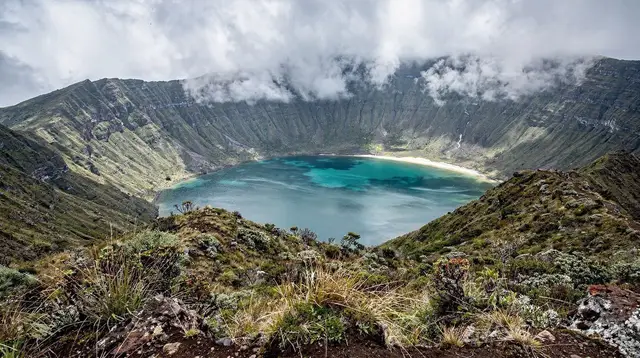
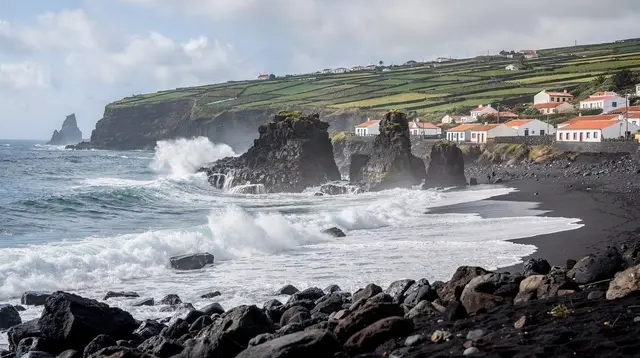
Inside a caldera — at Sete Cidades or around the Lagoa das Furnas — you are on enclosed fresh water, ringed by high crater walls that block most wind, with land never more than a few hundred metres away in any direction. On the open coast — Vila Franca do Campo, Caloura, Ribeira Quente — you are on salt water connected to nothing smaller than the Atlantic Ocean, with swell, current, and a shoreline that is mostly cliff rather than beach. Both are worth doing. Neither should be booked, packed for, or trusted on the assumption that the other one’s calm applies.
Why São Miguel Has No Wildlife Risk to Speak Of
Start with the good news, because it removes a worry that visitors often bring from other destinations and shouldn’t carry here. São Miguel has no snakes and no dangerous land animals of any kind. There is nothing venomous in the hedgerows around the lakes, nothing to watch for on the trail down to a launch point, and nothing in the water that changes how you should paddle. Sightings of dolphins or, more rarely, a distant whale from a sea kayak are a highlight, not a hazard — these are wild-animal encounters guided at a respectful distance, not close contact, and the animals in question have no history of being a danger to paddlers here.
This matters because it clears the ground for what the actual risks are. On an island without predators, it would be easy to assume that the outdoors is generically safe and stop thinking about it. That assumption is the trap. The dangers on São Miguel’s water are not biological. They are environmental, and they are exactly the same four things whether you are hiking, driving a mountain pass, or holding a paddle: the sea, the cliffs, the fog, and the sun that appears without warning between showers.
The Real Hazards: Sea, Cliffs, Fog and Sun
None of these four is exotic, and none of them is unique to kayaking. They are the hazards of the whole island, and paddling simply puts you closer to two of them than most activities do.
The sea is the obvious one on the coast, and it is discussed in its own section below. It is worth saying plainly here: the Atlantic around São Miguel is not decorative. It has real swell, real current around headlands, and stretches of coast with no beach to land on if conditions turn.
Cliffs matter even from a kayak, because much of São Miguel’s coastline is a wall of dark volcanic rock rising straight from the water, not a gently shelving shore. A kayak that gets pushed against rock in swell has nowhere soft to go, and a paddler who has to get out unexpectedly may find a ladder, a slipway, or nothing at all.
Fog rolls in fast and locally, especially around headlands and higher ground, and it removes visual reference points a paddler relies on — the shape of the coast, the location of other boats, the line back to the launch point. A guide who turns a trip back because of fog is not being cautious for its own sake; visibility is how sea kayaking stays safe.
The sun between showers catches people out because São Miguel’s weather is genuinely changeable — see the section below — and a bright interval on the water, reflected off both sky and sea, burns faster than the temperature suggests. It is a minor hazard next to the other three, but it is the one most visitors forget entirely.
Caldera Lakes: What Sheltered Actually Means
“Sheltered” is not marketing language on the caldera lakes — it describes the physical shape of the place. Sete Cidades sits inside a volcanic caldera whose walls rise hundreds of metres on every side, and the twin lakes of Lagoa Azul and Lagoa Verde lie at the bottom of that bowl. Wind that would raise a chop on open water is largely blocked before it reaches the surface. There is no tide, no current beyond what a light breeze pushes, and no swell at all, because there is no open fetch for waves to build across. Land — a shoreline you can paddle to in a few minutes from almost anywhere on the lake — is always close.
The same logic applies at Furnas, where the Lagoa das Furnas sits inside its own active caldera, ringed by steaming ground and farmland rather than cliffs. Sessions here are typically gentle, suited to beginners and families, and run on a fixed, short loop rather than an open-ended route. Guides still watch the weather — a caldera can fill with cloud even while it blocks the wind — but the range of conditions that would cancel a lake session is narrower than on the coast, and the consequence of getting caught out is far smaller: you are never more than a short paddle from solid ground.
None of this makes the lakes risk-free. Cold water, the etiquette of sharing the caldera with other boats, and simply not being able to swim are still real considerations. But the physics of the place — enclosed, wind-blocked, tideless, always close to shore — genuinely changes what can go wrong.
The Open Atlantic: What Exposed Actually Means
Sea kayaking on São Miguel usually launches from a sheltered starting point — a harbour at Caloura, the marina front in Vila Franca do Campo — and that calm first stretch of water can be misleading. Within a few hundred metres, most routes reach open coast, and open coast on this island means the unbroken North Atlantic, thousands of kilometres of it, with nothing between the paddler and the swell that has built up crossing that distance.
Three things define the exposure. Swell arrives even on days that look calm from land, because it can be generated by weather systems far offshore; a flat-looking morning can still have a groundswell that turns a rock landing into a hazard. Current runs stronger around headlands and near the mouths of inlets, including around the small islet reserve of the Ilhéu de Vila Franca, and can push a kayak off its intended line faster than a paddler expects. Landing options are limited: much of the coast is cliff, not beach, so a route is planned around the handful of places a kayak can actually come ashore if something changes, not simply paddled in whichever direction looks appealing.
This is why sea kayaking here is close-guided rather than a rental-and-go activity for anyone without local experience. A trip like the guided kayaking route around the Vila Franca do Campo islet runs a fixed loop chosen for its shelter relative to the open coast, with a guide reading conditions in real time — not because the Atlantic here is exceptionally dangerous by world standards, but because it is genuinely open water, and open water is never the same activity as a caldera lake, whatever the brochure photo suggests.
Lake vs Sea Kayaking, Side by Side
| Caldera lakes (Sete Cidades, Furnas) | Open Atlantic (Vila Franca, Caloura, Ribeira Quente) | |
|---|---|---|
| Water | Enclosed fresh water, no tide | Open salt water, tidal, connected to the Atlantic |
| Wind exposure | Blocked by crater walls | Full exposure, can rise within the hour |
| Swell | None | Present even on calm-looking days |
| Distance to shore | Minutes, almost anywhere on the lake | Limited landing points along cliff coastline |
| Typical session | Short, fixed loop, beginner-friendly | Guided route, fitness and swimming confidence expected |
| Main hazard | Cold water, sharing the lake, sudden low cloud | Swell, current at headlands, fog, limited landing spots |
| Cancellation likelihood | Low — mainly heavy rain or lightning | Higher — wind, swell and fog all apply |
How the Weather Changes Hour by Hour — and Coast by Coast
São Miguel’s weather is not one forecast for the whole island, and this is the detail that trips up visitors used to a single “today’s weather” number. A system can sit over the north coast while the south stays dry, or clear the west by midday while Nordeste stays in cloud until evening. It is entirely possible to launch a kayak in bright sun at Caloura while, a few kilometres away, Ribeira Grande is under rain, and for both of those to be different again from what is happening at Sete Cidades’ caldera rim. No page, including this one, can promise you what the water will be doing at a given hour — only that it can differ from one side of the island to the other, and that it can shift while you are already on the water.
That is precisely why guided operators on the coast build in flexibility: a route, a start time, or even the choice of coast can change on the day, based on a forecast checked that morning rather than the one checked when you booked. Treat a guide’s change of plan as the system working as intended, not as something going wrong.
Choosing Between a Lake Paddle and a Sea Kayaking Trip
For most visitors, the honest answer is: do both, for different reasons, and don’t expect one to prepare you for the other. A caldera lake session — on the Sete Cidades lakes themselves or as part of a wider tour taking in Sete Cidades and Lagoa do Fogo — is the low-commitment option: short, scenic, forgiving of a bad forecast day elsewhere on the island, and a genuinely good choice for families or anyone unsure about time in a boat. It is also, worth noting, one of the classic ways to see the caldera itself from water level, which no coastal trip replicates.
A sea kayaking route on the south coast or around Ribeira Quente is the bigger undertaking: closer to a proper outdoor activity than a lake paddle, weather-dependent, and best booked with a guide rather than attempted independently unless you already have open-water experience.
If you’d rather stay closer to shore with your own equipment and timing, an inflatable kayak rental with an electric pump for quick set-up suits sheltered harbour water at a gentler pace, though the same swell and wind rules still apply the moment you leave a harbour mouth. Visitors drawn to the rockier, more physical end of open water — entering and exiting directly from the coastline — are better served by a guided coasteering session along the volcanic coastline, which is built specifically around that exposure rather than treating it as incidental.
What a Guided Trip Should Tell You Before You Get In
A well-run operator, on either the lakes or the coast, briefs you on more than technique. Before a sea kayaking trip, expect a guide to cover what today’s sea state and wind actually mean for the route, where the planned landing points are if the trip needs to shorten, and what signal means “we’re turning back now.” On the lakes, the briefing is shorter by necessity, but should still cover water temperature, what to do if a boat capsizes in a caldera with no current to carry you anywhere in particular, and the etiquette of sharing calm water with other paddlers and the odd rowing crew.
If an operator offers no briefing at all and hands over a paddle with no mention of conditions, that is worth noticing — not because São Miguel is unusually dangerous, but because the gap between a caldera lake and the open Atlantic is real, and a guide who treats both the same way hasn’t accounted for it either.
Kayaking Safety on São Miguel: Frequently Asked
What’s the real safety difference between lake and sea kayaking on São Miguel?
On the caldera lakes — Sete Cidades’ Lagoa Azul and Verde, or Furnas’ Lagoa das Furnas — you paddle enclosed, flat water with land within easy reach on every side. On the Atlantic coast, around Vila Franca do Campo, Caloura or Ribeira Quente, you’re exposed to swell, tidal current and wind that can rise within an hour, with no sheltered water to retreat to.
Are there dangerous animals to worry about while kayaking?
No. São Miguel has no snakes and no dangerous land animals; the risks on the water are entirely environmental — sea state, cliffs, fog and sun — not wildlife.
Can weather really change that fast on São Miguel?
Yes, and it varies by coast as much as by hour: a calm morning at Vila Franca do Campo can coincide with fog and wind at Nordeste, and a lake session at Sete Cidades can go ahead under clear caldera sky while a stretch of coast a few kilometres away is closed to boats.
Do I need experience to kayak the caldera lakes?
Basic paddling ability and a life jacket are usually enough for a lake session, since the water is flat and guides stay close. Sea kayaking sessions expect a swimmer’s confidence, comfort in swell, and readiness to follow a guide’s call to turn back.
What should I check before booking a sea kayaking trip?
Confirm the operator has flexibility to reschedule for wind or swell, ask what sea state cancels the trip, and treat any last-minute change of plan toward a more sheltered stretch of coast as normal caution rather than a downgrade.
Is coasteering the same risk category as sea kayaking?
They share the same open-water exposure to rock, swell and current, but coasteering adds entering and exiting directly from cliffs and ledges, so it is guided even more closely and cancelled even more readily in marginal conditions.
What actually causes most kayaking incidents around São Miguel, if not wildlife?
Sea conditions changing after departure, fog reducing visibility near cliffs, and underestimating current around headlands are the recurring causes — not animals, since the island has none that pose a threat on the water. For the same reason, other water activities on the island — surfing, diving, and boat trips — are all planned around sea state and fog rather than any risk from marine life, and every one of them is worth checking against the day’s actual conditions rather than a general assumption about the season.
For the wider picture of what is and isn’t a real hazard on the island, see the overview on safety and wildlife on São Miguel and the note on why there are no snakes in the Azores. If your plans lean toward the water generally, the whales and sea itinerary and the kayaking and paddling category page are good starting points for comparing options across Lagoa and the rest of the coast.
Comparison on GetYourGuide
Verified deep-linked GetYourGuide tours. Book through these links and we earn a small commission at no cost to you.
GetYourGuide does not provide a product photo for this activity — the image shows the meeting point, photographed by us.