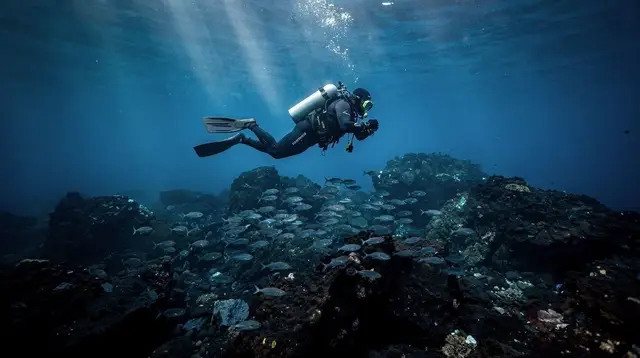
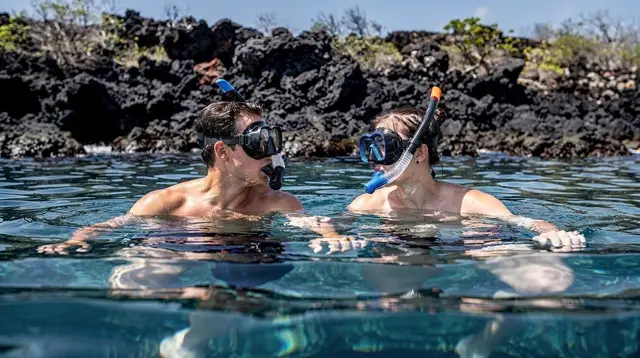
São Miguel Water Temperature: Diving and Snorkeling by Season
How warm is the water around São Miguel?
The Atlantic around São Miguel runs roughly 17-18°C in winter and 22-24°C at its warmest in late summer. It never reaches Caribbean temperatures, the beaches are volcanic black sand, and most people wear at least a shorty wetsuit outside July and August.
Reading the sea before you pack a wetsuit
The question that lands in most inboxes before a São Miguel trip is a simple one: how cold is the water actually going to be? The honest answer is that it moves with the seasons, in a fairly narrow band, and it never gets tropical. Across the year the Atlantic around the island runs from roughly 17-18°C in the depths of winter up to about 22-24°C at its warmest stretch in late summer. That six-or-so-degree swing shapes almost every other decision about swimming, snorkeling and diving here, from what you wear to how long you comfortably stay in.
This page is deliberately general. It is not about one bay or one dive site — for that, see the separate guides to specific spots below — it is about what the sea itself is doing, month by month, and what that means for your skin, your wetsuit bag and your expectations. Treat it as the layer underneath every other water-based plan you make for São Miguel.
The seasonal range, month by month
Sea temperature lags behind air temperature by a matter of weeks, because water heats and cools more slowly than land or air. That lag is worth remembering: the sea is often at its coldest not in the depths of winter but in late winter and early spring, and at its warmest not at the peak of summer heat but a little after it.
| Period | Typical sea temperature | What it feels like |
|---|---|---|
| January-March | ~17-18°C | Cold; a full wetsuit is the comfortable choice |
| April-June | ~18-20°C | Cool; a wetsuit is still standard for most people |
| July-August | ~21-23°C | Warm enough for many to go without, or use a thin layer |
| September | ~22-24°C | Usually the warmest window of the year |
| October-November | ~19-21°C | Cooling quickly; wetsuits back in regular use |
| December | ~17-19°C | Cold again, closer to the winter baseline |
These are broad, useful ranges rather than a forecast for a specific day. Wind, swell direction and a run of unusually warm or cold weather can nudge the actual number up or down. Nobody on the island will quote you a single fixed figure and mean it precisely — think in bands, not decimals.
Why São Miguel is not the Caribbean
It is worth saying plainly, because the comparison comes up often: this is not a tropical destination for swimming, and treating it as one leads to disappointment. The Azores sit in the open North Atlantic, roughly 1,400 km from mainland Portugal, and the ocean around them behaves like the Atlantic does at this latitude — cooler, more changeable, and shaped by swell rather than by a settled calm.
Two things follow from that. First, the water stays noticeably cooler year-round than a Caribbean or Mediterranean sea in high summer; even São Miguel’s warmest month sits well below what many tropical destinations offer as a baseline. Second, the beaches themselves look different: this is volcanic ground, so the sand is black or dark grey rather than the pale coral sand of a tropical coast.
Neither of these is a flaw in the destination — they are simply what an Atlantic volcanic island is — but they are worth knowing before you arrive expecting bath-warm turquoise water. For more on this contrast, see the companion piece on why São Miguel is not the whole Caribbean picture people sometimes expect.
What to wear, by season
Because the range runs from cool to moderately warm rather than cold to hot, wetsuit choice here is a spectrum rather than an on/off decision.
- Winter and early spring (roughly December-April): a full wetsuit, ideally with some thickness, is the standard choice for anyone spending real time in the water. Short dips are fine without one for the brave, but comfort drops fast after a few minutes.
- Late spring and early summer (May-June): a full wetsuit is still normal, though a thinner one is often enough as the month goes on.
- Peak summer (July-early September): this is when a shorty or even swimwear alone becomes realistic for many people, particularly for snorkeling rather than a long, still dive. Longer or deeper time in the water still favours some coverage.
- Autumn (October-November): the water is still carrying summer’s warmth early on, cooling steadily as the season goes; a full wetsuit becomes the sensible default again by late autumn.
Operators running scuba and snorkel trips typically supply wetsuits as part of the package, sized to the group, so this is rarely something you need to solve yourself — it mainly affects how you personally feel about a first-time dip, and whether you rent gear ahead of a self-guided outing.
Diving conditions beyond temperature
Water temperature is only one part of the picture for anyone considering a dive here. Two other factors matter as much, if not more, for how a day in the water actually feels.
Swell and exposure. São Miguel is an open-Atlantic island with no barrier reef and no lagoon to flatten the sea. Conditions on any given day depend heavily on which coast you are on and what the swell is doing — a sheltered south-coast bay can be calm while the north coast is churning, and the reverse can be true after a wind shift. Boat-based diving and snorkeling trips are planned around this, and cancellations or rerouted departures happen; see the general note on how weather and swell affect boat trips around the island for the wider pattern.
No fixed visibility promise. It is tempting to want a single number for underwater visibility, the way people quote one for water temperature. That figure genuinely varies too much — by season, by recent weather, by site, by the day’s swell — to state responsibly as a fixed fact, and this page deliberately does not attempt to. Ask your operator on the day; they will tell you honestly what conditions have been like that week, rather than what a brochure claims.
What a guided dive or snorkel trip actually includes
For visitors without their own gear, a guided outing is the practical route into the water here, and it takes most of the seasonal-planning work off your hands. A typical trip supplies a wetsuit sized to you, mask and fins, a briefing on the day’s specific conditions, and a guide who already knows which spot is calmest given the wind on that particular morning.
For a first taste of scuba in a controlled, guided setting, Try Scuba Diving is built for people with no certification who still want to breathe underwater for the first time, wetsuit and all the gear included. For a fuller open-water outing around one of the island’s better-known formations, the scuba diving trip out to the Vila Franca do Campo islet pairs a boat crossing with a guided dive in a sheltered, semi-enclosed setting.
And for something that keeps you in the water without a tank at all, a coasteering outing along the volcanic coastline mixes swimming, scrambling and jumping in a wetsuit supplied on the day — a different way to feel the same Atlantic temperature range described above.
None of these outings depend on you owning or packing your own wetsuit. That said, if you plan to snorkel independently from a beach rather than book a guided trip, renting or bringing a shorty for anything outside high summer will make the difference between a five-minute dip and a proper hour in the water.
Swimming without diving gear
Not everyone reading this wants a tank on their back — plenty of visitors simply want to know whether a regular swim is comfortable, and when. The short version: from around late June through September, a swim without a wetsuit is genuinely pleasant for most people who are used to any temperate sea, especially with some movement to stay warm. Outside that window, a swim is still very doable, just shorter and brisker, and a growing number of visitors simply pack a thin wetsuit or rash guard for the shoulder seasons rather than treat it as a scuba-only accessory.
Because sea conditions and access differ from beach to beach, and because this page deliberately stays general, specific swimming spots are covered on their own pages rather than here — including the sheltered water inside the Vila Franca islet’s crater and the black-sand coast at Mosteiros, both of which behave a little differently from the open coast described above.
Combining the water with the rest of a day
Diving or snorkeling rarely fills an entire day here, and several operators build it into a longer outing that mixes the sea with something else the island does well. A day that pairs whale watching with lunch and water activities is a common way to combine a boat trip out onto the open Atlantic with time actually in it, without committing an entire itinerary to one activity. If surfing rather than diving is more your speed, the group surf lesson operates in the same seasonal water-temperature band described above, with wetsuits included as standard.
For the wider context of how the sea and the surf season move together across the year, the dedicated guide to São Miguel’s surf season and water temperature covers the swell side of the picture in more depth than this page does.
Planning around the season, not against it
The most useful mindset for São Miguel’s water is to plan with the season rather than fight it. Nobody needs to force a wetsuit-free January swim, and nobody needs to over-pack neoprene for a September trip. A quick look at the month-by-month guide to the island or the broader best-time-to-visit overview will tell you roughly where in the seasonal cycle your dates fall, and this page’s temperature bands can be read alongside either.
Visitors coming specifically for the cooler, quieter months should also read the honest note on São Miguel’s winter low season — the water is colder then, but thermal pools, caldeiras and museums all stay open regardless of sea temperature, so a chillier ocean is not a reason to skip the island outside summer.
Related coastal reading
A handful of other pages fill in the pieces this one deliberately leaves out: exact swimming spots, kayaking on open water versus caldera lakes, and how coasteering interacts with the same seasonal water temperatures described here. Start with the guide to safety differences between the open Atlantic and the caldera lakes for kayaking, or the harbour-side option at Caloura, a sheltered snorkeling and swimming spot on the south coast.
For a broader sense of the coastline itself, the destination pages for Vila Franca do Campo, Mosteiros and Caloura each cover their own stretch of shore, while the Whales and Sea itinerary strings several of these water-based days together into a single trip plan.
Sea temperature and diving on São Miguel: frequently asked questions
What is the sea temperature around São Miguel in summer?
From around July through September the Atlantic here typically sits at its warmest, roughly 22-24°C. That is comfortable for snorkeling in a rash guard and often fine for a swim without a wetsuit, though some people still prefer a thin layer for longer sessions.
Is São Miguel’s water warm enough to swim without a wetsuit?
In peak summer, yes, for many people. Outside that window, and for anyone who chills easily, a wetsuit is the more comfortable choice, since the sea rarely climbs much above the mid-20s even at its warmest.
How cold does the sea get in winter?
Winter sea temperatures around São Miguel typically sit near 17-18°C. That is swimmable for a short dip with a wetsuit but cold for extended time in the water without one.
Do I need a wetsuit to snorkel or dive around São Miguel?
Most operators provide one, and most visitors use it. A shorty or thin full wetsuit is normal for spring, autumn and winter; even in summer many people choose a light wetsuit for comfort during a longer boat dive or snorkel outing.
Is São Miguel like the Caribbean for swimming?
No. This is the open North Atlantic around a volcanic island. The water is cooler year-round than a tropical sea, the beaches are black sand rather than white, and conditions depend on swell and weather rather than a settled tropical climate.
Which months have the warmest water for diving?
Sea temperature tends to follow the air temperature with a lag, so the warmest water is usually found from around August into September, after the summer sun has had the longest time to warm the upper ocean layer.
Does the water temperature vary around different parts of the island?
Yes, somewhat. Sheltered bays and harbours on the south coast can feel a touch warmer and calmer than the open, wind-exposed north coast, though the underlying seasonal range is the same all around São Miguel.
Diving & Snorkelling on GetYourGuide
Verified deep-linked GetYourGuide tours. Book through these links and we earn a small commission at no cost to you.
GetYourGuide does not provide a product photo for this activity — the image shows the meeting point, photographed by us.