Cozido das Furnas: How It's Cooked and Booked
How is cozido das Furnas actually cooked?
Sealed pots of meat and vegetables are lowered into a hole dug in the hot ground beside the Lagoa das Furnas and left to cook for 5 to 7 hours on volcanic heat alone, with no fire or coals. They go in mid-morning and come out around midday. Visitors don't dig or tend a hole themselves; a restaurant in Furnas takes the order, owns the site, and manages the whole cycle.
A Hole in the Ground, Not a Barbecue
Cozido das Furnas is often described to visitors as an underground barbecue, which gets the location right and almost everything else wrong. There is no barbecue, no grill, no fire and no coals anywhere in the process. What actually happens beside the Lagoa das Furnas is closer to a very slow, very literal form of geothermal cooking: sealed pots go down into a hole dug into ground that is naturally hot enough to cook meat, and they come back up hours later, fully cooked, without anyone having lit anything.
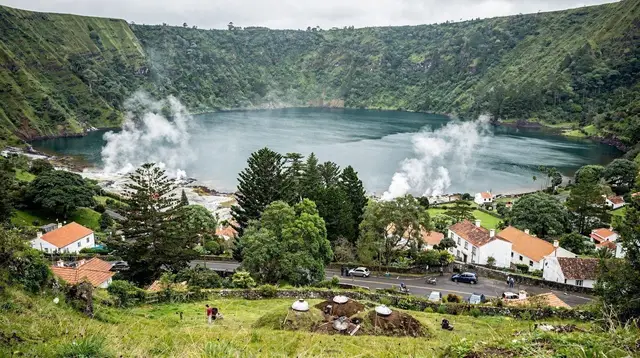
That distinction matters for a first-time visitor for a practical reason as much as an accurate one. If you arrive expecting to see flames, smoke from burning wood, or someone tending a fire pit, you’ll be looking for something that isn’t there. What you’ll actually find is a quiet, steaming stretch of ground on the lakeshore, a scatter of marked wooden covers over individual holes, and, at the right hour, staff from local restaurants lifting pots out with hooks and ropes. It is unglamorous, slightly eerie, and entirely real — the same volcanic heat that fills Furnas with fumaroles and mineral springs is doing the cooking.
Why the Ground Is Hot Enough to Cook Food
Furnas sits inside an active volcanic caldera, one of several on São Miguel, and its floor is threaded with shallow magma and superheated groundwater. That’s the same system that produces the village’s bubbling caldeiras, its sulphur smell, and the mineral-rich pools at Poça da Dona Beija and inside Terra Nostra Park. Along the shore of the Lagoa das Furnas, the ground itself runs hot enough, consistently enough, that a sealed pot lowered into it will slow-cook for hours without any external heat source at all.
This is not a novelty rigged up for tourists. Furnas families have cooked cozido this way for generations, using the caldeira field the way other communities might use a communal oven. What has changed is who does the digging: the shoreline holes are no longer casual household plots but managed cooking sites, each one licensed to and maintained by a specific restaurant in the village. For a broader look at how the fumaroles, mud pools and steam vents around the lake behave and where it’s safe to walk, see the walking guide to Furnas’ caldeiras and fumaroles.
How the Pot Actually Gets Cooked
The process runs on a fixed daily rhythm, built around getting lunch on the table by early afternoon.
- Early morning — the pot is packed. Restaurants prepare their pots the same day: layers of meat, sausage and vegetables, seasoned and packed into large metal containers, then sealed tightly enough to keep both steam in and groundwater out.
- Mid-morning — into the ground. Each restaurant’s team carries its pots to its assigned hole on the shore of the Lagoa das Furnas, lowers them in with ropes or a simple hoist, and covers the hole. From this point, nobody touches the pot again until it comes out.
- Five to seven hours — no fire, ever. The pot cooks entirely on ambient ground heat. There’s no way to add fuel, adjust a flame or check progress partway through; the timing is judged from experience, not from watching anything cook.
- Around midday — lifted out. Staff return, uncover the hole and haul the pot back out, now full of a stew that’s had hours to render fat, soften vegetables and let every layer’s flavour work into the rest.
- Straight to the table. The pot goes directly from the hole to the restaurant’s kitchen and out to whoever booked it, usually within the same hour it surfaces.
The whole cycle — packing, burying, waiting, lifting, serving — takes most of a working morning, which is why cozido is built around a fixed lunchtime service rather than something ordered on a whim.
What’s in the Pot
Recipes differ slightly from one restaurant to the next, but the core structure of a cozido das Furnas is consistent: it’s a layered boiled dinner built for slow, even cooking rather than for browning or caramelising, since there’s no direct heat to produce either.
| Layer | Typical contents |
|---|---|
| Meats | Beef, pork, chicken, and blood sausage (morcela) |
| Vegetables | Cabbage, carrots, potatoes, sweet potato |
| Seasoning | Salt, garlic, and regional spices, added before sealing |
| Cooking medium | None added — steam and heat come from the ground itself |
| Cooking time | 5 to 7 hours, no monitoring or adjustment possible mid-cook |
Because everything cooks together in one sealed container for so long, the result is soft rather than seared: fall-apart meat, vegetables that have absorbed the broth, and a smoky, mineral undertone that comes from the ground rather than from any wood or charcoal. It’s a genuinely different cooking method from a barbecue or a slow-roasted stew, not just a different setting for the same one.
Why the Hole Is Never Yours
The single most common misunderstanding about cozido das Furnas is the idea that a visitor might dig in and cook their own pot on the shore of the lake. The shoreline holes are not a public amenity. Each one is licensed to, dug by, and reserved for a specific restaurant in the village, which uses it daily for its own paying customers. There’s no walk-up booth where you rent a hole for an afternoon, and digging into unmarked ground near an active geothermal field is also, simply, dangerous.
What you book instead is the restaurant, not the site. A Furnas restaurant takes your order — sometimes days ahead in busy periods — assigns your pot a place in its hole for that morning, and serves the finished cozido at its own tables once it’s lifted out. This guide focuses on how that underground cooking actually works; for guidance on choosing where to eat and how far ahead to book a table, especially in the busier months, see where to eat near Furnas and booking ahead rather than treating the cooking site itself as a booking desk.
Watching, Eating, or Cooking: Three Different Experiences
There are three distinct ways to encounter cozido das Furnas, and it’s worth being clear about which one you’re signing up for before you book anything.
Watching from the shore. The steaming ground and caldeiras beside the Lagoa das Furnas are part of the public landscape around the lake, and anyone can walk past and see the covered holes, the rising steam, and — around midday, if the timing lines up — staff lifting pots out. This costs nothing and needs no booking, but it’s a passing glimpse, not a guided moment, and you won’t necessarily see any single restaurant’s pot come out on cue.
Eating the finished stew. This is the most common way visitors experience cozido: booking a table at a Furnas restaurant, where the cozido arrives as a set dish once it’s been carried up from the hole. It requires no cooking knowledge or hands-on time, just a reservation.
Joining a guided cooking experience. Several operators in Furnas run structured sessions that let guests take part in preparing a pot — helping layer the ingredients, understanding how the sealing and burial work, sometimes walking the caldeira field with a guide before or after — followed by tasting the results. This is the closest a visitor gets to being part of the actual process rather than just eating its outcome.
For that hands-on route, the Octant Furnas Hotel cozido cooking class walks guests through preparing a pot before it goes into the ground. A more involved option, the premium stew workshop that pairs the cooking process with lunch and a visit to a local dairy farm, extends the morning into a fuller look at where the ingredients come from.
And for guests who want to physically help layer and seal a pot themselves, the hands-on cozido experience combined with a thermal circuit pairs the cooking with time in Furnas’ hot pools afterwards.
A Morning in Furnas Built Around the Pot
Because the cooking cycle is fixed — pots down mid-morning, up around midday — most visitors build the rest of a Furnas morning around it rather than the other way round. A typical sequence looks like a walk along the Lagoa das Furnas shoreline to see the caldeira field while the pots are still underground, then time in the village itself — the Terra Nostra thermal pool or the smaller, less crowded Poça da Dona Beija — before circling back for lunch once the pots have surfaced. Because thermal water in Furnas stains fabric, pack an old swimsuit if a pool stop is part of the plan.
If you’re building a longer loop of the caldera and the village rather than a single lunch stop, the Furnas day trip covering cozido and the thermal park lays out a fuller sequence, and a guided half-day tour of Furnas bundles transport, the caldeira walk and a cozido lunch into one outing, which is useful if you don’t have a rental car or would rather not plan the timing yourself.
What Not to Expect
A few expectations trip visitors up consistently, and it’s worth naming them directly.
- No fire, no coals, no visible flame at any point. If a description, photo caption or tour listing mentions embers or a barbecue, it’s using loose language rather than describing the real method.
- No prices or reservations at the hole itself. The cooking site isn’t a business you contact directly; every booking runs through a restaurant.
- No walk-in cooking for visitors. You can watch, you can eat, and on a guided experience you can help prepare a pot — but you won’t be handed your own hole to manage.
- No guaranteed viewing window. Restaurants don’t publish a public schedule for lifting pots, so timing a visit to see one come out is a matter of general midday timing, not a fixed showtime.
- It’s inland, not a beach stop. Furnas sits in a caldera in the middle of the island; its own coastline is over the ridge at Ribeira Quente, a separate stop rather than part of the cozido visit itself.
Beyond the Pot: Furnas’ Wider Food Culture
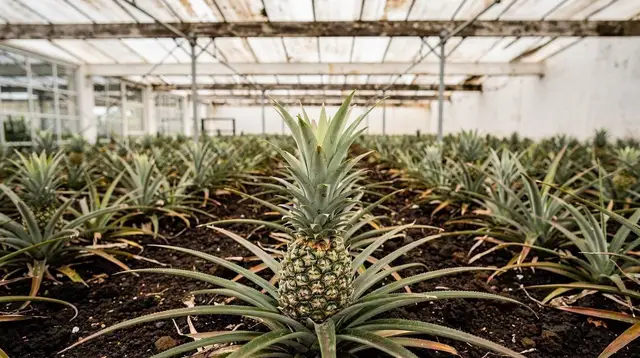
Cozido is the dish most visitors come to Furnas for, but the caldera’s volcanic ground shapes more of the local table than just this one stew. The same geothermal heat that cooks cozido also underlies the region’s other slow, mineral-inflected traditions — worth reading about together in tea and pineapple as local ingredients, which covers the tea plantations and greenhouse pineapples grown elsewhere on the island but served alongside dishes like this one.
For a sense of the wider Azorean table beyond Furnas, lapas and Azorean seafood covers the coastal side of the island’s food, and the Mercado da Graça food market guide is a useful stop in Ponta Delgada for seeing the raw ingredients — including the beef, pork and vegetables that end up in a cozido pot — outside a restaurant setting.
Booking Notes
Cozido das Furnas is not something to decide on the same morning, particularly from spring through early autumn when Furnas restaurants fill their daily allocation of pots well ahead. If a hands-on cooking session or a workshop-and-lunch format appeals more than simply eating a finished plate, book that specifically and in advance — spaces on guided sessions like the ones above are limited by how many pots a restaurant can physically fit into its hole on a given day, not by table capacity alone.
None of this requires choosing a specific establishment through this guide; it’s about understanding the mechanism so that whichever restaurant or workshop you book, you know what’s actually happening underground while you wait for lunch.
Food & Gastronomy on GetYourGuide
Verified deep-linked GetYourGuide tours. Book through these links and we earn a small commission at no cost to you.
GetYourGuide does not provide a product photo for this activity — the image shows the meeting point, photographed by us.