Ponta da Ferraria: Paid Spa or Natural Sea Pools?
What's the difference between the Ponta da Ferraria spa and the sea pools?
They are two separate places. The natural sea pools sit at the foot of the lava flow, right in the ocean, and are only safe to enter around low tide, when the swell is calm. The paid spa sits above them on the same lava point, with its own built pools fed by hot spring water, and it operates on opening hours rather than the tide.
Ponta da Ferraria is one point of volcanic rock, but it holds two different places to get in the water, and travellers mix them up constantly. One is free, wild and ruled entirely by the tide. The other is built, paid and open on a schedule. Knowing which is which before you drive out to the western tip of São Miguel saves a wasted trip and, more importantly, keeps you out of water that can turn dangerous in minutes.
Two Soaks, One Lava Point
At the far western end of the island, past Mosteiros, the land narrows to a black lava flow that runs straight into the Atlantic. This is Ponta da Ferraria — literally the “iron point,” named for the mineral-stained rock rather than any building. A hot spring rises here, at the exact place where the lava meets the sea, and that single fact of geography is what created two separate ways to experience it.
Downhill, at sea level, the spring mixes with incoming waves in a series of natural rock pools. This is the free, open-air option: no walls, no roof, no gate. Uphill, set back from the water on the same point, a built spa has been developed around the same thermal source, with its own constructed pools, changing facilities and a paid entrance. Both draw on hot water rising from the same volcanic system. Beyond that, they are not the same place, and they do not behave the same way.
This page is about telling the two apart — not about working out the exact minute the tide turns, which belongs to a dedicated guide on tide times at Ponta da Ferraria.
The Sea Pools: Free, Wild, and Ruled by the Tide
The natural pools at Ponta da Ferraria sit directly in the intertidal zone, in the gap where the lava shelters a rough basin from the open ocean. Hot mineral water seeps up through the rock and blends with seawater, so the temperature swings depending on how much ocean is mixing in at that moment — warmer near the source, cooler where waves are washing through.
Access is free and unmanaged. There is no ticket booth, no lifeguard rota built around the pools, and no fixed hours — the water is simply there, on the shoreline, for anyone willing to climb down the volcanic rock. That freedom is also the catch. The same absence of infrastructure means there is nothing standing between a bather and the sea beyond a low natural rock lip, and that lip only holds back the ocean when the tide is out.
At low tide, the rocks that ring the pools break the swell before it reaches the bathers inside, and the pools settle into something close to a calm, warm bath with a wild backdrop. As the tide comes in, that shelter shrinks. Waves start crossing the rocks, the pools lose their calm edge, and what was a pleasant soak becomes a place where a wave can knock someone off their feet onto volcanic rock, or pull them toward open water. In any real swell, the pools should be left alone entirely, regardless of the state of the tide.
None of this means the sea pools are unsafe by design — thousands of visitors use them without incident every year. It means they are conditional. The condition is the tide, checked on the day, not assumed from a guidebook. Exact tide windows, and how to check them before setting out, are covered separately in the Ponta da Ferraria tide times guide and the broader guide to swimming the hot spring safely.
The Paid Spa: A Built Facility on the Same Lava Flow
A short walk up from the sea pools, on the same point of land, sits a paid spa built around the same hot spring source. Where the sea pools are open rock and open sky, the spa is infrastructure: constructed pools with defined edges, a reception and entrance fee, changing rooms, and set opening hours rather than a tide table.
Because the spa’s pools are built rather than carved by the sea, their water level and temperature stay far more consistent than the sea pools below. There is no tide to time and no swell to watch — the trade-off is that access depends on the spa being open and on paying to get in. This guide does not quote an entry price, because a figure printed here would go stale quickly; check current rates on arrival rather than relying on any number found online.
The spa suits a different kind of visit than the sea pools. It works on a schedule, so it fits neatly into a planned day rather than a tide-dependent window. It is calmer and more predictable underfoot, which matters for anyone travelling with young children, older relatives, or simply a preference for not scrambling over wet volcanic rock. And it is a paid, managed space, which some travellers prefer and others come to Ponta da Ferraria specifically to avoid.
Choosing the spa over the sea pools is not a downgrade — it is a different kind of thermal soak on the same headland, built for people who want the hot spring experience without depending on the tide.
Sea Pools vs Paid Spa, Side by Side
| Natural sea pools | Paid spa | |
|---|---|---|
| Cost | Free | Paid entry (check current rate on site) |
| Access | Open shoreline, no gate | Managed entrance, opening hours |
| When usable | Around low tide only | During opening hours |
| Water | Mixes with the sea, temperature varies | Built pools, steadier temperature |
| Setting | Volcanic rock, open ocean | Constructed pools on the lava flow above |
| Best suited to | Confident swimmers, calm-sea days | Families, fixed schedules, predictable comfort |
| Facilities | None | Changing rooms, staffed entrance |
Which One Should You Choose
For most first-time visitors, the honest answer is: see both, on the same stop, if the tide cooperates. Walk down to look at the sea pools even if you plan to pay for the spa — the setting, with hot water rising straight into the Atlantic, is worth seeing regardless of where you end up bathing. If the tide is low and the sea is calm, the free pools are a genuinely rare experience: a hot spring meeting open ocean, not a built-up spa. If the tide is against you, wrong time of day, or the swell is up, the paid spa is the fallback that still delivers a hot mineral soak on the same headland, without depending on conditions outside for the day.
Families with small children, or anyone uneasy on wet volcanic rock, generally do better in the spa’s built pools than in the sea pools, tide or no tide. Confident swimmers travelling without children, visiting on a calm low-tide morning, tend to rate the free pools as the highlight of their whole trip to the island.
Either way, plan around the tide first and the spa’s opening hours second — the sea does not negotiate, and a wasted drive out to the western tip is the most common mistake here. A wider look at how the island’s thermal spots compare — Ponta da Ferraria against Terra Nostra, Poça da Dona Beija and Caldeira Velha — sits in the comparison guide to São Miguel’s thermal pools and the ranked guide to the best thermal pools.
Getting There and What Sits Nearby
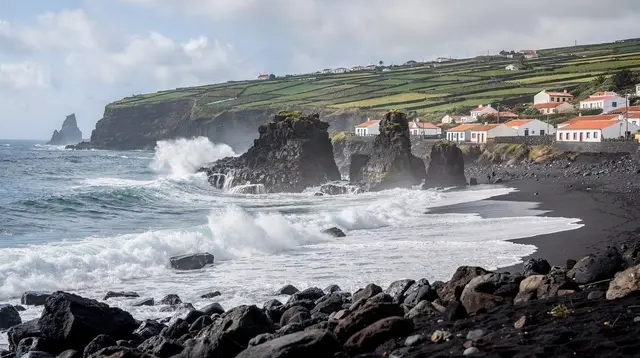
Ponta da Ferraria is on the far western tip of the island, past Mosteiros and its black-sand beach and sea stacks, on the road that loops around from Sete Cidades. A rental car is the practical way in — there is no dedicated shuttle to the point, and public buses are built around school and work timetables, not sightseeing. The last stretch of road is narrow, with limited parking near the shoreline, so arriving outside the busiest midday hours makes finding a space considerably easier.
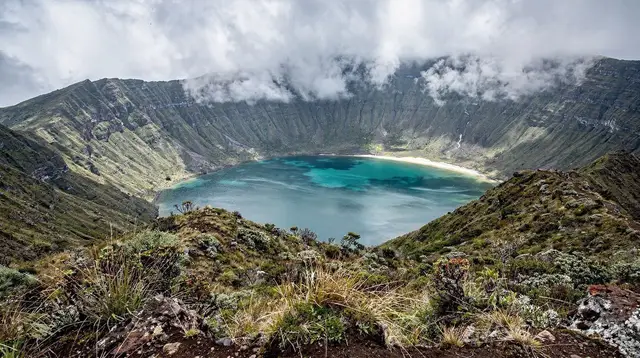
Most visitors combine Ponta da Ferraria with the rest of the western loop in a single day: Sete Cidades’ caldera lakes, Mosteiros’ coastline, and the hot spring point, roughly in that order coming from Ponta Delgada. A guided route through this side of the island, with Fenais da Luz and Sete Cidades included, is covered by a guided day trip through Sete Cidades and Fenais da Luz, which passes through this part of the island without needing to plan the drive yourself.
Travellers building a longer day that also takes in the crater lake at Lagoa do Fogo can look at a full-day tour covering Sete Cidades and Lagoa do Fogo, while those with less time can join a half-day trip focused on the Sete Cidades caldera.
Cruise passengers with a single day ashore, who want the western sights condensed into a fixed window back to the ship, are the intended audience for a shore excursion built around São Miguel’s essentials. None of these itineraries can guarantee low tide at Ponta da Ferraria on the day you visit — that is simply outside anyone’s control — but they do reliably get you to the headland, from where the choice between the free sea pools and the paid spa is yours to make on arrival.
Practical Notes Before You Go
Bring a swimsuit you don’t mind staining — the same iron-rich mineral water that colours the island’s other thermal pools runs through this spring too, and it can leave a permanent tint, a point covered in more detail for Terra Nostra’s pool but true of Ponta da Ferraria’s water as well. Footwear that can get wet and grip on volcanic rock is worth more here than at almost any other thermal site on the island, since the sea pools sit on bare rock rather than a built pool floor. A towel, a dry bag for valuables, and a change of clothes for the drive back cover the rest.
Check the sea and the tide on the day, not from memory of a past visit or a fixed schedule found online — conditions at Ponta da Ferraria change with the season and with the swell running in off the Atlantic, and the dedicated tide times guide is the place to work that out before setting off. If the sea pools look rough on arrival, treat that as the final word, not a suggestion — the paid spa above is there precisely for days like that.
Weather on this part of the island can differ from what’s happening in Ponta Delgada or Furnas at the same hour, so a clear morning elsewhere is no guarantee of calm seas here; the island’s general weather guide explains why conditions vary so much place to place. For a broader sense of what does and doesn’t carry real risk on São Miguel, the guide to safety and hazards is worth a read before any coastal stop, not just this one.
Anyone building out a full western-island day, or working out what else to pack for a trip built around thermal water, can start from the first-time guide to São Miguel and the note on what to pack for iron-rich thermal water.
Ponta da Ferraria: Spa or Sea Pools — Your Questions Answered
Are the Ponta da Ferraria sea pools free?
Yes. The natural pools where the hot spring meets the ocean are free and open to anyone, with no ticket and no fixed hours — the only limit is the tide.
Do I need to pay to feel the hot spring at Ponta da Ferraria?
No. The spring itself surfaces in the free sea pools at the base of the lava flow. The paid spa above it is a separate, built facility drawing on the same source, and it is optional rather than the only way to feel the hot water.
Can I swim in the sea pools at high tide?
Not safely. High tide and any real swell let waves cross the sheltering rocks, and the pools stop being calm. Low tide is the only reliable window, and this page deliberately leaves exact timing to the dedicated tide guide rather than printing hours that would go stale.
Is the paid spa warmer or cleaner than the sea pools?
The spa’s built pools hold a steadier temperature and a calmer surface, since they aren’t mixing with incoming waves the way the sea pools do. Which feels better is personal preference, not a fixed advantage either way.
Can I visit the sea pools without paying for the spa?
Yes. The sea pools sit on open shoreline below the spa, reached and used independently of the spa’s paid entrance.
Is Ponta da Ferraria good for children?
The paid spa, with its built and steadier pools, generally suits families better than the open sea pools, where wet volcanic rock and shifting tides call for closer supervision of young children.
How far is Ponta da Ferraria from Ponta Delgada?
It sits on the island’s western tip, past Mosteiros, roughly an hour’s drive from Ponta Delgada along the western roads.
What should I bring to Ponta da Ferraria?
An old swimsuit that can take a mineral stain, footwear with grip for wet volcanic rock, a towel and a dry bag — the same basics that suit any of the island’s thermal pools, plus a plan for checking the tide before you commit to the sea pools over the spa.
Comparison on GetYourGuide
Verified deep-linked GetYourGuide tours. Book through these links and we earn a small commission at no cost to you.
GetYourGuide does not provide a product photo for this activity — the image shows the meeting point, photographed by us.