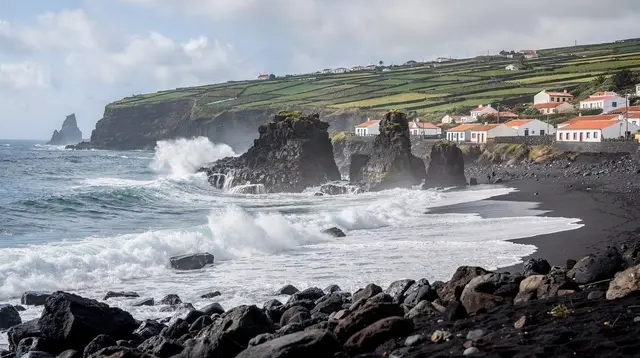
At the far western tip of São Miguel, a lava flow runs straight into the Atlantic, and a hot spring rises through the rock at the point where the two meet. That combination — volcanic heat, open ocean, and a shoreline of black basalt — is what draws people out to Ponta da Ferraria. It is one of the few places on the island where you can float in genuinely warm water while the sea itself does the work of a swimming pool wall, and it is one of the few places where that same sea can also make swimming unwise within a matter of hours. Every visit here is built around a single variable: the tide.
A hot spring with no walls
Ponta da Ferraria sits past Mosteiros, at the western tip of the same stretch of coast that runs down from Sete Cidades, though this page is only about the point itself, not those two neighbouring areas. The spring emerges through fissures in a black lava platform, and the water that collects in the natural rock pools here runs noticeably warmer than the surrounding sea — often into the low-to-mid 30s Celsius close to the source, cooling as it mixes with incoming waves further out. There is no tiled edge, no lifeguard chair, and no fixed boundary: the pools are shaped by the lava itself, and their size and depth change with every tide cycle.
That informality is the appeal, and it is also the reason this spot demands more attention than a normal beach. The guided trip that loops the western side of the island typically times a stop here around the tide rather than the clock, which is the same discipline any independent visitor needs to copy.
The one fact that governs the whole visit: the tide
This is the point to read carefully, because it is the most commonly misunderstood detail about Ponta da Ferraria. The natural sea pools are swimmable only around low tide, for a window of roughly two hours either side of it. During that window, the outgoing sea leaves the rock pools calm enough to sit in, and the warm spring water pools rather than being immediately overrun.
Outside that window, the situation reverses. As the tide rises, waves start breaking directly over the rocks that shelter the pools, and at high tide or in any meaningful swell, the same spot that was a warm bath two hours earlier becomes a stretch of exposed, wave-swept lava with no safe entry point. People have been swept off these rocks by waves they underestimated. There is no lifeguard on duty and no barrier stopping anyone from walking out at the wrong moment — the only real safeguard is knowing the tide table and respecting it.
Practically, that means:
- Check the tide time for the day before leaving Ponta Delgada, not on arrival.
- Treat “around low tide” as a two-hour window, not a single moment — arriving too early or leaving too late still carries risk as the water starts to move.
- Read the sea on the day. A big Atlantic swell can make even a technically low-tide window unsafe; local advice and posted conditions override the tide table.
- Never treat this as a “come back later” inconvenience — plan the whole west-coast day around the tide, the way you would plan around an opening time.
For the exact numbers on a given date, the dedicated guide to tide times at Ponta da Ferraria walks through how to read the table and what margin to build in; the hot-spring swimming guide covers footing, entry points and what the rocks are like underfoot.
Two different things, easily confused: the sea pools and the paid spa
Ponta da Ferraria is often described as one attraction, but it is really two, sitting one above the other, and mixing them up is the second most common mistake visitors make.
| Natural sea pools | Paid thermal spa | |
|---|---|---|
| Location | At sea level, where the spring meets the ocean | Set back and above the sea pools |
| Cost | Free | Entry fee applies |
| Access | Only around low tide, weather-dependent | Fixed opening hours, tide-independent |
| Water | Mixed spring and seawater, temperature varies with tide | Controlled thermal pools, consistent temperature |
| Facilities | None — bare lava rock | Changing rooms, showers, seating |
| Character | Wild, informal, unpredictable | Managed, calmer, more comfortable |
The free sea pools are the reason most people come — genuinely warm, genuinely oceanfront, genuinely nowhere else on the island. But they only work within the tide window described above. The paid spa above the site solves that problem by decoupling the experience from the sea: it holds its own thermal water in a built structure, on a fixed schedule, whatever the tide or swell is doing outside. It is a legitimate and often more comfortable alternative, especially for anyone visiting outside the low-tide window or travelling with people who would rather not clamber over wet lava rock.
Neither option is “the real one” and the other a fallback — they are two different experiences that happen to share a name and a hillside. The guide comparing the spa to the sea pools goes into opening hours, pricing brackets and which one suits which kind of visit; the wider comparison of São Miguel’s thermal pools sets Ponta da Ferraria alongside Terra Nostra and Poça da Dona Beija for anyone deciding where to spend a thermal-water afternoon.
Getting there
Ponta da Ferraria sits at the western edge of the island, past Mosteiros, on a minor road that dead-ends at the coast. A rental car is the realistic way to reach it — this is well outside any practical bus timetable, and there is no scheduled public transport that gets you to the point itself. From Ponta Delgada, allow 45 to 55 minutes of driving, longer if you stop at viewpoints along the way; the road narrows toward the end, and parking near the site is informal and can fill up around a good low tide on a fine day. Notes on the wider road network and what to expect from Azorean driving are in the car rental guide.
Because the site is unstaffed and exposed, bring what you need with you: a towel, footwear you don’t mind getting wet on sharp lava, and a swimsuit you’re prepared to see stained slightly by mineral water — a milder version of the staining effect associated with Terra Nostra’s iron-rich pool, though less pronounced here. There is no shop and no food on site.
Combining Ponta da Ferraria with the rest of the west
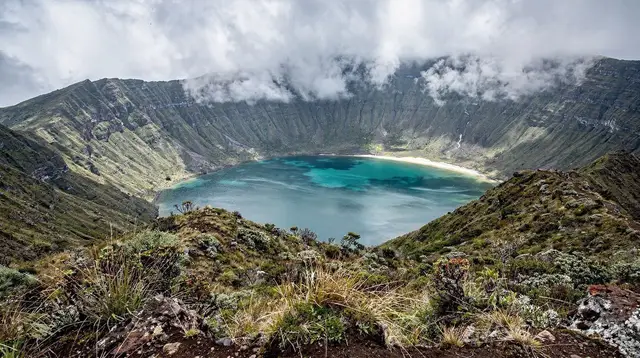
Most visitors treat Ponta da Ferraria as one stop on a wider western-side day, built around Sete Cidades’ caldera lakes and the black-sand coast at Mosteiros. Because none of those stops are tide-dependent in the way Ponta da Ferraria is, the practical order is usually to lock in the tide window first and build the rest of the day’s sightseeing around it, rather than the other way round. The Mosteiros and Ponta da Ferraria day trip guide lays out one workable sequence, and the island-wide thermal springs itinerary places this stop alongside the other hot-water sites on São Miguel for anyone building a longer thermal-focused route.
Jeep and buggy tours cover this stretch of coast regularly and can take the tide-timing problem off your hands, since operators plan their route around it. The full-day jeep circuit that includes the western coastline and the self-drive buggy route around Ponta Delgada and the west both pass through this area, and a private option exists for anyone who wants the itinerary built entirely around their own low-tide window rather than a fixed group schedule.
For general orientation on where hot-spring sites sit across the island, the category page for hot springs and thermal pools and the Ponta da Ferraria activities page both index the relevant guides and tours in one place.
Timing your visit beyond the tide
While the tide dictates whether swimming is possible at all, time of day and season shape how comfortable the visit feels once the tide is in your favour. Early morning tends to bring the calmest wind and the fewest other visitors sharing the same pools, which matters given how informal and unsupervised the site is — there is no queue system, and a low tide on a fine weekend can draw a crowd to a spot with nowhere to spread out. Late afternoon light along this stretch of black lava coast is often the most dramatic for photography, though it means checking the tide table against the sunset rather than the sunrise.
The guide to São Miguel’s best time to visit and the dedicated sunset viewpoints guide both help frame a west-coast day beyond the swim window alone, and the general itinerary-planning guide is useful for anyone slotting this stop into a longer trip rather than treating it as a dedicated outing on its own.
Anyone weighing a whole day here against folding it into a wider loop can also weigh it against the island’s other geothermal sites in the thermal pools comparison guide already linked above, or consider a private option — the tailored 4x4 tour that can be built entirely around a specific low-tide window — for travellers who would rather not have a fixed group departure time dictate when they arrive.
For photography, the light along this stretch of coast — lava rock, open Atlantic, few buildings — is part of the draw independent of the water; the west-coast viewpoints and hydrangea photo guide covers nearby vantage points for anyone extending the day beyond the spring itself.
What this stop is not
Ponta da Ferraria is not a resort pool and not a managed attraction with staff checking conditions on your behalf — the sea pools are wild, unsupervised, and only safe within the tide window described above. It is also not the same site as Sete Cidades’ caldera lakes or Mosteiros’ black-sand beach, both nearby but distinct destinations covered on their own pages, not here. And the free sea pools and the paid spa above them are not interchangeable — choosing between them, or timing a visit to the free option correctly, is the single most important planning decision this stop involves.
Ponta da Ferraria FAQ: Tides, Safety and the Spa
Is it safe to swim at Ponta da Ferraria at any time of day?
No. The sea pools are only safely swimmable within roughly two hours either side of low tide. At high tide or in any swell, waves cross the rocks and the pools become dangerous — always check the tide table before you drive out, and be ready to skip swimming if the sea looks rough on the day.
What is the difference between the free pools and the paid spa?
The free natural sea pools sit at sea level, where the hot spring meets the ocean, and are only accessible around low tide. The paid thermal spa sits above them, on a fixed schedule with changing rooms and showers, and works whatever the tide is doing outside. They are two separate facilities on the same site, not one attraction with two names.
How do I find out the tide time before I go?
Check a local tide table for the day you plan to visit and aim to arrive within about two hours of low tide. The detailed tide-timing guide explains how to read the window correctly and what margin to allow for.
How warm is the water?
Close to where the spring surfaces, the water runs noticeably warmer than the surrounding Atlantic, often into the low-to-mid 30s Celsius, though it varies as spring water mixes with incoming seawater through the tide cycle. It is not a fixed, thermostat-controlled temperature the way the paid spa’s pools are.
Can I visit Ponta da Ferraria without a car?
It’s difficult. There is no practical public transport route to the point itself, and the site is far enough from Ponta Delgada that a rental car or an organised tour is the realistic option for most visitors.
Will swimming here stain my swimsuit?
The mineral content is milder than at Terra Nostra’s iron-rich pool, but bringing a swimsuit you don’t mind getting slightly discoloured is still sensible, along with footwear for the sharp lava rock underfoot.
Is Ponta da Ferraria suitable for children?
Only within the safe tide window, and with close supervision — the pools sit directly on an exposed lava shoreline with no barriers. Families who want a calmer, more controlled thermal-water experience often choose the paid spa above the site instead.
Can I combine Ponta da Ferraria with Sete Cidades or Mosteiros in one day?
Yes, and most visitors do — the three sit along the same western stretch of the island. The practical approach is to fix the day around the Ponta da Ferraria tide window first, then route the rest of the sightseeing around it, as covered in the combined day-trip guide.
Is Ponta da Ferraria included on organised tours?
Yes — several west-coast itineraries out of Ponta Delgada build in a stop here, timed around the tide rather than a fixed schedule, since operators know the pools are only usable within that window. A private tour offers more flexibility than a fixed-departure group tour if your travel dates make the low tide fall very early or very late in the day.
Does the weather affect whether I can swim, separately from the tide?
Yes. Even during a low-tide window, a large Atlantic swell or strong onshore wind can make the pools unsafe regardless of what the tide table says — local sea conditions on the day always take priority over the printed tide time.