Mosteiros and Ponta da Ferraria: A West Coast Day Trip
Can Mosteiros and Ponta da Ferraria be visited in the same day?
Yes — the two sit only a short drive apart on São Miguel's west coast and combine naturally into a half-day loop from Ponta Delgada. The one variable to plan around is the tide: Ponta da Ferraria's sea-level hot spring is only safe to enter around low tide, so check the tide table before you fix a schedule.
Mosteiros and Ponta da Ferraria sit at the far western edge of São Miguel, past the Sete Cidades caldera, where the island narrows to a strip of cliff, black beach and lava flow running into the Atlantic. They are close enough together to link into one loop, and different enough in character that neither feels like a rerun of the other: Mosteiros is a village and a beach, Ponta da Ferraria is a geological oddity, a hot spring that surfaces not on land but in the sea itself.
This guide covers the two of them as a pair — how to string them into a single day, what each place actually offers, and the one detail that decides whether the day works or not: the tide.
Two Faces of the West Coast in One Day
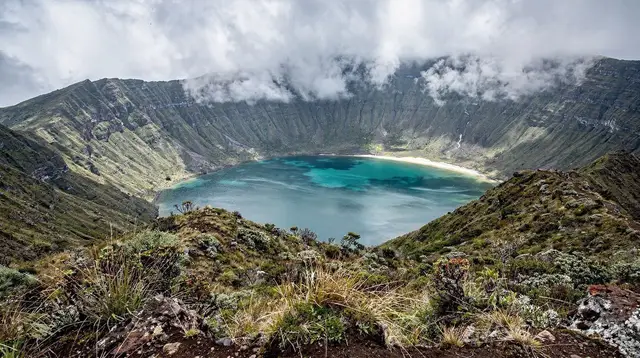
The west of São Miguel is the part of the island where the volcano meets the ocean most visibly. Mosteiros’ sea stacks stand just offshore like broken teeth, remnants of a coastline the Atlantic has been chewing on for millennia. A few kilometres further, at Ponta da Ferraria, a lava flow runs straight into the water, and underground heat leaks out exactly where the waves break — a hot spring with no walls, no roof, and no fixed opening hours, because the sea itself decides when it is usable.
Neither of these places is Sete Cidades, and this guide deliberately leaves that caldera and its twin lakes out of the plan. Sete Cidades is close by on the map and easy to fold into the same drive, but it is large enough, and different enough in what it demands of a visit, that it works better as its own half-day. If you want to add it, the dedicated Sete Cidades half-day guide covers that route on its own terms; trying to do all three properly in one day usually means rushing at least one of them.
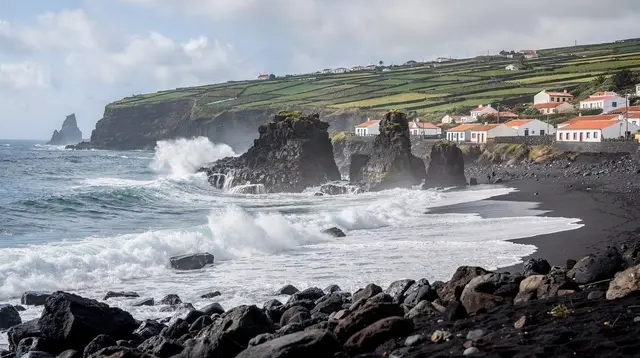
What Mosteiros and Ponta da Ferraria do share is a coastline that looks nothing like a Caribbean brochure. The beaches here are volcanic — grey to black sand and pebble, not white — and the water is Atlantic, not tropical, cool even in August. That is not a flaw in the itinerary; it is the actual character of this island, and pages that promise turquoise shallows and soft sand are describing somewhere else.
Getting There and Planning the Route
Both stops sit on the western arm of the island, reached from Ponta Delgada by driving out past Sete Cidades or by the lower coastal road that skirts the caldera’s outer slope. Expect roughly 35 to 45 minutes from Ponta Delgada to Mosteiros, and a further 10 minutes or so on to Ponta da Ferraria, which sits just beyond the village. Roads on this side of the island are narrow, winding through pasture and hydrangea hedges rather than running straight, so the driving time matters more than the distance on a map.
A rental car remains the practical way to link the two stops on your own schedule — see the general guide to renting a car on São Miguel and the notes on what driving on the island is actually like if this is your first visit. Buses run the west coast route, but on timetables built for residents’ school and work days, not for a visitor trying to catch a low tide window at a specific hour.
Because the hot spring at Ponta da Ferraria is only usable around low tide, the smart way to build this day is to check the tide table first and work backwards from it, rather than deciding on a start time and hoping the tide cooperates. A typical shape for the day:
| Time slot | Stop | What you’re doing |
|---|---|---|
| Morning | Mosteiros village and viewpoints | Sea stacks, black-sand beach, coffee in the village |
| Around low tide | Ponta da Ferraria | Bathing in the sea-level hot spring pools |
| Either side of the above | Mosteiros beach | Walking, photographs, a swim in the ordinary sea if you like it cool |
If low tide falls at an inconvenient hour — very early morning or after dark — it is entirely reasonable to skip the spring on a given day rather than force a swim at an unsafe state of tide. There is always another low tide roughly twelve hours later.
Mosteiros: Black Sand, Sea Stacks and a Village at the Edge
Mosteiros is a small fishing and farming village strung along the coast where the caldera’s outer slopes finally run down to sea level. Its defining feature is visible from the moment you arrive: a run of sea stacks standing just offshore, dark basalt columns left behind as the softer surrounding rock eroded away.
At sunset, with the light low and orange, this is one of the more photographed stretches of coastline on the island — it earns a mention in the island-wide guide to São Miguel’s best sunset viewpoints — and the a guided photo session that times the light along this coast is built around exactly this kind of scene.
The beach itself is black sand and dark pebble, backed by cliffs and reached by a short walk down from the village. It is not a manicured tourist beach — there are no rows of sunbeds — and swimming here means the open Atlantic: cool water, sometimes a real swell, and sand that gets genuinely hot underfoot on a sunny afternoon precisely because it is dark. Locals and regular visitors swim here through summer; if you are picturing pale sand and still, warm shallows, recalibrate before you arrive.
The village itself is worth twenty minutes beyond the beach: a working harbour, a church, small cafés serving the kind of unfussy Azorean food that does not bother with a tourist menu. It is a good stop for a coffee or a simple lunch before or after the hot spring, since Ponta da Ferraria itself has little in the way of facilities.
For visitors who want to get in the water here rather than just look at it, the sea stacks make for reasonable snorkelling on a calm day, though this is open Atlantic coastline, not a sheltered lagoon — check conditions and never go in alone if the sea looks anything other than settled. The dedicated guide to snorkelling among the Mosteiros sea stacks covers entry points and what to expect underwater in more detail.
Ponta da Ferraria: A Hot Spring in the Sea
Ponta da Ferraria is the more unusual of the two stops, and the one that needs the most careful planning. A lava flow runs out from the land and into the ocean here, and along the point where it meets the water, volcanic heat leaks up through the rock directly into the sea. The result is a set of natural pools, cut into the black lava at the shoreline, where warm mineral water mixes with the cold Atlantic in constantly shifting proportions depending on the swell and the tide.
This is the detail that every page about this place has to get right: the spring is in the sea, not on land, and it is only safe to enter around low tide. At low tide, the water in the pools is calmer and the mix leans warmer; you can generally get in and move between pockets of warmer and cooler water as the pools allow.
At high tide, or whenever there is any real swell, the sea surges directly over the same rocks, and what was a calm bathing pool becomes a stretch of coastline being actively hit by waves. People have been swept off these rocks. Treat the tide table as the single non-negotiable planning input for this stop, not a nice-to-know detail — the full tide times guide for Ponta da Ferraria lays out how to check it before you leave.
| Tide state | Condition at the sea pools | Recommendation |
|---|---|---|
| Low tide, calm sea | Pools sheltered, warm water accessible | Good to bathe |
| Mid tide, calm sea | Water rising, pools partly covered | Use caution, watch the sea |
| High tide, or any swell | Waves breaking directly over the rocks | Do not enter |
Separate from these free, natural sea pools, there is a paid thermal spa built on the point above the spring, with its own pool, changing facilities and entry fee — a different experience from wading into the tidal pools below, and one this guide does not cover in detail; the comparison in the spa versus sea pools guide is the place to weigh the two against each other. Many visitors do both on the same visit: the paid spa when the tide is wrong for the sea pools, or the other way around.
Bring an old swimsuit — the minerals in the water and the volcanic rock can mark fabric — and something on your feet, since the lava underfoot is sharp and uneven rather than smooth sand. There are no lifeguards at the free sea pools, and no facilities to speak of beyond the parking area, so treat it as a genuinely wild swimming spot rather than a managed attraction. The step-by-step hot spring swimming guide and the broader comparison of the island’s thermal pools are useful if you want to see how this spot stacks up against Terra Nostra or Poça da Dona Beija elsewhere on the island.
Fitting a Guided Option Into the Day
Most visitors drive this route themselves, since it suits a self-paced day built around the tide. But if you would rather not manage the driving, or want the west coast folded into a broader look at the island’s volcanic landscape, a few guided options cover this side of São Miguel, generally alongside Sete Cidades since the roads naturally link the two.
A half-day minibus tour of the western caldera and coastline typically swings past the viewpoints above Mosteiros as part of a wider western-island route, useful if your time is limited and you want the highlights without driving yourself. For more flexibility on where you stop and for how long, a private van tour that can be routed through the west coast on request lets you build in extra time at Mosteiros’ viewpoints or wait out the tide at Ponta da Ferraria without holding up a group.
Visitors short on time, such as those on a cruise stop, sometimes take the fast 90-minute express run through the western caldera instead, though that pace does not leave room for the hot spring — it is built for the caldera viewpoints alone.
None of these tours are built specifically around swimming at Ponta da Ferraria, since a fixed tour schedule cannot chase a moving tide window. If bathing in the sea pools is the point of your day, driving yourself and timing your own visit around low tide remains the more reliable approach.
Who This Day Trip Suits
This route works best for visitors who already have a rental car sorted and don’t mind a day built around checking a tide table rather than a fixed schedule. Families travelling with children can still make it work — the sea pools at low tide are generally calmer than open-ocean swimming, though the sharp lava underfoot and the unpredictability of the tide mean closer supervision than at a managed pool; the wider guide to family-friendly thermal pools on São Miguel and the broader São Miguel with kids guide both help set expectations before you go.
Anyone weighing where to base themselves for a trip that includes this side of the island can check the where to stay on São Miguel guide — Ponta Delgada keeps this route within an easy morning drive.
What Else Is Nearby, and What to Leave for Another Day
The west coast has more within reach than these two stops, and it is worth being deliberate about what to add and what to skip. Ginetes, the small village between Sete Cidades and Mosteiros, is a pleasant stop for a coffee if you are driving through, but it does not need a dedicated visit on this itinerary. Sete Cidades itself, with its caldera and twin lakes, is the obvious temptation to bolt on, and while it is geographically close, cramming it in alongside Mosteiros and a tide-dependent hot spring usually means shortchanging all three. If your schedule allows it, give Sete Cidades its own morning or afternoon rather than an hour squeezed between two other stops.
The road out to this side of the island runs through pasture bordered by hydrangea hedges, which is one of the reasons early-to-mid summer is a particularly scenic time to make the drive; see the guide to hydrangea season on São Miguel for when the hedges are actually in bloom rather than just green.
Anyone based in Ponta Delgada for a wider island trip can use this west coast day as one piece of a longer plan — the three-day itinerary and five-day itinerary both have room for a dedicated west coast day alongside Furnas and the north coast, without needing to double up destinations in a single outing. If you haven’t settled on an overall shape for the trip yet, the general guide to planning a São Miguel itinerary is a reasonable starting point.
Practical Notes for the Day
A few details worth knowing before you set off. Fuel up before heading this far west — stations thin out once you’re past Ponta Delgada’s immediate surroundings. Mobile signal can be patchy along stretches of the coast road, so download or screenshot the tide table rather than relying on checking it live at the spring.
Weather on this side of the island can differ sharply from Ponta Delgada or Furnas at the same hour, so check conditions for the west coast specifically rather than trusting a forecast for the capital — the general São Miguel weather guide explains why conditions vary this much between coasts. The São Miguel packing list is a useful cross-check for anything beyond swimwear and water shoes.
| Item | Note |
|---|---|
| Tide table | Check before leaving; low tide is the only safe window at Ponta da Ferraria |
| Footwear | Water shoes or sandals for the sharp lava at the sea pools |
| Swimwear | An old suit — mineral water can stain fabric |
| Fuel | Fill up before leaving Ponta Delgada or Ribeira Grande |
| Facilities | Minimal at the free sea pools; cafés and a village centre at Mosteiros |
| Paid spa | Separate facility above the spring, different hours and fee |
None of this is complicated once it is written down, but it is exactly the kind of planning that a spontaneous drive out to “see a hot spring” tends to skip — and the tide is the one variable on this list that cannot be argued with.
Mosteiros and Ponta da Ferraria: Frequently Asked Questions
Is Ponta da Ferraria safe to swim in at high tide?
No. At high tide or in any swell, waves surge directly over the rocks where the hot spring mixes with the sea, and the current becomes dangerous. The pools are only usable in the window around low tide, on a calm day.
Is the sand at Mosteiros really black?
Yes. Like most beaches on São Miguel, Mosteiros’ sand and pebbles are volcanic, dark grey to black, backed by sea stacks and cliffs rather than the pale sand of a Caribbean postcard.
Do I need a rental car to see Mosteiros and Ponta da Ferraria?
A car is the practical way to do this route. Public buses reach the west of the island on limited school and work timetables, not on a schedule built for sightseeing at two spread-out stops plus a tide window.
Is there a paid spa at Ponta da Ferraria as well as the free sea pools?
Yes, there is a separate paid thermal spa built above the tidal pools, with its own hours and entry fee. It is a different facility from the free sea-level spring described in this guide.
How far is Mosteiros from Ponta Delgada?
Mosteiros sits on the far side of the Sete Cidades caldera from Ponta Delgada, a drive of roughly 35 to 45 minutes depending on the route and traffic through Sete Cidades village.
Should I combine this day trip with Sete Cidades?
They are geographically close, but Sete Cidades’ caldera and lakes deserve their own half-day rather than being squeezed in. Treat it as a separate trip — see the dedicated guide — unless you are prepared for a very long day.
What should I bring to Ponta da Ferraria’s hot spring?
An old swimsuit, since the water and volcanic rock can mark fabric, plus water shoes or sandals for the sharp lava underfoot, a towel, and a way to check the tide before you leave your accommodation.
What time of year is best for this west coast route?
The route works year-round since both stops are outdoor and weather-exposed rather than seasonal attractions, but calmer summer seas make the low-tide window at Ponta da Ferraria more forgiving, and hydrangeas line the road from June onward.
Day Trips on GetYourGuide
Verified deep-linked GetYourGuide tours. Book through these links and we earn a small commission at no cost to you.
GetYourGuide does not provide a product photo for this activity — the image shows the meeting point, photographed by us.