Mosteiros: Black Sand, Sea Stacks and Open-Water Snorkeling
Can you swim and snorkel at Mosteiros?
Yes — Mosteiros has a black-sand beach and a line of volcanic sea stacks on São Miguel's west coast, but the water there is the open North Atlantic, not a sheltered bay. Whether it's swimmable on a given day comes down to swell and wind, so check conditions locally rather than assuming calm water.
What the water at Mosteiros is actually like
Mosteiros sits on the far western edge of São Miguel, past Sete Cidades and its caldera, where the land runs out into the Atlantic in a scatter of dark rock. The village gives its name to a short stretch of coast built around a black-sand beach and a line of volcanic sea stacks standing offshore — the kind of view that photographs beautifully and reads, in a photo, like a sheltered cove. It isn’t one. This is open Atlantic coastline on the exposed side of a volcanic island, and the sea here behaves accordingly.
That distinction matters more than the postcard shot suggests. Nothing in the geography of Mosteiros — no reef, no enclosing headland, no breakwater beyond the modest harbour wall — closes this stretch of water off from ocean swell. On a flat, windless day it can be calm enough for an easy swim close to shore. On a day with any west or northwest swell running, the same water turns to whitewater against the stacks and a shore break on the sand. The honest starting point for planning a swim or a snorkel here is that you’re dealing with open sea, not a lagoon, and the day’s conditions decide what’s sensible far more than the season does.
The black sand and the sea stacks
The beach itself is volcanic sand — dark grey through to black, coarser than the pale sand most visitors expect from a beach photo, and noticeably hot underfoot in direct summer sun. It runs along the base of low cliffs and lava outcrops rather than a long open strand, and it’s a working village beach rather than a resort one: a modest amount of shade, a scatter of local swimmers on a warm weekend, no beach clubs or loungers for hire.
The sea stacks are the real draw. These are eroded remnants of harder volcanic rock left standing in the water as the softer surrounding material wore away — small islets and pinnacles a short distance offshore, visible from the beach and from a couple of viewpoints on the approach road. They’re what make Mosteiros distinctive on the island’s west coast, and what pulls people toward the idea of getting in the water for a closer look, whether that’s a wade-in swim or a snorkel around the nearest rocks.
Getting close to them in the water is a genuinely different proposition from looking at them from the sand. The stacks stand in open water with no shelter, currents move around their bases, and the same swell that shapes the view is what you’d be swimming in to reach them. Treat any approach to the stacks as open-water swimming and snorkeling in changeable conditions, not as a supervised activity with a defined safe perimeter — because it isn’t one.
Snorkeling here versus snorkeling elsewhere on the island
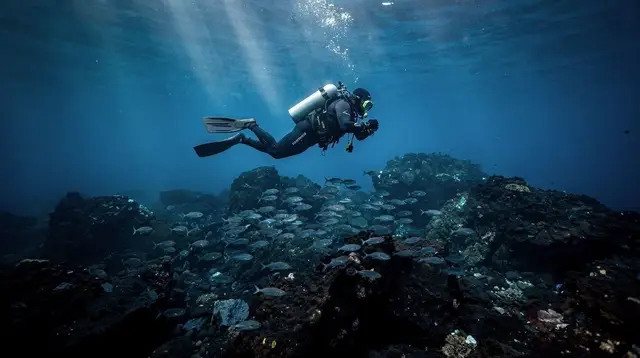
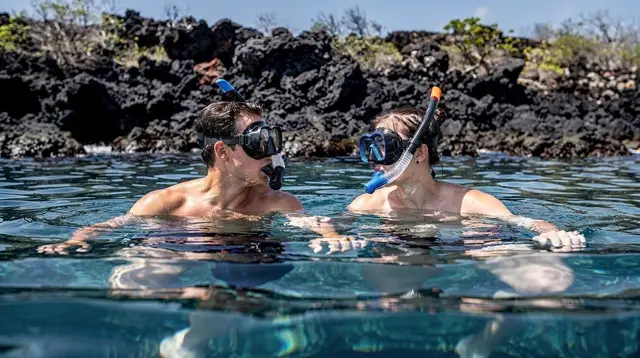
It’s worth being specific about what kind of snorkeling this is, because São Miguel’s water experiences vary a lot by location. Mosteiros is unguided, open-Atlantic snorkeling off a black-sand beach — no boat, no reef structure, no rental counter, and no fixed safe zone marked by anything other than your own read of the sea that day. For a wider sense of how the island’s water temperature and visibility change through the year, São Miguel’s diving and water conditions is a useful companion read before you pack a mask.
It’s also worth being clear about what this page is not covering. The best-known snorkeling spot on the island by reputation is inside the Ilhéu de Vila Franca, the sunken crater islet off Vila Franca do Campo, where a boat takes you into a flooded volcanic crater that is far more enclosed than anything at Mosteiros — that’s a separate destination with its own access rules and season, not this coast. If a naturally sheltered swim inside a crater is what you’re after, that’s the one to look at, not Mosteiros.
Closer to Mosteiros in character is Caloura on the south coast, which does have a small, more protected harbour-side swimming spot — a useful point of comparison precisely because Mosteiros doesn’t offer the same shelter. If the idea of a calmer, easier entry appeals more than open-water swimming against sea stacks, Caloura or the crater at Vila Franca are the better fit; Mosteiros is for people who want the black-sand-and-stacks scenery and are comfortable reading Atlantic conditions before they get in.
Reading the conditions before you get in
There is no lifeguard station at Mosteiros and no posted flag system to lean on, so the judgment call is yours. A few things are worth checking before deciding to swim or snorkel here, rather than assuming the calm-looking photo you saw online reflects today:
| Check | Why it matters at Mosteiros |
|---|---|
| Swell direction and height | West coast beaches take the brunt of Atlantic swell; even a moderate swell turns the stacks into a rough, surging area |
| Wind | Onshore wind builds chop quickly and can push a swimmer toward the rocks |
| Local advice | Someone in the village or at a nearby café will usually tell you plainly if it’s a “no swimming today” |
| Time of day | Wind tends to rise through the afternoon; a calmer window, if there is one, is more often in the morning |
| Your own comfort in open water | This is unsupervised Atlantic swimming, not a pool — go in only as far as you’re confident swimming back from |
None of this is exotic advice, but it’s the advice that applies specifically to an exposed volcanic coastline rather than to a beach in general. The same caution that governs surfing São Miguel’s north coast — respecting the swell rather than the season — applies here too, even though Mosteiros isn’t a surf beach.
Getting to Mosteiros and what’s around it
Mosteiros sits on the western loop of the island, easily combined with a day based around Sete Cidades — the drive from the caldera down to the coast is short, and many visitors do both in one outing. From the village, the beach and the harbour are a short walk from where you’ll park, with the sea stacks visible almost as soon as the coast opens up.
If you’re building a full day around the west of the island, a guided route can save you the driving and give you the caldera lookouts as well as the coast. A tour like the half-day Sete Cidades tour covers the crater lakes and viewpoints that sit just inland of Mosteiros, and pairs naturally with time at the coast afterward if you’re driving yourself onward.
For a longer day that also reaches the crater lake in the island’s centre, the full-day tour combining Sete Cidades and Lagoa do Fogo covers considerably more ground, though note that neither of these tours stops at the Mosteiros beach itself — they’re a way to see the wider west-of-the-island landscape that Mosteiros sits within.
South of Mosteiros, Ponta da Ferraria is the other well-known coastal water spot on this side of the island, and it’s easy to conflate the two. They’re different places with different rules: Ponta da Ferraria is a hot spring meeting the sea at a specific rock pool, swimmable mainly around low tide, detailed in the tide-times guide for Ponta da Ferraria. Mosteiros has no thermal water — it’s the black-sand beach and sea stacks, full stop, and the two are often combined in one day via the Mosteiros and Ponta da Ferraria day trip precisely because they sit a short drive apart on the same stretch of coast.
If you’d rather see the coastline from the water than get into it, options exist that don’t require you to judge the swell yourself. A stand-up paddle session on the calmer, enclosed lakes at Sete Cidades gives a different, gentler kind of water time nearby, on protected inland water rather than open sea — a sensible alternative on a day when the coast itself looks unsettled. And for a broader look at the caldera and coastline together without getting wet at all, an e-bike tour around Sete Cidades covers the viewpoints above the west coast at a slower pace.
Safety notes worth taking seriously
A few points are specific enough to Mosteiros — and to São Miguel’s coast generally — that they’re worth stating plainly rather than assuming they’re obvious:
- This is not a bay. Nothing about Mosteiros’ geography shelters it from Atlantic swell. Treat every visit as open-water conditions until you’ve personally checked otherwise.
- The sea stacks are not a supervised attraction. They stand in open water; currents and surge around their bases can be stronger than they look from the beach.
- There’s no rescue infrastructure at the beach. No lifeguard tower, no flag system — the responsibility for judging conditions sits with you.
- Black sand gets hot. In full summer sun it can be uncomfortable to walk on barefoot; sandals help.
- Rocks near the waterline are volcanic and can be sharp or slick with algae. Reef shoes or old trainers are worth having if you plan to scramble near the stacks.
- São Miguel has no dangerous land wildlife, so the real hazards here are entirely to do with the sea and the terrain — worth reading alongside the island’s broader safety and hazards guide if this is your first visit to a volcanic Atlantic coastline.
For a wider sense of how sea conditions affect boat-based activities around the island — useful context even if you’re only planning to swim from shore — the guide to weather and cancellations on São Miguel’s boat tours explains how operators judge the same Atlantic conditions you’d be judging on your own at Mosteiros.
Combining Mosteiros with the rest of the west
Most visitors don’t come to Mosteiros as a single destination — it’s a stop within a wider loop of the island’s west, usually anchored by Sete Cidades and its caldera lakes. If a fuller sense of the volcanic landscape inland of the coast appeals, a tour such as the Three Lakes Volcanic Wonders experience covers the crater lakes that sit above Mosteiros, giving useful context for the same volcanic geology that produced the black sand and sea stacks down at the coast.
The larger point to leave with is simple: Mosteiros is one of the more visually striking stretches of coast on São Miguel precisely because it’s raw and exposed rather than tamed into a resort bay. That’s also exactly why it rewards a bit of caution. Enjoy the black sand, admire the sea stacks, and get in the water on the day’s terms rather than the photo’s — that’s the difference between a good swim at Mosteiros and a bad one. For more on how this fits the island’s general character rather than a tropical postcard, the note on why São Miguel isn’t the Caribbean is a fair summary of the mindset to bring.
Mosteiros snorkeling and swimming, questions people actually ask
Is Mosteiros beach sheltered from the ocean?
No. Mosteiros faces the open Atlantic directly, with the sea stacks standing in exposed water offshore. There is no reef or headland closing it into a calm bay, so swell reaches the sand on most days to some degree.
Is the sand really black at Mosteiros?
Yes — it is volcanic sand, dark grey to black, typical of São Miguel’s west coast. It gets noticeably hot in direct summer sun, more than pale sand does, which is worth knowing if you’re walking it barefoot.
Can you snorkel around the sea stacks?
People do, on calm days and close to shore, but this is unguided open-water snorkeling in Atlantic swell, not a groomed reef. Visibility and safety depend entirely on the day’s sea state, and there is no lifeguard or rental hut at the stacks themselves.
What’s the water temperature at Mosteiros?
It follows the island’s general range, roughly 17-18°C in winter and 22-24°C at the summer peak. It is swimmable year-round for anyone used to Atlantic water, but it is never Caribbean-warm.
Is Mosteiros the same as Ponta da Ferraria?
No, though they’re often visited together. Ponta da Ferraria is a separate hot spring a short drive south, where warm water meets the sea at a specific rock pool near low tide. Mosteiros is the black-sand beach and sea stacks further along the coast, with no thermal water.
Is there snorkel gear rental at Mosteiros?
Not reliably — Mosteiros is a small village beach, not a resort setup. Bring your own mask and fins if you plan to get in the water; don’t count on finding rental gear on site.
When is Mosteiros calmest for getting in the water?
There’s no fixed calm season — the west coast can be flat for days or churned by swell with little warning, in any month. Mornings before the wind picks up are often more settled, but check the day’s actual sea and wind forecast rather than relying on a season.
Diving & Snorkelling on GetYourGuide
Verified deep-linked GetYourGuide tours. Book through these links and we earn a small commission at no cost to you.
GetYourGuide does not provide a product photo for this activity — the image shows the meeting point, photographed by us.