Why the Azores' Pineapple Takes Two Years to Grow
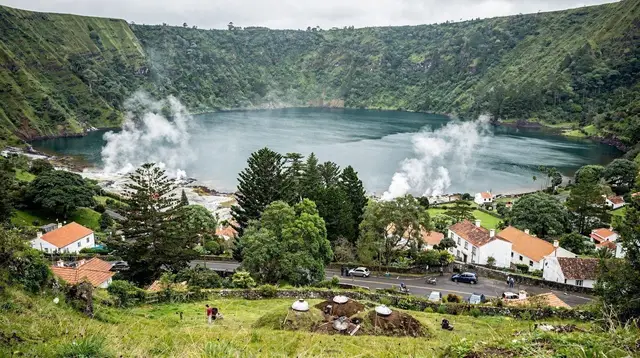
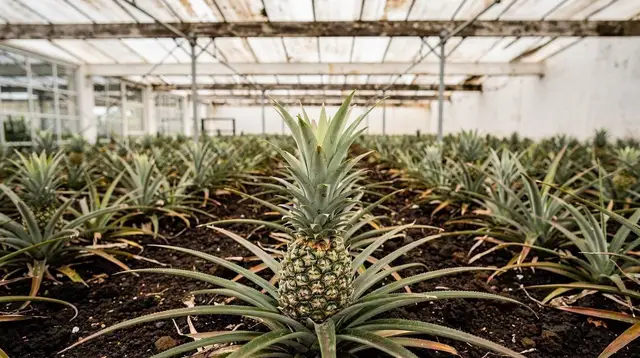
The first time someone told me São Miguel grows pineapples, I pictured rows of spiky plants baking under an open sky, the way I’d seen them years ago in a market stall photo from somewhere properly tropical. Then I actually drove out to Ponta Delgada and someone pointed me toward Fajã de Baixo, and what I found instead was a row of low glass greenhouses, quiet as a nursery, each one holding a few hundred spiky green rosettes under panes fogged with condensation. No open field in sight. That gap between what I expected and what was actually there is basically the whole story of this fruit.
The pineapple that broke my idea of a pineapple
I’ll admit I almost skipped it. A greenhouse full of pineapple plants sounded like the kind of minor local curiosity you nod at and move past on the way to somewhere more dramatic, like Sete Cidades or Furnas. But once the grower walked me through what it actually takes to get one ripe fruit out of that glasshouse, I stopped thinking of it as a footnote. It’s one of the more patient pieces of agriculture I’ve come across anywhere, and it exists because this island refuses to behave like the tropics, no matter how green it looks.
Greenhouses, not fields: why estufas at all
São Miguel sits about 1,400 km out in the North Atlantic, at a latitude and climate that is genuinely temperate: mild, damp, cloudy more often than not, with sea temperatures that swing between roughly 17 and 24°C across the year. That’s a world away from the steady tropical heat a pineapple plant actually wants. Left outdoors here, it would grow slowly, flower unreliably, and never ripen with any consistency.
So growers moved the whole operation under glass. The estufas around Fajã de Baixo, just outside Ponta Delgada, trap solar heat and hold humidity at levels the open Azorean air simply won’t provide on its own. It’s a workaround built entirely around the climate this island actually has, rather than the one a pineapple would prefer. I found that oddly reassuring, honestly — nobody here is pretending São Miguel is something it isn’t. The tea plantations at Gorreana work the opposite way, thriving precisely because the Atlantic climate suits tea; pineapple only survives here because someone built it an artificial tropics in miniature.
Two years, start to finish
This is the part that actually surprised me. A tropical pineapple grown in open fields elsewhere in the world typically fruits within twelve to eighteen months. Here, growers count on roughly two years from planting a new shoot to picking a ripe fruit.
The process itself is almost entirely manual. A young plant spends its first year or so simply building size and leaf mass in the warm, humid greenhouse air. Then, rather than waiting for the plant to flower on its own schedule, growers trigger it deliberately, traditionally using smoke, which releases ethylene gas and forces the plant into flowering on the grower’s timetable rather than nature’s. From there it’s several more months of fruit development before a single pineapple is finally ready to cut.
Multiply that by however many plants are staggered through a working greenhouse at different stages, and you start to understand why this isn’t a crop anyone is scaling up. Every fruit on that plant represents about two years of somebody checking on it, adjusting vents, managing humidity, and waiting.
Why this makes Azores pineapple an artisan product, not an export crop
Once I did the math on that two-year cycle, the size of the whole operation made sense. This was never going to be a shipping-container commodity competing with Costa Rica or the Philippines. A greenhouse that takes two years per fruit, tended largely by hand, produces a small, local, slightly expensive product — closer in spirit to the tea and pineapple that show up together on Azorean tables than to anything moving through a global supply chain.
That’s part of why it feels different to eat one here. It shows up as juice, as a garnish, occasionally as a liqueur, sold in small quantities at places like the Mercado da Graça food market in Ponta Delgada, rather than stacked by the pallet. It sits alongside the island’s other slow, small-scale specialties — the tea at Gorreana, the oldest working tea plantation in Europe, the underground-cooked cozido from Furnas, the seafood pulled straight from the coast — all of it more about patience and place than volume.
It’s a fair reminder, too, of the wider point people miss about this island generally: São Miguel isn’t a stand-in for the whole Azores archipelago, and it certainly isn’t a tropical destination — this is black-sand, temperate Atlantic terrain, pineapple greenhouses and all.
Where to see it for yourself near Fajã de Baixo
If you want to see the estufas in person, Fajã de Baixo sits close enough to central Ponta Delgada that it fits easily alongside a morning around the old town. Several small growers open their glasshouses for a modest entry fee, usually including a taste of the fruit, and it takes fifteen or twenty minutes to walk through and understand the whole two-year cycle firsthand.
It pairs naturally with a wider look at São Miguel’s local food and market culture, and if you’d rather have someone else handle the driving and context, joining a small-group tour that covers São Miguel’s lesser-known local producers is an easy way to fit it in without planning the logistics yourself.
Cruise passengers with only a few hours ashore can still catch a version of this: a half-day shore excursion from Ponta Delgada that swings past local food culture is often enough to work in a quick greenhouse stop. And if pineapple turns out to be just one curiosity among many on your list, a broader 4x4 day trip into the Furnas crater will show you how much of this island’s food, from cozido to tea to pineapple, comes down to the same theme: working with a stubborn, temperate Atlantic climate rather than against it.
Questions people ask me about São Miguel’s greenhouse pineapple
Why are Azores pineapples grown in greenhouses instead of fields?
São Miguel sits in the temperate North Atlantic, not the tropics, so pineapples cannot ripen reliably outdoors. Growers put them under glass to trap heat and control humidity, recreating something closer to tropical conditions inside a controlled space.
How long does it actually take to grow one pineapple?
From planting a new shoot to picking a ripe fruit is roughly two years. Growers speed up flowering with a smoke treatment, but the plant still needs about a year to mature before that step and several more months to fruit and ripen afterward.
Where can I see the pineapple greenhouses?
The main cluster of estufas is around Fajã de Baixo, a short drive from central Ponta Delgada. Several growers open their glasshouses to visitors, usually for a small entry fee that includes a taste.
Are Azores pineapples different from tropical pineapples in taste?
Growers and regulars describe them as sweeter and less acidic than typical imported tropical pineapples, with a softer texture, though this is a matter of local pride as much as strict measurement.
Can I buy or taste Azores pineapple locally?
Yes. It turns up at the Mercado da Graça in Ponta Delgada, in local cafés as juice or liqueur, and at the greenhouses themselves, though supply is small and mostly local rather than exported in volume.
Is pineapple grown anywhere else in Europe like this?
Not at any comparable scale. Azores greenhouse pineapple is unusual enough in Europe that it functions more as a regional curiosity and small-scale product than as a commercial crop competing with tropical exporters.
Is visiting the greenhouses free?
Most charge a small entry fee, unlike Gorreana’s tea fields, which have long been free to walk. The fee is modest and typically includes a slice or a small taste of the fruit.
Tea & Pineapple Plantations on GetYourGuide
Verified deep-linked GetYourGuide tours. Book through these links and we earn a small commission at no cost to you.
GetYourGuide does not provide a product photo for this activity — the image shows the meeting point, photographed by us.