Why Gorreana Is Europe's Last Working Tea Plantation
A Crop That Has No Business Growing Here
The first time I stood in the rows at Gorreana, what struck me wasn’t the view, though the view is good — tea bushes running downhill toward a grey Atlantic, the kind of coastline you’d expect to grow cabbage or nothing at all. What struck me was the ordinariness of it. Nobody was selling me a ticket. There was no gate, no guide with a clipboard, no queue. A woman was clipping the hedge-line of a field the way you’d tend a garden, and the factory next door rattled along exactly as it must have decades ago, because most of the machinery is exactly that old. It didn’t feel staged, because it isn’t. It’s a working farm that happens to be the last of its kind on the entire continent, and it has been going about its business since 1883.
That date matters more than it looks. Tea is an Asian crop, and Europe’s attempts to grow it elsewhere mostly failed — wrong soil, wrong rain, wrong light. What the north coast of São Miguel has that most of Europe doesn’t is a very specific, very stubborn kind of weather: humid, mild, rarely frosting, rarely baking, with volcanic soil holding water the way tea plants like. It’s the same Atlantic dampness that keeps Ribeira Grande green and the hydrangea hedges thick along every lane. Gorreana’s founders weren’t chasing novelty. They were chasing silk and tea money in a century when both were serious business, and the crop simply took here in a way it never has on the mainland.
Why It Survived When Nothing Else Did
Tea growing in the Azores once had competition. Several estates tried it through the nineteenth and early twentieth centuries. Nearly all of them folded, undercut by cheaper colonial tea from Asia and by an island economy that shifted toward dairy and pineapple. Gorreana and, later, the smaller estate at Porto Formoso are what’s left, both strung along the same short stretch of coast east of Ribeira Grande. That’s not a coincidence of geography so much as a coincidence of stubbornness — these were the two operations that kept replanting, kept running the driers, kept selling into a niche market long after it stopped being an obvious business.
What you see today at Gorreana is largely original: the same rolling and drying machines installed generations ago, oiled and running rather than restored for effect. Nothing about the factory floor has been dressed up for visitors. That’s the part that surprises people who arrive expecting a heritage attraction with a gift shop built around an idea. It’s closer to walking into a small, slightly old-fashioned factory that has quietly kept making the same product the same way for well over a century, and letting anyone wander through to watch.
Gorreana and Porto Formoso, Side by Side
| Gorreana | Porto Formoso | |
|---|---|---|
| Founded | 1883 | Smaller, newer as a visitor site |
| Entry | Free, self-guided | Paid, guided |
| Size | Larger estate | Smaller estate |
| Shop | Own-brand teas for sale | Own-brand teas for sale |
| Typical visit | 45–60 minutes | Guided slot, shorter |
I’ve walked both, and I’d resist the urge to rank one above the other, because they’re doing slightly different things. Gorreana is the one to wander on your own time, at your own pace, without anyone narrating it for you. Porto Formoso is smaller and charges for entry, but the guided visit fills in context Gorreana leaves you to work out yourself — what the machines are actually doing, why the leaves are picked at a particular stage, how black and green tea from the same bush end up so different.
If you only have time for one, go to Gorreana first; it’s the older estate and the free one. If tea genuinely interests you, the two together make a proper morning, and a fuller guide to visiting Gorreana is worth reading before you go, since opening patterns shift by season.
Not a Staged Stop on the Coast Road
It would be easy to drive the north coast, pull in at Gorreana for twenty minutes of photographs among the bushes, and drive on to Caldeira Velha or the waterfalls further along without registering what you’d actually seen. I’d argue that undersells it. This is one of the very few places in Europe where you can watch an entire agricultural chain happen in front of you — leaf on the bush, leaf in the drier, leaf in the tin — on a crop that has nothing to do with Europe’s usual export list of wine, olive oil and grain.
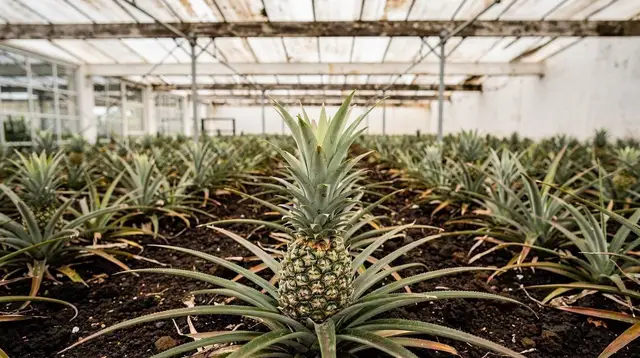
It sits in the same category, oddly, as the pineapple greenhouses near Ponta Delgada: another crop that shouldn’t work here, kept alive by exactly the same Atlantic microclimate, and worth reading about together if you want to understand why São Miguel’s tea and pineapple end up on the same souvenir shelf.
If you’d rather see it as part of a longer day rather than a standalone stop, several island tours build it in. The Furnas volcano and tea plantation day tour pairs Gorreana with the caldera villages further east, and a guided hike past the tea fields with lunch included is a gentler way to see the estate if you’d rather walk than drive.
For a broader loop of the island that still swings past the plantations, the west-coast tour is worth comparing against a self-drive itinerary — Gorreana’s fields and factory stay open in weather that would cancel a boat trip, which makes it a sound fallback plan.
What I’d Tell Someone Going for the First Time
Wear shoes you don’t mind getting a little damp; the paths between rows are often wet even when it isn’t raining. Go into the factory building itself, not just the fields — that’s where the machinery is, and where the smell of drying leaves actually tells you something about the process.
And buy the tea while you’re there rather than assuming you’ll find it later; Gorreana’s own brands aren’t widely stocked off the island, and the shop prices are noticeably better than what the same tins fetch once they’ve been shipped out. It’s a small, unglamorous errand on a trip built around volcanoes and hot springs, but it’s the one stop on the north coast that’s genuinely irreplaceable — you cannot do this anywhere else in Europe.
Questions I Get About Visiting Gorreana
Is Gorreana tea plantation free to visit?
Yes. Walking the fields and the factory floor at Gorreana has long been free and self-guided, with no ticket booth and no set tour times. You pay only if you buy tea in the shop.
What’s the difference between Gorreana and Porto Formoso?
Gorreana is the larger, older estate, free to enter, with a working factory you walk through on your own. Porto Formoso is smaller, newer as a visitor site, and charges for a guided visit.
How long does a visit to Gorreana take?
Most people spend 45 minutes to an hour: a walk through the field rows, a look at the drying and rolling machines when they’re running, and a stop in the shop.
Can you buy tea at Gorreana?
Yes, the shop sells Gorreana’s own black, green and orange pekoe teas, packaged on site, at prices well below what the same tins cost once exported.
Is Gorreana the only tea plantation in Europe?
No, but close. Gorreana and Porto Formoso, both on São Miguel’s north coast, are the only two commercial tea plantations left on the European continent.
When is the best time to visit for the tea harvest?
Picking runs roughly from April to September, so the fields are fullest and the factory most active through summer; in winter the machines are quieter but the rows are still open to walk.
Do I need a car to reach Gorreana?
A rental car is the practical way in, since Gorreana sits on the coast road east of Ribeira Grande with no rail and only limited bus service. It’s also a common stop on organised day tours, including the private jeep tour of the island, if you’d rather not drive it yourself.
For the fuller list of what’s nearby, the Gorreana and Porto Formoso guide and the north coast day trip guide both cover logistics in more depth, and it’s worth reading why São Miguel isn’t the whole Azores and how pineapple greenhouses work if you want the rest of the island’s unlikely-crop story, plus a look at Capelas further along the same coast.
Tea & Pineapple Plantations on GetYourGuide
Verified deep-linked GetYourGuide tours. Book through these links and we earn a small commission at no cost to you.
GetYourGuide does not provide a product photo for this activity — the image shows the meeting point, photographed by us.