A Rainy-Day Itinerary for São Miguel
Why São Miguel Needs a Backup Plan
Weather on this island does not arrive as one verdict for the whole day. It can be dry in Ponta Delgada and pouring an hour inland at Furnas, or the reverse by afternoon. Rather than gamble a whole day on a forecast that will be wrong somewhere, this route sticks to places that work regardless: a market town, a working tea plantation under cover, and a caldera that steams from the ground up rather than from anything the sky is doing. It is also, deliberately, a low-altitude day — nothing here depends on a viewpoint staying clear.
That hour-to-hour swing is normal here, not a bad forecast — the guide to how weather changes on São Miguel explains why a single radar check in the morning tells you almost nothing about the afternoon. The broader São Miguel weather guide is worth a read before the trip, since it covers which months bring this kind of pattern most often and how locals plan around it rather than waiting for it to pass. The short version for today: this itinerary is built so that checking the sky every hour changes nothing about the plan.
Day 1: Ponta Delgada, Gorreana and Furnas
Morning: Ponta Delgada Under Cover
Start in the capital itself. The Mercado da Graça is fully roofed and busiest before midday — cheese, pineapple, tuna and flowers under one structure, a good hour of browsing without stepping outside. From there, the historic centre is close together: the black-and-white Portas da Cidade arches, the Igreja Matriz de São Sebastião, and the Forte de São Brás overlooking the harbour, each a short walk apart so a shower means ducking into a doorway, not losing the morning. A walking guide to the old town and a closer look at the Graça market are both worth reading before you set out.
If the rain settles in properly, the Gruta do Carvão lava tube on the edge of town is an underground option by definition — weather does not reach it. See the lava tube guide for what to expect below ground.
For visitors who’d rather have a guide narrate the centre than work it out street by street, a historic walking tour through Ponta Delgada’s old streets covers the same ground with commentary, and keeps moving whatever the sky is doing.
Midday: North to Gorreana
Leave Ponta Delgada mid-morning for the roughly 40-minute drive north to Gorreana, Europe’s oldest working tea plantation, founded in 1883. This is the single most reliable rainy-day stop on the island: the factory floor and processing rooms are indoors, entry has long been free and self-guided, and the fields themselves are walkable under a covered path when the weather turns.
Nearby Porto Formoso is a smaller, paid alternative if you want to see both. Full detail is in the Gorreana plantation guide, the Porto Formoso guide, and a short piece on why Gorreana is Europe’s oldest working plantation.
Have tea and a pastry in the on-site café before moving on — there is no need to rush a plantation visit that was built to be weatherproof.
Optional Detour: Ribeira Grande and Caldeira Velha
If Gorreana still leaves time on the clock, Ribeira Grande, the island’s second town, sits only a few minutes off the same road and makes an easy stretch-your-legs stop between tea and Furnas. It doesn’t ask for clear skies — the Ribeira Grande guide covers a compact centre that works fine under an umbrella.
Caldeira Velha, a thermal waterfall and pools a short drive further on the slope of the Água de Pau massif, is the one exception worth knowing about: it’s outdoors, but the whole point of the stop is getting into warm volcanic water, so rain falling on your head while you’re already soaking in a hot pool changes very little. It only stops being worth it if wind makes the drive up unpleasant.
The Caldeira Velha thermal waterfall guide and the short Caldeira Velha walk both note this; a combined Ribeira Grande and Caldeira Velha day trip lays out the pairing in full if you’d rather build a whole day around this stretch of coast another time. Treat this detour as optional rather than core — adding it pushes the Furnas arrival later, and Furnas is the stop that should anchor the afternoon.
Afternoon: Furnas in the Cloud
From Gorreana, continue east to Furnas, roughly another 45 minutes to an hour depending on the road taken. Furnas sits inside an active caldera, and its caldeiras — the steaming, bubbling vents around the Lagoa das Furnas — run on volcanic heat, not sunlight, so they look exactly the same fuming through fog as they do on a clear afternoon. If your visit lines up with lunch, this is also where cozido das Furnas is cooked underground in the hot ground itself, five to seven hours on volcanic heat with no fire at all; book a restaurant table rather than expecting to arrange the cooking yourself, and the cozido explained page covers how the ordering actually works.
The other reason Furnas earns the afternoon slot is the Terra Nostra garden and its iron-rich thermal pool, warm at roughly 35-40°C and a genuinely pleasant place to be standing in the rain rather than under it. The water stains pale swimwear orange over time, so bring a suit you don’t mind losing to it. Read the Terra Nostra thermal pool guide and the wider Furnas caldeiras and fumaroles guide before you go.
Two ways to do this stretch without driving yourself between stops: a half-day Furnas tour taking in the caldeiras and the thermal park, or, for a smaller group pace, a private tour combining the Furnas lake with Terra Nostra Park. If lunch is the priority, a tour pairing the underground cozido lunch with the thermal pools handles the booking end for you.
Early Evening: Back to Base
Allow around an hour back to Ponta Delgada, longer if the rain has traffic moving slowly through Ribeira Grande. There’s no need to add another stop — a day that started at the market and ended in a hot orange pool has already used the weather well.
What to Skip When Cloud or Fog Rolls In
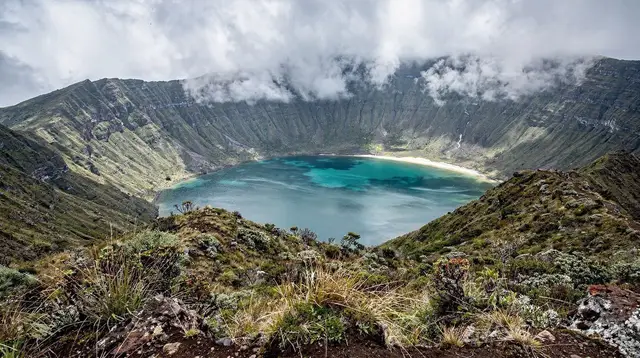
This route leaves out Sete Cidades and Lagoa do Fogo on purpose. Both are crater lakes whose entire appeal is the view down into them — from Vista do Rei, Boca do Inferno, or the Lagoa do Fogo viewpoint itself — and in cloud there is nothing to see, only white. Lagoa do Fogo has no café, no shelter and no facilities of any kind to wait it out in, and both access roads can be signed closed for wind or fog.
If you reach a closed barrier on the way up, the right move is to turn around and rejoin this itinerary, not to push on past the sign. Save both for a clear day; the Sete Cidades day trip and a dedicated thermal springs tour are better used when the forecast actually cooperates.
Whale-watching trips fall into the same category, even though they don’t involve a viewpoint: boats can and do cancel or reschedule for sea conditions rather than rain itself, and pushing to go out in poor conditions is neither pleasant nor productive for spotting anything. If that’s on your plan for another day of the trip, the whale-watching and cancellations guide explains what operators actually look at before they call a trip off, which is wind and swell, not whether it’s drizzling on land.
Getting Around in the Rain
This route depends on driving yourself between three towns that aren’t close together, so a few practical points are worth knowing before you leave. If you’re not used to driving on this island, read what driving on São Miguel is actually like first — narrow roads, sudden fog banks on the higher stretches, and drivers who know the bends better than you do are the norm, and rain makes all three slightly worse. The car rental guide is worth checking too if you haven’t booked yet, since availability tightens in the wetter months when more visitors decide a car is worth it after all.
Parking in Ponta Delgada itself is straightforward but not unlimited, and a downpour is the wrong moment to be circling the old town looking for a space — the parking in Ponta Delgada guide lists where to leave the car before you start the morning walk. Fill the tank before Gorreana rather than after; between Ribeira Grande and Furnas there is less to rely on, and a wet, unfamiliar road is not where you want to be running low.
If the Rain Follows You for More Than One Day
A single wet day rarely derails a São Miguel trip, but a run of them can, especially outside summer. If you’re travelling in the wetter months, the São Miguel in winter and low season guide is the better starting point than this single-day plan — it’s built around exactly this pattern rather than treating it as an exception, and it makes the case that low season isn’t a write-off, just a different island. The month-by-month guide breaks down what to expect from the weather across the year if you’re still choosing dates.
Worth knowing either way: pack for it properly. A real waterproof jacket, not an umbrella that the Atlantic wind will turn inside out within a day, a spare swimsuit for thermal pools, and shoes that can dry overnight all belong on the list — the São Miguel packing list covers the rest.
If several days in a row look wet, it’s usually more efficient to reshuffle the whole trip around this itinerary’s logic — indoor and low-altitude first, viewpoints and crater hikes held for whichever day actually clears — rather than repeating this exact route twice. The seven-day itinerary and the five-days-in-depth plan are both written with enough slack to absorb a bad day or two without losing the trip.
tours.1 days
Verified deep-linked GetYourGuide tours. Book through these links and we earn a small commission at no cost to you.
GetYourGuide does not provide a product photo for this activity — the image shows the meeting point, photographed by us.