Gorreana Tea Plantation Day Trip
How do you visit Gorreana tea plantation on São Miguel?
Gorreana's fields and factory sit on the north coast between Ribeira Grande and Maia, and entry has traditionally been free with no ticket or guide required. Walk the tea rows, watch the machinery when the factory is running, and taste teas in the shop, all in an hour or two. Porto Formoso, the island's other historic plantation nearby, charges for its visit — Gorreana does not.
Europe’s Last Working Tea Fields
Most people who plan a São Miguel trip do not expect tea to be on the list. But the island’s north coast holds one of Europe’s genuine oddities: rows of camellia sinensis climbing a green slope above the Atlantic, tended and processed the same way they have been since 1883. Gorreana is the oldest working tea plantation in Europe, and with its smaller neighbour Porto Formoso it is one of only two left on the continent — both of them here, on this one island. Neither is a museum piece. Both still grow, pick, and process leaf that ends up in a shop, not just a display case.
What sets Gorreana apart, and what this page is built around, is a single practical fact: you can walk its fields and its factory floor for free, on your own schedule, with nobody checking a ticket at a gate. That is not how most agricultural visitor sites work, in the Azores or anywhere else, and it is worth planning around rather than assuming.
Where Gorreana Sits on the North Coast
Gorreana’s estate lies on the coastal stretch between Ribeira Grande and Maia, on the north side of São Miguel, with the tea terraces running down toward the sea below the road. It is roughly a 30 to 40 minute drive from Ponta Delgada, and close enough to Capelas and the wider north coast that most visitors treat it as one stop on a longer loop rather than a destination on its own.
There is no train on São Miguel and buses run on local timetables rather than sightseeing ones, so a rental car is the practical way to reach Gorreana on your own terms. Parking is at the estate itself, free, and close to both the fields and the factory entrance — there is no shuttle and no distant overflow lot to worry about.
For anyone building a north coast day around tea, the plantation at /destinations/gorreana-tea-plantations/ is the natural anchor point, with the fields visible from the road well before you turn in.
Walking the Fields and the Factory, Free of Charge
This is the detail that trips people up, in both directions: some assume a working plantation must charge for entry and skip it, planning around it as if it needed a booking; others arrive expecting a ticket booth and wander looking for one. Neither is right. Gorreana’s fields and the ground floor of its factory have traditionally been open, self-guided, and free — no ticket, no timed slot, no required guide.
The fields themselves are laid out in terraces stepping down toward the coast, crossed by a network of paths that let you walk among the rows at whatever pace you like. A short signed trail loops through the growing area and up to a small viewpoint over the plantation and the sea beyond it — a good five to ten minutes on foot, longer if you stop to read the signage explaining how the leaf is picked and what distinguishes green tea from black at Gorreana, where the difference is processing, not different plants.
The factory building sits below the fields, and its ground floor is open to walk through and see the machinery: the withering troughs, the rolling machines, the driers, most of it original equipment still doing the job it was built for over a century ago. Whether any of it is actually running depends on the harvest calendar — more on that below — but the building and its explanatory panels are open regardless.
At the end of the visit, the shop offers a free tasting counter where several of Gorreana’s own teas are poured for anyone to try before deciding what, if anything, to buy. Boxes of the estate’s green and black tea, called Gorreana, Roxo, Hysson, Broken Leaf, Orange Pekoe and Pekoe depending on grade and blend, sell for a few euros and travel well in a suitcase.
Most visits, fields, factory, viewpoint and shop together, run one to two hours. There’s no reason to schedule more unless you plan to combine it with a walk or a meal nearby.
Gorreana vs Porto Formoso: Don’t Mix Them Up
The single fact worth getting right before you go: Gorreana is free, Porto Formoso is not. It’s an easy detail to reverse in memory, since both are tea estates on the same coast with similar-sounding names, and getting it backwards means turning up somewhere expecting a free walk and being asked for a ticket, or the opposite.
| Gorreana | Porto Formoso | |
|---|---|---|
| Founded | 1883 | Working estate; opened to visitors more recently |
| Entry | Free, self-guided | Paid entry |
| Size | Larger estate | Smaller estate |
| Factory | Original machinery, open floor | Exhibition and tasting rooms |
| Guide | None required | Visitor-oriented display |
| Distance from Ponta Delgada | ~30-40 min | ~35-45 min |
If you only have time for one, Gorreana’s combination of scale, history and free entry makes it the default choice for a north coast day trip. Porto Formoso rewards a visit too, particularly if you want a more curated, exhibition-style introduction to how Azorean tea is made, but it’s a deliberate paid stop rather than something to fold in on a whim. The comparison is laid out in full at Tea or Pineapple: Which Plantation to Visit on São Miguel alongside the island’s other agricultural curiosity, and side by side at Gorreana and Porto Formoso: São Miguel’s Two Tea Gardens.
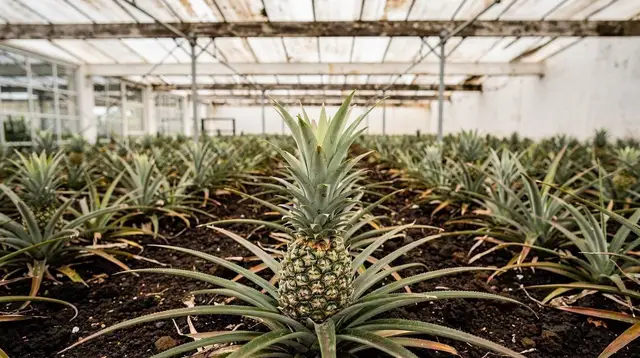
Tea is not the only crop on São Miguel grown somewhere unexpected. A short drive from Ponta Delgada, pineapples are grown not in open fields but inside greenhouses at Fajã de Baixo, a single fruit taking roughly two years to ripen under glass — a similarly free-to-wander curiosity that pairs naturally with a tea-and-agriculture theme for the day. Between tea and pineapple, both are part of what actually ends up on Azorean tables, covered together at Azorean Tea and Pineapple: From Farm to Plate.
When the Factory Is Actually Running
Because Gorreana is a working estate and not a re-enactment, the machinery only runs when there is leaf to process. Picking and processing follow the plant’s growing cycle, broadly spring through autumn, with the busiest processing days clustering around flushes of new growth. Visit on a weekday morning during those months and there’s a reasonable chance of seeing the rollers and driers actually working, with the smell of processing tea filling the building.
Visit in winter, or simply on a quiet day, and the machines may be still — the fields, viewpoint and shop stay open regardless, but the factory-in-motion part of the experience is not guaranteed on any single visit, in the same way whale sightings elsewhere on the island are usual but never promised.
If seeing the process matters more to you than the walk itself, there is no way to book a guaranteed working day in advance — it depends on the harvest, not a schedule set for visitors.
Building the Rest of Your Day
Gorreana rarely fills a full day on its own, so most visitors build it into a longer north coast loop. Ribeira Grande, the island’s second town, sits a short drive away and makes a natural pair with a tea plantation stop, covered in full at Ribeira Grande: São Miguel’s Second Town; further along the coast, Capelas adds the old whaling station and its own stretch of black volcanic shoreline to the same loop.
For travellers who prefer not to self-drive the whole route, a full-day option that folds tea plantations into a guided itinerary with lunch included is worth considering — a full-day tour taking in tea plantations and Furnas with lunch included handles the driving and adds Furnas’ caldera villages to the same day.
Those who want the fields of Gorreana as one stop inside a broader north coast sweep, rather than a plantation-focused day, might instead look at a wider north coast expedition covering Rabo de Peixe, Mosteiros and Capelas, which threads together several of the fishing villages and coastal viewpoints along the same stretch of coast. And for a private, flexible pace that can linger at the plantation as long as you like before moving on, a private jeep 4x4 tour built around your own stops gives the most control over timing.
None of these are required to see Gorreana — the plantation itself needs no vehicle beyond getting there and no ticket once you arrive — but they’re worth knowing about for travellers who would rather not plan the whole loop themselves, or who want tea folded into a bigger north coast or Furnas day.
Getting There and Practical Notes
- Driving time from Ponta Delgada: roughly 30-40 minutes via the north coast road.
- Parking: free, on-site, close to both the fields and the factory building.
- Cost: free for the fields, factory floor, viewpoint and tastings; the shop is optional.
- Time needed: one to two hours for a relaxed visit.
- Best time for a working factory: weekday mornings during the main growing season, spring through autumn — never guaranteed, since it follows the harvest, not a visitor timetable.
- Facilities: shop and tasting counter on site; no café or restaurant at the plantation itself, so plan a meal stop in Ribeira Grande or elsewhere on the coast.
- What to bring: nothing beyond ordinary walking shoes — the paths through the fields are flat gravel and grass, not a hike.
Because the visit is short and unticketed, it slots easily into a longer itinerary rather than anchoring one by itself. Travellers weighing how much time to give the north coast against the rest of the island can check How Many Days Do You Need on São Miguel? for how a stop like this fits into a wider plan.
Gorreana Tea Plantation Questions
Is Gorreana tea plantation really free to visit?
Yes. Walking the fields and the ground floor of the factory has long been free and self-guided, with no ticket booth and no required tour. It’s an unusual enough setup that visitors sometimes look for a gate they must have missed — there isn’t one.
What’s the difference between Gorreana and Porto Formoso?
Both are historic tea estates on São Miguel’s north coast and, together, the only two working tea plantations left in continental Europe. Gorreana is larger, older, and free to walk. Porto Formoso is smaller, more exhibition-oriented, and charges an entry fee.
Do I need to book a tour to see Gorreana?
No. Seeing the fields and factory on your own needs no booking at all. A tour only makes sense if you want tea bundled with transport and other stops rather than a self-drive visit.
How long does a visit to Gorreana take?
Most visitors spend one to two hours: a walk through the rows, a look at the factory machinery if it’s running, and a stop in the tasting room and shop.
Is the tea factory always running?
No. Processing follows the harvest, mainly spring through autumn, and the machines are often idle outside those months or on quiet days. The fields, viewpoint, shop and tastings stay open either way.
Can I buy tea at Gorreana?
Yes. The shop sells Gorreana’s own green and black teas by the box, with a free tasting counter to try several before buying — an easy, packable souvenir.
Is Gorreana suitable for a self-drive day trip from Ponta Delgada?
Yes. It’s a straightforward 30 to 40 minute drive along the north coast and pairs naturally with other stops rather than needing a dedicated day.
When is the best time to visit Gorreana?
Late morning on a weekday during the growing season, roughly spring through autumn, gives the best chance of seeing the factory in motion. Any season works for walking the fields.
Tea & Pineapple Plantations on GetYourGuide
Verified deep-linked GetYourGuide tours. Book through these links and we earn a small commission at no cost to you.
GetYourGuide does not provide a product photo for this activity — the image shows the meeting point, photographed by us.