Chasing São Miguel's Hydrangea Season
I flew into Ponta Delgada the first time in late September, ten days after a friend had sent me a photo of a hedge so blue it looked retouched. I had that photo saved on my phone the whole flight. I did not find that hedge. What I found, driving out toward Sete Cidades on my first afternoon, was a lot of green — tall, healthy, unmistakably hydrangea shrubs, not a flower on most of them, a handful of tired blue heads clinging on here and there like the last guests at a party. I had missed it by about three weeks, and nobody had told me there was a window to miss.
That’s the thing about São Miguel that doesn’t come through in the pictures people share: the hedges are real, they’re everywhere, and they are also seasonal in a way a single photograph can never convey. The island grows hydrangeas the way other places grow hedgerows — as living fences between pastures, planted generations ago and left to spread — and for most of the year those fences are simply green. It’s an easy mistake to make, because the photo that convinces most people to come is almost always taken in July.
The window is real, and it’s narrower than the internet suggests
Hydrangeas on São Miguel start opening in June, build through the month, and hit their fullest, most photogenic point around July. They hold reasonably well into August, start thinning in September, and by October you’re back to green shrubs with the odd faded bloom. That’s roughly a four-month window with maybe six or seven genuinely spectacular weeks inside it, and the exact timing shifts a little year to year with how wet and warm the spring has been.
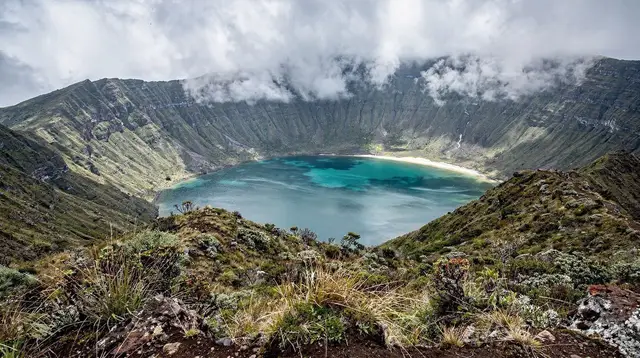
I’ve since been back in early July, and the difference from that first September trip was not subtle. The roads near Sete Cidades run for stretches with blue on both sides, the pastures are edged in it, and the caldera rim viewpoints — the ones you’ve seen in every São Miguel photo — actually look like the photos. If the flowers are the point of your trip, June through September is not a rough guideline you can round outward. Outside it, you are looking at leaves.
I’d build a trip like that around a full loop of the west, because the hedges aren’t confined to one viewpoint — they follow the roads and field boundaries across a big stretch of the island. A guided day touring the western caldera roads and lookouts covers most of the classic hydrangea corridor in one go, which took me three separate drives to piece together on my own.
It’s a farmed island, and that’s part of what you’re looking at
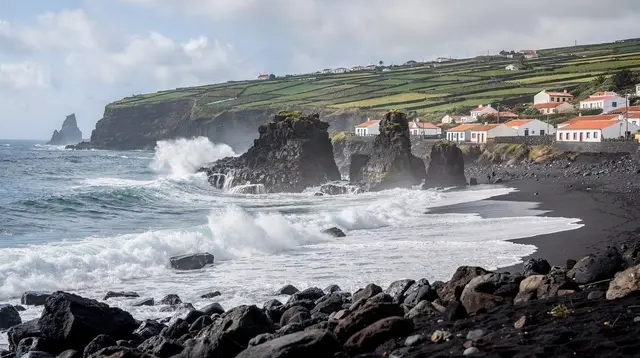
What struck me on that first, flower-less trip — and what I think gets lost in the postcard version of São Miguel — is that these hedges aren’t a wild feature of some untouched island. They’re farm boundaries. I drove past cattle standing right at the roadside more than once, penned in by exactly the same hydrangea rows that make the photographs. The island is green, cultivated and lived-in, not a nature reserve, and the flowers you’re chasing are, structurally, fencing. Once I noticed that, I stopped being disappointed by the working pastures between viewpoints and started paying attention to them — they’re as much the place as the flowers are.
That also explains why the bloom is so tied to a calendar rather than to any particular spot. You don’t need to find one secret hedge; in July the whole island is doing it at once, on lanes that have nothing to do with tourism.
What to do if you can’t hit the window
Not everyone can arrange a trip around six weeks in midsummer, and I don’t think that should stop anyone from going. The island’s other big draws don’t answer to a bloom calendar at all. Sperm whales and dolphins are resident here year-round, so a whale-watching morning works in January as well as it does in August — I’ve had better sightings in the shoulder months than I did in peak summer, if anything, because the boats are less crowded and the vigias have fewer groups to manage.
The thermal pools at Furnas and Terra Nostra are, if anything, more appealing when it’s cool and drizzling outside than when it’s already warm. None of that is a consolation prize; it’s just a different trip.
If you do land outside hydrangea season and want to see the volcanic side of the island instead, a half-day jeep circuit across the interior craters and viewpoints is a good use of a grey day, and it runs the same routes whether or not there’s a single flower on them. I did that trip on my September visit as a direct swap for the hedges I’d missed, and it turned out to be the thing I talk about most from that trip.
What I’d actually plan around
If the hydrangeas are the reason you’re coming, book for July and accept that even then nature gets a vote — a cool, dry spring can push the peak later, a warm one can pull it earlier. Ask wherever you’re staying what the hedges near them look like that week; locals notice this the way skiers notice snow depth. If you’re flexible, the back half of July has been the safest bet on both my trips there.
If the hydrangeas are one reason among several, don’t let them dictate the whole calendar. I’d rather plan around whale season or the quieter shoulder months and treat any flowers I catch as a bonus, because the weather here changes by the hour and by the coastline regardless of what month it is — sun in Sete Cidades and fog in Furnas the same afternoon isn’t unusual.
A short buggy run through the caldera roads, like the half-day buggy loop around Sete Cidades, is a good low-commitment way to see whatever the hedges are doing that week without building an entire itinerary around it.
Either way, look past the hedges themselves at what’s growing behind them. The caldera viewpoints near Nordeste are worth the drive with or without hydrangea season, Furnas steams year-round, and the low season from November to March is genuinely not the write-off people assume. I’d still tell anyone chasing that one blue-hedge photo to fly in July. But I’d also tell them the island doesn’t stop being itself the other eight months of the year.
tours.Seasons
Verified deep-linked GetYourGuide tours. Book through these links and we earn a small commission at no cost to you.
GetYourGuide does not provide a product photo for this activity — the image shows the meeting point, photographed by us.