Whale Watching Season on São Miguel
When is the best time for whale watching on São Miguel?
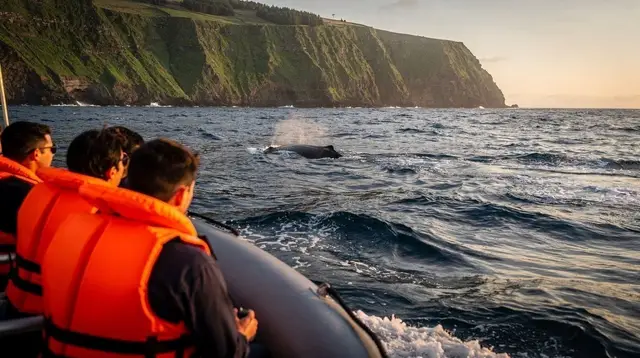
Sperm whales and dolphins live in these waters year-round, so trips run in every season. Blue, fin and sei whales pass through on their spring migration, roughly March to June, adding the largest species to what boats can find. Sightings are never guaranteed, and trips can be cancelled in rough seas whatever the month.
São Miguel sits above some of the deepest water in the Azores, and that depth close to shore is the whole reason boats leave Ponta Delgada and other harbours almost every day of the year. Some species never really leave. Others pass through on a schedule of their own. Getting the timing right means understanding which is which, rather than picking a single “best month” and hoping.
Resident Species and Migratory Species Are Not the Same Trip
The single most useful fact for planning is this: sperm whales and several dolphin species are resident in the waters off São Miguel year-round. They are not visiting on a schedule, they live here, feeding in the deep canyons that run close to the island’s coast. That is why operators run trips in November and February as well as July, and why a whale and dolphin watching trip in the quiet season is a reasonable plan, not a consolation prize.
Layered on top of that resident population is a separate, seasonal event: the spring migration of blue, fin and sei whales, which passes through Azorean waters roughly between March and June as these baleen whales move toward their summer feeding grounds further north. These are the largest animals likely to be seen from a São Miguel boat, and their presence is what pushes spring toward the top of most planning guides. A trip booked in April is looking for both layers at once: the whales and dolphins that are always here, plus whichever migratory animals are passing that week.
For a fuller picture of which species is which and how operators describe them, see sperm whales and dolphins resident all year alongside the migration guide above.
A Rough Month-by-Month Picture
| Period | What is typically around | Notes |
|---|---|---|
| March – June | Sperm whales, dolphins, plus migratory blue, fin and sei whales | Widest range of species; book ahead in peak weeks |
| July – September | Sperm whales, dolphins | Calmer, warmer seas; migratory whales mostly gone north |
| October | Sperm whales, dolphins; some late migration activity | Sea starts to roughen |
| November – February | Sperm whales, dolphins | Fewer trips run; more days lost to weather |
This table is a general pattern, not a forecast for any specific week. Azorean weather changes quickly, and a boat operator’s daily call matters far more than a calendar.
For a deeper, month-by-month version of this pattern across the whole year, including how it sits alongside hydrangea season, the tea harvest and the island’s quieter shoulder months, see the month-by-month guide and best time to visit São Miguel.
How a Trip Actually Finds Animals: the Vigias
Whale watching here did not appear from nothing; it grew directly out of the whaling industry that worked these waters until it ended in the Azores in the 1980s. The lookout posts built along the coast, and the role of the person who staffed them, survived that transition largely intact. A vigia is a shore-based spotter who scans the ocean from a fixed post, often with strong binoculars and decades of local knowledge of where animals surface, then radios boats out at sea toward what they have seen.
This is the detail worth knowing before booking: a modern whale watching trip out of Ponta Delgada or Caloura is not a boat driving out and hoping. It is a boat being guided in real time by someone standing on land who can see much more of the coastline than any vessel can from the water. It is a genuinely more efficient way to find wild animals in open ocean, and it is also why sightings are usual, if never certain. For the history behind the role, including its old base at Capelas, see vigias, the whale spotters.
a São Miguel trip that puts a marine biologist on board to explain what the vigia has spotted turns that radio call into a running commentary rather than just a course correction.
From Whaling Station to Whale Watching Base
Capelas, on the north coast, kept an old whaling station along with some of the coastline’s original lookout posts, and the old whaling station at Capelas is worth a stop for anyone who wants to see where the vigia system began before it turned into a tourism tool. Commercial whaling in the Azores ran into the twentieth century and only ended in the 1980s, a detail that surprises visitors who assume it stopped much earlier.
The shift from hunting to watching kept the same coastal infrastructure and the same local knowledge of where animals surface, just aimed at a camera rather than a harpoon. For the fuller arc from one industry to the other, see whaling heritage and the vigias explained and the shorter note on when whaling actually ended.
Sightings Are Never Guaranteed
However good the vigia network is, this remains wild-animal watching in the open Atlantic, not a marine park with a schedule. No operator, and no page on this site, can promise you will see a whale on a given trip. Some days deliver sperm whales, dolphins and a passing baleen whale within the first half hour. Others come back with only dolphins, or with a quiet sea and no encounter at all. That variability is normal, not a sign a trip went wrong, and it applies in April as much as in November.
What can be said with more confidence is that swell, wind and poor visibility are the real limiting factor, more than the calendar. A short, sharp storm can shut down trips for a day or two even in the middle of the busiest June week, while a calm, clear morning in December can produce excellent conditions. See weather and cancellations explained and the wider boat tours and weather cancellations guide for how operators handle a rough-sea call, including rebooking and refund practice.
What to Expect on Board
Most whale watching trips leave from the marina at Ponta Delgada, close to the Portas do Mar front, with a smaller number running from harbours such as Caloura on the south coast.
A typical outing runs two to three hours: a briefing at the dock, a run out to open water directed by the vigia network, time watching whatever has been found, and a return leg that often adds dolphins riding the boat’s bow wave even after the main sighting is done. For a walk-through of the format, timing and what boats and skippers actually do, see whale watching boat trip: what to expect.
Layers matter more than most people pack for: open water off São Miguel is cooler and windier than the town a few hundred metres inland, and spray is normal even on a calm day. A hat that ties on and a windproof layer do more for comfort than anything else in a bag.
a three-hour whale and dolphin watching trip from São Miguel is the standard format most first-time visitors book, long enough to reach open water and return without eating a whole day.
For a longer outing that pairs the water time with a meal on board, a whale watching trip that includes lunch and water activities stretches the day and adds swimming or snorkelling stops once the whale watching portion is done.
Where a trip leaves from shapes the first twenty minutes on the water as much as anything else. Boats out of Ponta Delgada reach open water past the harbour breakwater fairly quickly, with the town’s Portas do Mar front visible behind for most of the outbound run. Boats from Caloura, a small harbour on the south coast, head out along a quieter stretch of coastline before reaching the same open water the sperm whales and dolphins use. Neither departure point changes what is likely to be seen; the choice mostly comes down to which side of the island a visitor is already based on for the day.
Whale Watching With Children
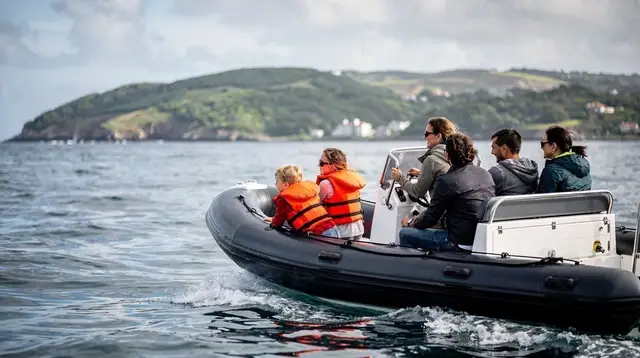
A two-to-three-hour boat trip in open water is a different proposition for a family than a museum or a garden, and it is worth thinking through before booking. Swell that an adult barely notices can be uncomfortable for a small child, and there is no guarantee of a sighting to reward a long, choppy ride. That said, plenty of families do this successfully, usually by choosing calmer months, sitting toward the middle of the boat, and setting expectations that dolphins are the likely highlight rather than a certainty of whales.
For a dedicated look at what to expect with kids on board, see whale watching with children, and for how a whale watching stop fits into a broader family schedule, São Miguel with kids and the family itinerary cover the rest of the day.
If the Season You Want Does Not Line Up With Your Trip
Because sperm whales and dolphins are resident year-round, there is no month where whale watching is simply unavailable, only months where the odds and the sea state differ. A visit built around the spring migration adds a chance at the largest species but also lands in the island’s busiest booking weeks, when boats and cars fill up early. A visit in July or August trades the migratory whales for calmer, warmer conditions and less competition for space on a boat. A November or February trip trades some trip cancellations for quieter harbours and lower prices, and is a legitimate way to see sperm whales and dolphins without building a whole itinerary around a single migratory window.
If whale watching is one piece of a longer south-coast day rather than the whole plan, a full-day west coast tour of São Miguel is a way to combine a whale watching stop with the island’s western viewpoints on a single booking.
For an itinerary built specifically around marine wildlife across several days, see whales and sea, and for the wider category of operators and trip types, whale watching on São Miguel.
What to Book Ahead and What to Pack
Peak weeks during the spring migration fill boats faster than the rest of the year, and a trip booked a day or two ahead has more choice of departure time and operator than one arranged at the dock that morning. Outside that window, same-day availability is usually easier to find, though a rough-sea day can still cancel a booking regardless of how far ahead it was made.
For a broader view of what else on the island rewards advance booking, see what to book in advance on São Miguel. On packing, the short version repeated throughout this site is layers: a windproof layer and something to tie down a hat matter more at sea than anywhere on land, and the full packing list covers the rest of a trip to the island.
Whale Watching Season on São Miguel: Frequently Asked Questions
When is the best time to see whales and dolphins on São Miguel?
Any month works for sperm whales and dolphins, which stay near the island year-round. For the widest range of species, including blue, fin and sei whales, aim for roughly March to June, when the spring migration overlaps with the resident population.
Which whales pass São Miguel during the spring migration?
Blue whales, fin whales and sei whales are the migratory species, moving through Azorean waters on their way to summer feeding grounds roughly between March and June. They are seen from boats, not guaranteed, and years vary.
Are dolphins and sperm whales really around all year?
Yes. Several dolphin species and sperm whales are resident in the deep water off São Miguel year-round, which is why boats run trips in every season, not just spring and summer.
What is a vigia and are they still used today?
A vigia is a shore-based lookout, a role that dates from the whaling era and is still used by whale watching operators today. From a coastal post with binoculars, the vigia spots activity and radios boats toward it, which is why modern trips can find animals so efficiently over open water.
Can a whale watching trip be cancelled?
Yes, regularly. Boats go out in the open Atlantic, and swell, wind or poor visibility can cancel or shorten a trip at short notice, in any season including summer.
Do the boats guarantee a sighting?
No responsible operator guarantees a sighting. These are wild animals in open water, not a marine park, and even in the best months a trip can come back having seen little.
Is whale watching worth doing outside the spring migration?
Yes, because sperm whales and dolphins are resident year-round. Summer and autumn trips regularly find both, even without the migratory whales passing through.
What ended whaling in the Azores, and when?
Commercial whaling in the Azores continued into the twentieth century and ended in the 1980s. The vigia lookout posts built for that industry were repurposed for whale watching rather than abandoned.
Should I book a whale watching trip in advance?
Booking a day or two ahead is worth it during the spring migration, when boats fill up fastest, but is less critical the rest of the year when same-day spots are usually easier to find. A rough-sea cancellation can still happen regardless of when a trip was booked.
Is whale watching suitable for young children?
It can be, though a two-to-three-hour trip in open water suits some children better than others. Choosing a calmer month, sitting toward the middle of the boat, and treating dolphins rather than whales as the likely highlight all help manage expectations for a family trip.
Seasonal Guide on GetYourGuide
Verified deep-linked GetYourGuide tours. Book through these links and we earn a small commission at no cost to you.
GetYourGuide does not provide a product photo for this activity — the image shows the meeting point, photographed by us.