Why São Miguel's Low Season Isn't a Dead Season
What the island actually does between November and March
I keep hearing the same assumption before people fly out in December or February: that they’re arriving in the off-season, the way you’d arrive in a ski town after the lifts have stopped turning, or a beach resort with the restaurants boarded up. São Miguel doesn’t work that way, and the sooner visitors let go of that mental model, the better their trip goes.
There’s no snow line here, no lift pass, no seasonal closure notice on a resort gate. The island’s whole appeal — caldeiras, thermal pools, tea plantations, a farmed green landscape that never really goes dormant — has nothing to do with snow and nothing that switches off when summer ends. What changes in low season is the sky, not the island’s operating hours.
The honest weather, not the marketing version
From November through March, daytime temperatures sit around 14-17°C, the sea cools to roughly 17-18°C, and rain is a real possibility on most days. Wind picks up too, and it isn’t rare for a squall to blow through Ponta Delgada while Furnas, twenty minutes away, stays dry — or the other way round. I’ve stood at the edge of Lagoa do Fogo in full cloud, driven down to the coast twenty minutes later, and found blue sky.
This isn’t a forecast I can promise you. It’s a pattern worth planning around: build slack into your days, don’t chase a single sunset spot as your only plan, and treat a rained-out morning as an excuse for a thermal pool rather than a wasted day. The month-by-month guide breaks this down further if you’re choosing between low-season months.
What stays open, in full
This is the part that surprises people most. The things that make São Miguel worth the flight in the first place keep running right through winter:
| Experience | Low season status |
|---|---|
| Terra Nostra & Poça da Dona Beija thermal pools | Open year-round |
| Caldeira Velha thermal waterfall | Open year-round |
| Gorreana and Porto Formoso tea plantations | Open year-round |
| Furnas caldeiras and cozido lunch | Cooked and served daily |
| Museums and old-town Ponta Delgada | Open, quieter |
| Whale and boat trips | Weather-dependent, more cancellations |
I’d argue the thermal pools are actually better in low season. Stepping into 35-40°C water while it’s raining and cool outside is a genuinely different, arguably superior version of the same experience you’d get queuing for a spot in August. Terra Nostra’s iron-rich pool doesn’t care what month it is, and neither does Poça da Dona Beija.
Furnas in particular rewards a winter visit. The caldeiras steam harder against cold air, the cozido still gets buried in the same hot ground it always has, and the crowds around the Terra Nostra garden thin right out. A day like the one covered by a guided day out to the Furnas caldera, its thermal garden and a cozido lunch runs exactly the same way in February as it does in July — the pots don’t know the season.
Where the cancellations actually happen
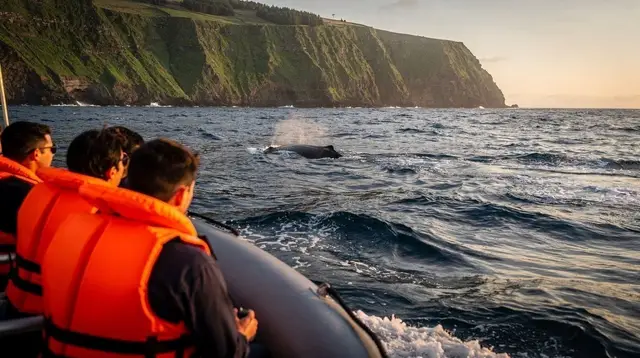
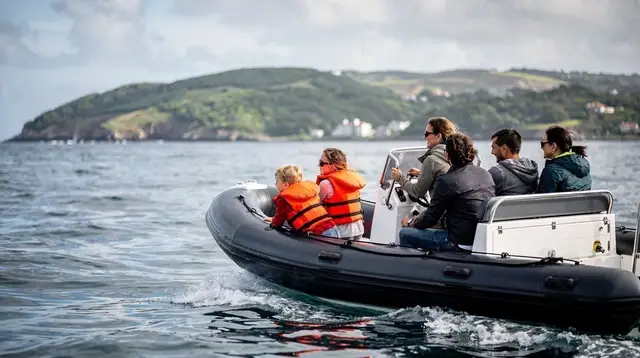
The honest caveat, and the one worth planning for: sea-based activities are where low season bites. Whale watching and other boat tours depend on the ocean being workable, and the North Atlantic swell picks up from November to March. Operators cancel or reschedule far more often than they do in summer — not because the whales leave (sperm whales and dolphins are resident all year) but because putting a small boat out in a rough sea isn’t worth the risk.
If a boat trip is the one thing you can’t do without, build in a spare day or two and don’t schedule it for your last afternoon. Everything land-based has no such problem. A day on a west-coast circuit taking in Sete Cidades’ crater lakes and the coastline around Mosteiros, or a full loop of the island’s viewpoints and caldeiras by jeep, runs on the same roads whatever the sea is doing.
Why I still tell people to go
I’ve done São Miguel in August, elbow to elbow at Vista do Rei, and I’ve done it in December with the whole viewpoint to myself and cloud rolling through the crater below. I’d choose December again. Driving the island’s roads in low season means fewer rental cars queued behind you on the EN1-1A, easier tables at the Furnas restaurants that get booked out solid in July, and a landscape that, being genuinely green and farmed rather than a summer backdrop, looks exactly the way it’s supposed to look in the rain.
None of this is a sales pitch dressed up as honesty. Low season here really does mean more wind, more rain, and a real chance your boat trip gets bumped. It also means the caldeiras, the pools, the tea fields and the food are all still there, still working, at a fraction of the summer traffic. If you want a version of São Miguel with a jeep tour built around the caldeiras rather than the coast, a private jeep route reaching viewpoints a rental car can’t works just as well under grey skies as blue ones — arguably it works better, with the fumaroles standing out more sharply against cold, damp air.
For itinerary planning specifically built around this stretch of the year, the winter escape itinerary and the dedicated low-season guide go into more day-by-day detail than a personal piece like this one can. But the short version is the one I keep repeating to friends who ask if December is “worth it”: nothing on this island closes for winter except the sea, some of the time.
Questions people ask me about São Miguel’s low season
Is São Miguel worth visiting in winter?
Yes, if you go in for the right reasons. Land-based sights, thermal pools and food stay fully open, prices and crowds drop, and the island’s volcanic scenery looks its best when everything is green and the caldeiras are steaming against cold air.
What’s the weather like on São Miguel from November to March?
Mild but unsettled: daytime temperatures around 14-17°C, rain likely on most days, wind a regular feature, and the sea around 17-18°C. It can also change from valley to valley within the same afternoon.
Do the thermal pools stay open in low season?
Yes. Terra Nostra, Poça da Dona Beija and Caldeira Velha all run through winter, and a warm soak in cool, damp air is arguably a better experience than the same pool in August heat.
Why do boat trips get cancelled more often in winter?
Swell, not cold. Whale watching, the Ilhéu de Vila Franca boat and other sea outings depend on manageable ocean conditions, and the North Atlantic is rougher from November to March, so operators cancel or postpone more often for safety.
Is there a ski season or mountain closures on São Miguel?
No. São Miguel is a volcanic island with no ski resorts, lifts or snow closures, so none of the usual mountain-town low-season shutdown applies. The odd closure that does happen is the road up to Lagoa do Fogo in poor weather, not the island itself.
What should I pack for a low-season trip to São Miguel?
A proper waterproof jacket, layers, sturdy shoes that can handle mud, and a swimsuit you don’t mind staining in the iron-rich pools. Sunny spells do happen between showers, so pack for both.
Is it cheaper to visit São Miguel in winter?
Generally yes. Car rental and accommodation both ease off outside the June-to-September peak, and restaurants and thermal pools are far less likely to be full, though it’s still worth booking ahead for Furnas dining.
Seasonal Guide on GetYourGuide
Verified deep-linked GetYourGuide tours. Book through these links and we earn a small commission at no cost to you.
GetYourGuide does not provide a product photo for this activity — the image shows the meeting point, photographed by us.