A 3-Day São Miguel Itinerary for the Winter Months
Why Winter Works on São Miguel
Between November and March, São Miguel drops its crowds, its prices and a good part of its sunshine, but almost nothing that makes the island worth visiting actually closes. Daytime temperatures sit around 14-17°C, the sea cools to roughly 17-18°C, and rain is possible on any given day — sometimes for an hour, sometimes for most of it, and rarely everywhere on the island at once. This is the honest low season, not a dead one, and the trick to enjoying it is choosing activities that don’t depend on a clear sky or a calm sea.
That’s the whole logic behind this three-day loop. Day one stays close to Ponta Delgada and its covered, indoor and old-town attractions. Day two goes to Furnas, where steaming ground and a hot pool are actually more enjoyable in cold air than in a heatwave. Day three pairs a thermal waterfall with a tea plantation — two stops that are sheltered, indoor-adjacent, and open every day of the year. What’s deliberately missing is a boat trip and the crater lake at Lagoa do Fogo, both covered below.
| Day | Focus | Weather-dependent? | Anchor stop |
|---|---|---|---|
| 1 | Ponta Delgada | Low — mostly indoor and covered | Gruta do Carvão lava tube |
| 2 | Furnas | Low — caldeiras and pool work in rain | Terra Nostra thermal pool |
| 3 | Caldeira Velha & Gorreana | Low — waterfall pool and tea house | Gorreana tea plantation |
Day 1: Ponta Delgada, Under Cover
Base yourself in Ponta Delgada for the first night — it keeps airport transfers short and puts the day’s stops within walking distance of each other, which matters when the forecast is uncertain. Start with the black-and-white Portas da Cidade arches and the old streets around them; a self-paced walk through the old town covers the Igreja Matriz de São Sebastião, the Forte de São Brás and the harbour front without needing a car or good weather.
If rain sets in, head underground. The Gruta do Carvão, a lava tube on the edge of town, is one of the few genuinely all-weather attractions on the island — cool, dry and entirely out of the wind. A guided walk through the lava tube takes under an hour and works exactly as well in a downpour as on a sunny afternoon. For a broader look at the town’s layout and history, a half-day Ponta Delgada city tour strings the old town, the Portas do Mar marina front and the market together in one loop, and doubles as an easy orientation day if you’ve just landed.
a guided historic walk through Ponta Delgada’s old town is a good option for this first afternoon — it’s led on foot, mostly under cover between churches, arcades and courtyards, and it holds up regardless of what the sky is doing.
Lunch or an early dinner belongs at the Mercado da Graça, the covered food market a few minutes from the old town centre; a guide to the market’s stalls and seafood points out what’s actually local versus what’s aimed at cruise-ship day-trippers. Ponta Delgada in winter is quiet by early evening, which makes it an easy first night: no long drive, no exposed viewpoint, nothing that depends on the weather holding.
Day 2: Furnas — Fumaroles Against Cold Air, Then a Hot Soak
Furnas is the day this itinerary is built around, and winter is arguably its best season rather than its worst. The village sits inside an active caldera, and the steaming ground around the Lagoa das Furnas — where cozido is still cooked underground on volcanic heat, with no fire, for five to seven hours — looks more dramatic against cold, damp air than it does in August. A walking guide to the fumaroles and caldeiras covers the safe paths around the vents; stick to the marked routes, since the ground genuinely is hot in places.
Cozido itself needs booking ahead regardless of season — restaurants take the order and manage the cooking hole, and it isn’t something you can arrange on the spot. A primer on how cozido actually works and a list of where to eat and how far in advance to book are worth reading before you leave Ponta Delgada. If you’d rather not self-drive the caldera roads on a first winter visit, a half-day Furnas tour that covers the lake, the fumaroles and the cozido lunch handles the logistics for you.
The other half of the day is Terra Nostra Park, and this is where winter genuinely earns its keep. The thermal pool is iron-rich and orange, sits around 35-40°C, and staying in it while the air temperature hovers in the mid-teens is a different, better experience than a summer afternoon in the same water — just bring a swimsuit you don’t mind staining, since the iron never fully washes out. A guide to what to expect at the Terra Nostra pool covers depth, temperature and etiquette.
For a version of the day with a short guided walk built in, a private tour combining a lake-side walk with time at Terra Nostra Park covers both halves of the day without you needing to plan the route yourself. If the underground cooking process on its own is what interests you most, a dedicated Furnas Valley day trip is built around exactly that pairing of caldeiras and thermal pool.
Stay a second night either in Furnas itself or back in Ponta Delgada, depending on how early you want to start day three — Furnas keeps the next morning’s drive shorter.
Day 3: Caldeira Velha and Gorreana, Two Doors That Never Close
The last day pairs two stops that share a quality this itinerary depends on: neither one has a season. Caldeira Velha, a thermal waterfall and pool set into the forested slope of the Água de Pau massif, is smaller and less developed than Terra Nostra, with warm water running straight off the falls into a series of natural pools shaded by tree cover — which also means less exposure if it’s drizzling.
A short walking guide to Caldeira Velha covers the paths and the pool itself, and a guided hike that takes in Caldeira Velha along a forested trail is a good option if you’d rather not navigate the access road yourself in wet conditions.
From there, head north to Gorreana, founded in 1883 and the oldest working tea plantation in Europe — one of only two left on the continent, alongside nearby Porto Formoso. Entry to Gorreana’s factory and fields has long been free and self-guided, the machinery runs under a roof, and the tasting room at the end is warm and dry regardless of what’s happening outside. A guide to visiting the Gorreana plantation covers what the factory tour actually shows you, and if you have time for both, a comparison of Gorreana and Porto Formoso helps decide whether the second, smaller plantation is worth the detour.
Loop back toward Ponta Delgada along the north coast through Ribeira Grande, the island’s second town, timing your drive so the last stretch isn’t in the dark — winter daylight is shorter and the coast roads are narrow.
Why This Itinerary Skips the Boat and the Crater Lake
Two things are conspicuously absent from these three days, and both are left out on purpose.
The first is Lagoa do Fogo, the crater lake at the island’s centre. It has no café, no ticket office, no bins and no toilets in any season, and in winter the access road closes more often for fog and wind on top of that. Building a day around it risks arriving to find the road shut, or the lake itself invisible inside cloud. If the weather happens to be exceptionally clear during your visit, it can be added as a short detour — but it should never be the plan a winter day depends on.
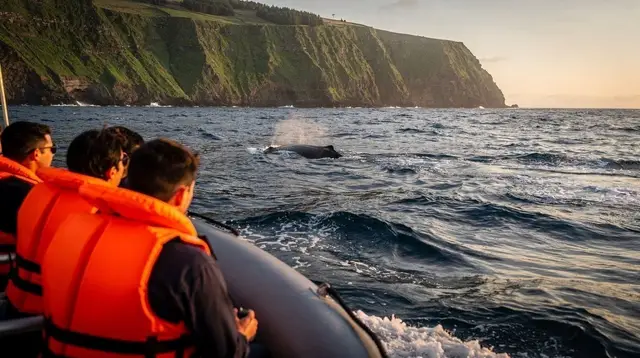
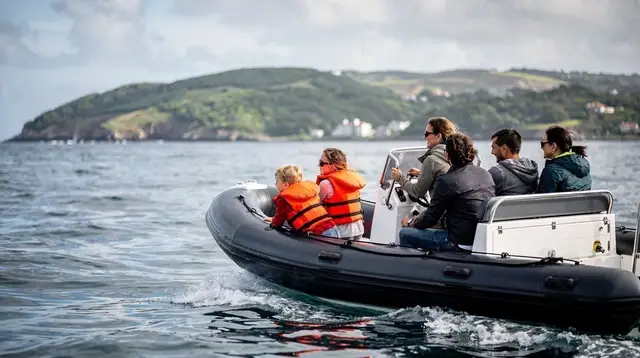
The second is anything on the water: whale watching, the boat crossing to the Ilhéu de Vila Franca, or a harbour trip from Ponta Delgada or Caloura. Sperm whales and dolphins are resident year-round and sightings do happen in winter, but boat operators cancel far more often when the Atlantic is up, and a trip built around a sailing that gets postponed is a wasted day. If you want to try, treat it as a bonus you slot in if a clear, calm morning appears — never as day two or three’s anchor. A look at how weather affects boat-trip cancellations and how operators handle rescheduling is worth reading before you book anything on the water.
Practical Notes for a Winter Drive
A rental car is the practical default for this loop, and the roads themselves stay in decent shape through winter — it’s visibility and closures, not surface conditions, that cause the most disruption. The EN1-1A rings the island and the dual-carriageway via rápida connects Ponta Delgada with Ribeira Grande and Lagoa quickly; the smaller roads up toward Lagoa do Fogo and Sete Cidades are the ones most likely to be closed or fogbound, which is one more reason this route avoids them. Fill the tank before heading out from Ponta Delgada each morning, since stations thin out once you’re away from the main towns.
Prices in shops and restaurants are shown VAT included, at the Azores’ lower regional rate rather than the mainland’s, and a tip is a simple round-up rather than a percentage. None of that changes with the season, but off-season restaurant tables and thermal-pool changing rooms are noticeably quieter, which is arguably the best argument for coming in winter at all. For a broader sense of what does and doesn’t slow down between November and March, a guide to São Miguel’s low season and a comparison of the island’s thermal pools are useful reading before you go.
FAQ: Planning a Winter Trip to São Miguel
Is São Miguel worth visiting in winter?
Yes, if you plan around the season rather than against it. Thermal pools, caldeiras and tea plantations run year-round, prices and crowds drop, and the island stays green. What doesn’t hold up is a plan built on boat trips or the Lagoa do Fogo road, both of which lose reliability from November to March.
What’s the weather really like on São Miguel between November and March?
Mild but wet and windy, with daytime temperatures typically around 14-17°C and rain possible on any given day. Conditions also vary by location: it can be raining in Furnas while Ponta Delgada stays dry, so a fixed forecast for the whole island is never reliable.
Do the thermal pools stay open in winter?
Yes. Terra Nostra Park, Caldeira Velha and the island’s other thermal sites operate all year, and cold, damp air makes a hot soak feel better, not worse. Poça da Dona Beija near Furnas is open too, and makes a good add-on on a slower afternoon.
Should I book a whale-watching or boat trip during a winter visit?
Treat it as optional rather than a pivot for your day. Sea conditions cancel far more boat trips in winter than in summer, and this itinerary deliberately keeps every day’s core plan on land so a cancelled crossing to the Ilhéu de Vila Franca or a rescheduled whale-watching trip costs you nothing.
Is Lagoa do Fogo worth attempting in winter?
It’s left out of this itinerary on purpose. The crater lake has no café, ticket office or shelter of any kind, and the access road closes more often in winter for fog and wind. If it’s genuinely clear when you’re there, it can be added as a detour, but it should never anchor a winter day.
Do I need a rental car for this itinerary?
Yes. Buses run on school and work timetables rather than sightseeing ones, there’s no train on São Miguel, and Furnas, Caldeira Velha and Gorreana sit far enough from each other and from Ponta Delgada that a car is the only practical way to string all three into three days.
Are Furnas restaurants open in the off-season?
Yes, and cozido das Furnas is served year-round, but restaurants that arrange the underground cooking still take bookings rather than walk-ins, so call or book ahead even in a quiet month.
What should I pack for a São Miguel winter trip?
Layers, a proper waterproof rather than an umbrella, and a swimsuit you don’t mind staining — the iron-rich water at Terra Nostra turns fabric orange over time. Sturdy shoes help too, since paths around the caldeiras and the tea fields are often damp.
Seasonal Guide on GetYourGuide
Verified deep-linked GetYourGuide tours. Book through these links and we earn a small commission at no cost to you.
GetYourGuide does not provide a product photo for this activity — the image shows the meeting point, photographed by us.