How to Get to the Ilhéu de Vila Franca by Boat
How do you get to the Ilhéu de Vila Franca?
By a short boat shuttle from the marina at Vila Franca do Campo, roughly ten minutes each way. The islet is a nature reserve with a daily visitor cap, the shuttle runs in season only, roughly June to September, and it does not sail in heavy sea.
What the Ilhéu de Vila Franca actually is
The Ilhéu de Vila Franca is a small, near-circular islet sitting just off the south coast of São Miguel, opposite the town of Vila Franca do Campo. It is what remains of a collapsed volcanic crater, its rim now a low ring of cliff and scrub breaking the surface of the Atlantic, with a narrow beach and a flooded centre. Seen from the air or from the hills above town, it reads as a ring of green and black rock enclosing a pool of blue-green water, connected to the open sea by a single channel.
That last detail matters, because it is easy to conflate two different things: getting to the islet, and what you do once you are there. This page is about the first part only — the boat crossing itself, who runs it, when it operates, and why “just show up” is the wrong plan here. Swimming inside the crater is covered separately, in the snorkelling guide to the Ilhéu de Vila Franca, and cetacean sightings from a boat belong to the whale-watching boat trip guide, not here.
The islet and the waters around it form a nature reserve, managed with a capped number of visitors allowed ashore at any given time. That single fact — a limited, protected site rather than an open beach — shapes almost everything else about how a visit works, from the boats that are allowed to operate to the months in which they run at all.
The crossing: from Vila Franca do Campo’s marina
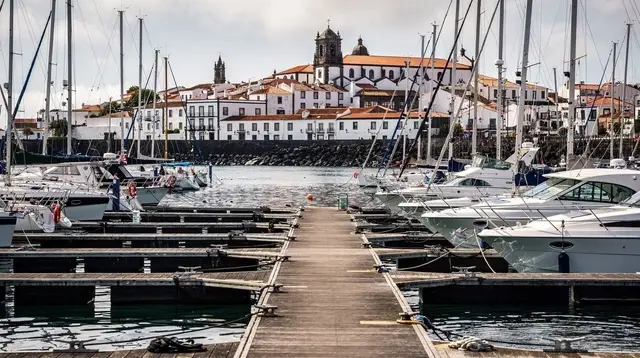
Every crossing to the islet starts in the same place: the small marina at Vila Franca do Campo, on São Miguel’s south coast. The town sits about 20 to 25 minutes’ drive east of Ponta Delgada along the coast road, and its harbour front is compact enough to find the boats without much searching — ask at the marina office or look for the operators’ kiosks near the moorings.
The trip itself is short. The channel between the harbour and the islet is roughly a ten-minute run each way, which is part of why the visit feels more like a shuttle than an excursion in its own right — most of a half-day out here is spent at or near the islet, not travelling to it. Boats range from small open craft carrying a handful of passengers to slightly larger tour boats that circle the crater rim before or after a landing.
A few operators run the crossing as a standalone shuttle, ferrying visitors out, waiting, and bringing them back on a rotation through the day. Others fold it into a longer half-day trip along the south coast. Both are legitimate ways to do it; which suits you depends on whether you want a quick there-and-back or a longer morning that takes in more of the coastline around Caloura and Vila Franca on the way.
For a straightforward crossing built around the islet itself, the Vila Franca do Campo boat tour around the islet covers exactly that — out to the crater, a look at the rim and channel, and back, without adding unrelated stops. If you would rather see the islet as part of a broader outing along this stretch of coast, the half-day tour around Vila Franca do Campo extends the same waters into a longer morning or afternoon on the water.
Season: roughly June to September, and not fixed beyond that
The shuttle to the Ilhéu de Vila Franca is a seasonal service, not a year-round one. In practice that means it runs through the warmer months, roughly June to September, when both the sea state and the reserve’s own visiting rules allow it. Outside that window, do not plan a São Miguel itinerary around reaching the islet — there may be no scheduled crossing running at all, whatever the day’s weather looks like from the shore.
Even within the season, “roughly June to September” is a description of the usual pattern, not a guarantee stamped on a calendar. Early June and late September sit at the edges of the window, and operators adjust their schedules from one year to the next depending on demand and on how the sea is behaving. If a visit here is central to your plans, checking current dates directly with an operator before you build the rest of the day around it is worth the five minutes it takes.
This is a good moment to say plainly what this page is not claiming: the Ilhéu de Vila Franca is not a year-round, on-demand attraction. It is a seasonal, weather-dependent, capacity-limited site. Treat any suggestion otherwise — including a generic search result that doesn’t specify a season — with caution.
Sea conditions: why the boat sometimes doesn’t go
Vila Franca do Campo faces the open south Atlantic, and the short channel out to the islet crosses water that has nothing between it and open ocean to the south. That exposure is exactly why the crossing is sea-state dependent: in calm summer conditions it is an easy ten-minute hop, but with any meaningful swell or wind, the same channel becomes unsafe for the small boats involved, and the shuttle is called off.
There is no fixed threshold you can check from home — no single wind speed or wave height that reliably predicts whether the boats will run on a given morning. Operators make that call locally, sometimes the evening before, sometimes on the morning itself, based on conditions right at the marina and along the crossing. If you are visiting during a period of unsettled weather, build in flexibility: a spare day, or at least the expectation that a booked slot might shift or cancel.
For a broader look at how weather affects boat trips around São Miguel generally — not just this one crossing — the guide on weather and cancellations for São Miguel boat tours is worth reading before you commit to a tight schedule involving any boat on this coast.
The visitor cap: why this is not a walk-on attraction
The Ilhéu de Vila Franca is protected as a nature reserve, and access is managed with a cap on how many people are allowed ashore at once. This is not a bureaucratic formality; it is the reason the site has stayed in the condition that makes it worth visiting at all — a crater beach and channel that see a controlled trickle of visitors rather than an open flow.
In practical terms, the cap means two things for planning. First, in peak weeks — essentially July and August — demand for the crossing regularly runs up against the daily limit, and booking ahead is the difference between getting a boat and not. Second, even outside peak season, treat “we’ll just turn up at the marina” as a plan B, not a plan A: a same-day spot can work when things are quiet, but there is no promise of one.
If you want the reassurance of a fixed slot rather than a same-day gamble, both the private sunset boat tour around Vila Franca do Campo and the private boat tour along the Vila Franca do Campo islet coast are booked in advance for a specific time, which sidesteps the daily-cap uncertainty that comes with a walk-up visit.
More background on why the reserve is capped, and what the daily limit is trying to protect, is covered in the piece on the islet’s visitor cap.
Planning the day around the crossing
Because the boat only runs in season and only in workable sea conditions, the practical approach on São Miguel is to treat a visit to the Ilhéu de Vila Franca as a flexible half-day rather than a fixed appointment. A useful pattern:
| Step | What it looks like |
|---|---|
| Before travel | Confirm the current season dates with an operator if visiting in early June or late September |
| The evening before | Check whether tomorrow’s crossing is confirmed to run |
| Morning of | Arrive at the marina with time to spare — queues form on busy summer mornings |
| If cancelled | Have a fallback nearby: the town of Vila Franca do Campo itself, or the chapel above town |
| If confirmed | Allow a half-day rather than a fixed hour, since return timings shift with demand and conditions |
Vila Franca do Campo rewards a slow morning even without the islet crossing. The harbour front, the old town, and the walk up to Nossa Senhora da Paz are all worth the visit on their own, which softens the disappointment of a cancelled crossing considerably. For the fuller picture of the town’s own history — including its unlikely spell as the island’s original capital — see the guide to Vila Franca do Campo as the former capital and the related blog piece on the same history.
If your trip has some slack in the calendar, building the islet crossing into a wider south-coast day — taking in Caloura’s harbour and boat trips as well — spreads the risk: a cancelled shuttle one morning still leaves a full day of coastline to explore.
Other ways to see the islet from the water
Not every boat trip that passes the Ilhéu de Vila Franca lands on it. Some operators run circling trips that show the crater rim, the narrow channel entrance, and the cliffs from the water without a landing — useful if the day’s visitor cap for landings is full, or if you simply want the view rather than the beach. Others combine a look at the islet with wider south-coast sightseeing that starts from Ponta Delgada’s own marina; see the boat tours departing from Portas do Mar in Ponta Delgada for that angle.
Whatever the operator, none of this is a substitute for the reserve’s own landing rules — a circling view is a different product from a landing, and the two are not interchangeable if a beach visit is the point of your trip. Ask specifically, when booking, whether the crossing includes going ashore.
Where this fits in a São Miguel itinerary
The Ilhéu de Vila Franca sits on the itineraries built around water and the south coast rather than the volcanic-interior routes further north. If you are shaping a trip around boats, whales, and coastline generally, the whales and sea itinerary groups this kind of morning with the island’s other marine activities. For visitors with three days on the island trying to fit the south coast in alongside the caldera towns, the classic three-day itinerary is a reasonable frame to slot a half-day here into.
More broadly, the things to do around Vila Franca do Campo and the island’s full list of boat tours both give a wider sense of what else operates from this stretch of coast, in case the shuttle to the islet is not running on the day you have available.
Booking the Ilhéu de Vila Franca Boat Trip: Questions Answered
Can you get to the Ilhéu de Vila Franca all year round?
No. The shuttle service is seasonal, running roughly from June to September when the sea and the visitor rules allow it. Outside that window there is no scheduled crossing, and the reserve itself may be closed to landings regardless of the weather.
Do you need to book the boat in advance?
Booking ahead is strongly recommended in July and August, when demand is highest and the daily visitor cap fills early in the day. Outside peak weeks a same-day crossing is sometimes possible, but it is never guaranteed.
What happens if the sea is too rough?
The shuttle simply does not run. Vila Franca do Campo sits on the open south coast, and the short crossing to the islet is called off whenever swell or wind make it unsafe, with no fixed rule for how far ahead this is known.
Is there a limit on how many people can visit the islet at once?
Yes. The Ilhéu de Vila Franca is a protected nature reserve, and the number of visitors allowed ashore at any one time is capped to limit pressure on the crater’s ecosystem and beach.
Where does the boat leave from?
From the marina in Vila Franca do Campo, on São Miguel’s south coast, about 20 to 25 minutes’ drive from Ponta Delgada. Boats and tour operators are based at or near the harbour front.
Is the boat trip the same as swimming inside the crater?
No. The crossing gets you to and from the islet; whether you go into the water once there is a separate question of season, conditions, and the specific trip you book. Some boats simply circle the islet without a landing.
Does the boat trip include whale watching?
Not as a rule. Boats that circle or land on the Ilhéu de Vila Franca are focused on the islet itself; sightings of dolphins or whales along the way are possible but incidental, not the purpose of the trip.
Boat Tours on GetYourGuide
Verified deep-linked GetYourGuide tours. Book through these links and we earn a small commission at no cost to you.
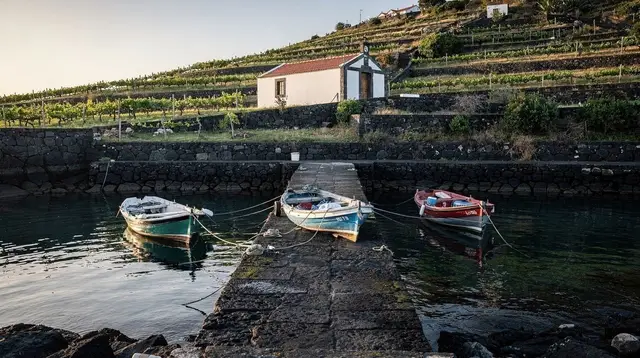
GetYourGuide does not provide a product photo for this activity — the image shows the meeting point, photographed by us.