Snorkeling Inside the Vila Franca Islet Crater
Can you snorkel inside the Vila Franca islet crater?
Yes, in season and only when the sea allows it. The islet is a collapsed volcanic crater with one narrow breach to the ocean, and swimmers enter the flooded caldera by boat under a daily visitor cap set by the nature reserve.
Swimming Inside a Drowned Volcano
The first thing that registers, mask down, is how the sound changes. Outside the breach, the Atlantic is a continuous rush against rock. Cross the narrow gap into Ilhéu de Vila Franca and that rush drops to a murmur, muffled by a ring of dark stone that used to be a volcano’s rim and now holds a flooded caldera the size of a small harbour. You are floating inside what erupted, collapsed, and filled with sea — not beside it, inside it. That is the specific, slightly disorienting sensation this spot sells, and no other snorkeling stop on São Miguel offers quite the same one.
This guide is about that feeling in the water, not about how the boat gets you there or when the shuttle runs — for the crossing, the operators, and the seasonal timetable, see the Ilhéu de Vila Franca boat trip guide. What follows assumes you are already through the breach, mask fogging slightly in the humidity, deciding whether to put your face in.
What the Islet Actually Is, Underwater and Above It
Vila Franca do Campo sits on São Miguel’s south coast, and a short distance offshore from its harbour is a near-circular islet that is, geologically, a crater. At some point in the island’s volcanic past this cone erupted, then partially collapsed in on itself, and the sea broke through one section of the rim. What is left is a ring of cliff, mostly closed, open on one side where the ocean pours in and out with the tide. Inside that ring the water is sheltered on three sides and exposed on the fourth, which is why conditions inside can be swimmable while the open coast a few hundred metres away is doing something rougher.
Below the surface, the walls of the crater continue down as they do above it: dark, vesicular volcanic rock, pitted and ledged rather than smooth, dropping into a sandier centre where the caldera floor levels out. It is not a coral reef and nobody markets it as one — the appeal is the geology as much as the marine life, the sense of swimming in a bowl that nature carved and then flooded.
When You Can Actually Get In the Water
This is the fact that matters most and the one worth repeating: entry to the crater’s interior is seasonal, boat-only, and capped. Ilhéu de Vila Franca is a protected nature reserve, and the reserve authority sets both a season for visits — broadly the warmer, calmer months — and a daily limit on how many people can land or swim inside on a given day. Outside that season, or once the cap is reached, the breach is not open to snorkelers regardless of how the water looks from the mainland shore.
There is no route into the crater that does not involve a licensed boat crossing the open water between Vila Franca’s harbour and the islet. Swimming out from the coast is not a shortcut anyone takes — the crossing is open Atlantic, not a lagoon, and it is neither offered as an activity nor sensible to attempt independently. If the boats are not running that day, on-site, that day, the interior is not swimmable, full stop; there is no back door.
Sea state decides the rest. The same narrow breach that lets calm water in during good conditions turns into a funnel for swell when the Atlantic is up, so a rough spell can close the crater to swimmers even in the middle of the official season. None of this is a formality — operators and the reserve genuinely cancel rather than run trips into a surging channel.
The Feeling in the Water
Once you are in, the crater reads as calmer and more enclosed than almost anywhere else you will snorkel on São Miguel. The rock walls curve around you rather than stretching off in a straight line, so you always have a sense of the space’s edges, which some people find reassuring and others find faintly claustrophobic in a pleasant way. Sunlight comes down through the gap in the rim at an angle rather than from directly overhead everywhere, so parts of the crater interior stay shadowed even at midday, and the light shifts noticeably as you swim from the sunlit centre toward the walls.
Temperature-wise, it is the same Atlantic water as the open coast — there is no thermal quirk here, unlike the geothermal pools inland at Terra Nostra or Caldeira Velha. What changes is motion, not heat: less chop, less current pulling you sideways, more of a sense of floating in place. For a general read on what the water temperature does across the year islandwide, the diving and water temperature guide covers the seasonal range in more depth than this page needs to.
What You’ll See Below the Surface
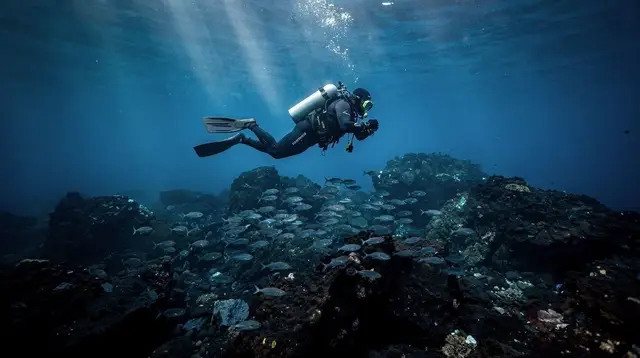
Expect fish rather than coral. Schools of bream move along the crater walls in loose, shifting formations, damselfish hold territory around individual rock ledges, and sea urchins cluster in the shallower crevices near the entry points — worth noting if you are wearing anything less than reef shoes or fins. The centre of the caldera, sandier and more open, is where a ray occasionally crosses, usually low and unhurried, more interested in the sand than in you.
Visibility is the one variable nobody can promise. On a calm day after a settled week it can be genuinely clear, walls and fish visible from well above them. After swell or rain runoff it can turn cloudier, particulate suspended in the water column, and there is no way to know in advance which day you will get. That unpredictability is Atlantic snorkeling, not a flaw specific to this site — the same applies at Mosteiros and Caloura along the rest of the coast.
Visitor Cap and Why It Exists
The daily limit on visitors is not a marketing device, it is a management tool. A crater this size, with one point of access and a contained ecosystem, absorbs a finite number of swimmers and boats before the water quality and the marine life inside start to show it. The reserve authority sets the number, tour operators book against it, and on the busiest weeks of summer that cap can fill — one more reason a guided trip booked ahead beats turning up at the harbour and hoping.
Because the cap and the crossing are handled together by licensed operators, this is one of the few spots on the island where going with a guide is less about comfort and more about the only legal way in. There is no independent, unguided route to the crater’s interior.
Getting In: Depth, Fitness, and Comfort
The water near the entry points is a moderate depth rather than a shallow paddling pool, so this suits swimmers who are comfortable in open water over their head, not strictly beginners in the swimming-pool sense. That said, compared with snorkeling directly off an exposed stretch of coast, the enclosed crater is a gentler introduction — less current to fight, no surf to time an entry against, walls close enough to orient by.
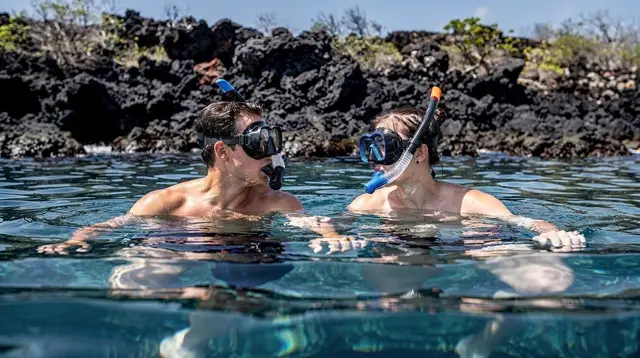
A well-fitted mask matters more here than fins do, since most of the swimming is unhurried and close to the rock rather than covering distance. Reef shoes or sturdy fins help around the urchin-studded shallows near where boats moor. None of this is technical diving — it is recreational snorkeling with a slightly more dramatic backdrop than usual, and guided trips generally include the gear and a briefing on where the urchins and the current are that day.
Comparing It to Other Snorkeling Spots on São Miguel
| Spot | Setting | Typical conditions | Access |
|---|---|---|---|
| Ilhéu de Vila Franca | Inside a flooded crater | Calmer, sheltered, but tide- and swell-dependent | Boat only, seasonal, daily cap |
| Caloura | Small sheltered harbour cove | Generally calm, easy entry | By car, most of the year |
| Mosteiros | Open black-sand coast with sea stacks | More exposed, swell-dependent | By car, weather permitting |
The crater is the most distinctive of the three and the most restricted; Caloura is the easiest fallback on a day the islet is closed to visitors.
Booking a Guided Snorkeling Trip
Because the crossing and the crater cap are managed together, almost everyone who snorkels inside the islet does so on a guided trip. A half-day excursion out of Vila Franca do Campo typically bundles the boat crossing with time inside the crater and a guide who knows where the current runs strongest at the breach.
For a trip built specifically around getting in the water rather than sightseeing from the boat, look at a dedicated snorkeling outing at Vila Franca do Campo or one framed explicitly as a guided snorkel tour of the islet itself, which usually means smaller groups and more time actually in the crater rather than in transit.
If you would rather pair the swim with a wider look at the south coast — Caloura, the Água de Pau coastline, or a broader loop — the whales and sea itinerary sketches how a water-focused day on São Miguel can be structured around one or two boat departures rather than a packed schedule.
Practical Notes Before You Go
Bring your own mask if you have a well-fitting one you trust; rental gear works but a bad seal ruins the experience faster than cold water does. Reef shoes earn their weight near the urchin-lined entry points. A rash guard covers both sun and the minor scrapes that come from brushing volcanic rock. Because sea state can cancel a trip on short notice even in season, avoid scheduling the islet crossing on your last morning before a flight — for the general pattern of how boat trips get cancelled or rescheduled around São Miguel, the boat tours and weather guide explains what to expect and how operators typically handle it.
The islet has no facilities of its own beyond what the tour brings — no shop, no café, nothing to buy once you’re across. Sun exposure on the water is stronger than it feels, especially with cloud cover that Azorean weather produces often; sunscreen goes on before the boat leaves the harbour, not after.
For how conditions shift month to month, including the window when the crater is most likely to be open, the best time to visit São Miguel guide and the month-by-month guide both cover the seasonal picture in more detail than fits here. General safety notes for the island’s coastline and water are gathered in the safety and hazards guide.
For more of the region’s water-based activities and their own operators, browse the island’s diving and snorkeling category or the things to do at Ilhéu de Vila Franca specifically. Background on why the visitor cap exists, straight from the reserve’s own logic, is covered briefly in the islet visitor cap explainer.
Snorkeling at the Vila Franca Islet: Your Questions
Can you swim inside the Vila Franca islet crater?
Yes. The crater rim has one breach where the Atlantic enters, and inside that ring the water sits calmer than the open sea. Swimming and snorkeling are allowed in season, within the boat trip’s time window and the reserve’s daily visitor limit.
Is snorkeling at Ilhéu de Vila Franca good for beginners?
Mostly yes. The enclosed water is calmer than open-coast spots like Mosteiros, and depths near the entry points are moderate, but it is still open ocean water with a current at the breach, so confident swimmers and a snug-fitting mask matter more than experience.
Why is there a limit on how many people can visit?
The islet is a protected nature reserve, and both the crater’s marine life and its narrow landing point cap how many boats and swimmers it can absorb in a day without damage. The cap is enforced by the reserve authority, not by tour operators.
What will you actually see underwater?
Dark volcanic rock walls, schools of bream and damselfish, sea urchins in the shallows, and occasionally a ray over the sandy centre. Visibility depends on recent swell and can range from murky to genuinely clear within the same week.
Can you swim to the islet from the mainland coast?
No. The islet sits offshore from Vila Franca do Campo across open water, and swimming out is neither offered nor safe. Every visit to the crater’s interior happens by licensed boat, and only within the season the reserve keeps it open.
Is the water inside the crater warmer than the open sea?
Not meaningfully warmer, since it is the same Atlantic water exchanging through the breach, but it is calmer and more sheltered from wind and swell, which is what makes it feel gentler than snorkeling directly off the coast.
What happens if the sea is too rough?
Boats do not run and the reserve does not open the breach to swimmers, because the same channel that lets calm water in also funnels swell straight into the crater in poor conditions. Trips are rescheduled or refunded rather than run in unsafe seas.
Diving & Snorkelling on GetYourGuide
Verified deep-linked GetYourGuide tours. Book through these links and we earn a small commission at no cost to you.
GetYourGuide does not provide a product photo for this activity — the image shows the meeting point, photographed by us.