Ilhéu de Vila Franca Has a Visitor Cap, Not an Open Door
Why the Islet Boat Doesn’t Run on Your Schedule
The first time I planned a day around Ilhéu de Vila Franca, I made the mistake everyone makes: I treated it like a beach. Pack a towel, drive down, walk in whenever. It isn’t that, and the sooner a visit is planned around what the islet actually is, the less likely the day is to fall apart.
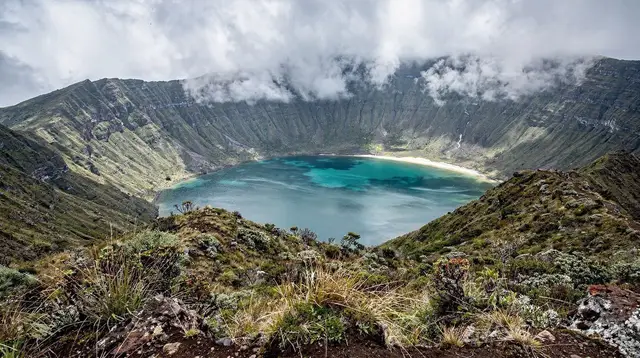
Ilhéu de Vila Franca sits just off the harbour at Vila Franca do Campo, on the south coast a short drive from Furnas. From the marina it looks almost decorative, a low green ring a few hundred metres offshore. Up close it’s a collapsed volcanic crater, its seaward wall long since breached by the Atlantic, so that the sea now fills what used to be the caldera floor. Inside that ring the water is sheltered enough to swim in, which is the whole reason people want to go. But it is a nature reserve, managed as one, and it behaves like one: access is controlled, seasonal, and weather-dependent, not a gate you walk through on your own timetable.
The Season Is Real, Not a Suggestion
The crossing runs roughly from June to September. Outside that window, don’t plan a day around it — the service isn’t a reduced winter timetable, it’s largely absent. Even within the season, the boat only goes when the sea allows it. It’s a short crossing, a few hundred metres of open water, but open water off a volcanic coast can turn choppy fast, and the operators who run the crossing won’t take a boatload of visitors out in swell just because a booking exists. I’ve had a slot cancelled on a morning that looked, from the marina car park, perfectly fine — the difference was on the water, not in the sky.
That’s the piece I’d tell anyone before they build a whole itinerary around this one stop: check the season and the sea state before you fix the date, not after. If the islet is the reason you’re routing your week through the south coast, build in a spare morning or two, or hold it loosely against a Furnas day or a slower loop through Caloura, so a cancelled crossing doesn’t sink the day.
Why There’s a Cap at All
The visitor cap is the part that trips people up most, because it reads as bureaucracy until you’ve actually swum inside the ring. There is no dock full of boats coming and going all day. A limited number of people are allowed onto the islet at any one time, and once that number is reached, the next boat waits. This isn’t there to manufacture scarcity or push people toward a paid tour — it’s there because the reserve is small, the ecosystem inside the crater is fragile, and a narrow volcanic rim with a lagoon in the middle doesn’t cope well with unlimited footfall. Think of the cap the same way you’d think of a timed entry to a small museum room: not a punishment, a protection for the thing you came to see.
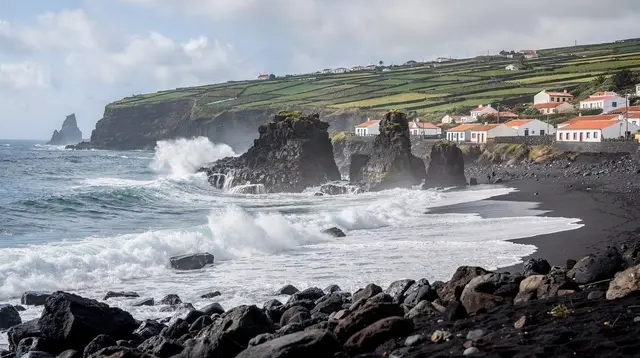
I found that easier to accept once I stopped comparing it to a normal Azorean beach. There’s no equivalent anywhere else on the island — Praia de Santa Bárbara or the black sand at Mosteiros are open coastline you can walk onto any hour of daylight. The islet is a single access point, boats only, into a protected space with a hard limit on how many people can be inside it. Once that clicks, the booking and the weather-dependence stop feeling arbitrary.
What I’d Actually Book, and When
For a first visit, I’d rather go with someone who knows the reserve than just buy a seat on the fastest boat out and back. An islet tour from Vila Franca do Campo’s marina covers the crossing itself and gives you real time inside the ring rather than a rushed loop. If you’d rather understand what you’re swimming over and past, a biologist-guided eco boat tour of the islet is worth the extra hour — the seabirds nesting on the crater walls and the reason the water stays this clear are both more interesting with someone explaining them.
If the crossing gets cancelled, or you just want the town and the coast without gambling the whole day on sea state, a half-day tour of Vila Franca do Campo still covers the town that was the island’s original capital, the harbour, and the viewpoint above it — worthwhile on its own, cap or no cap.
Building It Into a Real Itinerary
The mistake I keep seeing is the islet parked as a fixed line item on a tight two-day loop, with no slack around it. Given the season window and the sea-state dependence, I’d rather treat it as a strong maybe that I try to fit into a longer south-coast stretch — a morning free after Furnas, or paired loosely with the Vila Franca do Campo day trip — than the one thing the whole week is built around.
It also isn’t the only way to get in the water on this coast. The snorkelling inside the crater is the best-known option once you’re actually on the islet, but Caloura’s harbour and the wider run of south coast boat trips don’t share the same hard cap, and they’re a reasonable fallback if the crossing is called off.
If the day fully depends on the weather, our general note on boat tours and cancellations on São Miguel is worth reading before you commit a whole afternoon to it — and it’s the same logic behind why the island has no ferry from the mainland: the Atlantic here sets the schedule, not the other way round.
For anyone weighing this against the rest of the south coast, or wondering whether the reserve is really worth building a day around, it helped me to remember it’s not the Caribbean — this is a working volcanic coastline with real sea conditions, and the cap and the season are just an honest reflection of that, not red tape. Book the crossing if the dates and the season line up, check the sea before you leave the hotel, and keep a second plan on the south coast for the mornings when it doesn’t.
Frequently Asked Questions About Visiting Ilhéu de Vila Franca
Can I visit Ilhéu de Vila Franca whenever I want?
No. The islet is a nature reserve reached only by boat from Vila Franca do Campo’s marina, roughly June to September, and only when the sea is calm enough. Visitor numbers are capped each day, and the crossing is cancelled outright in swell.
Why is there a visitor cap on the islet at all?
The islet is a protected nature reserve, not a beach concession. The cap limits how many people are inside the crater at once, which is what keeps the water clear, the birdlife undisturbed, and the narrow rim from being worn down.
What months does the boat actually run?
Roughly June to September, weather and sea state permitting. Outside that window the service typically does not run at all, whatever a generic calendar might suggest.
What happens if the sea is too rough on the day?
The crossing is cancelled. Boats do not attempt the short hop across open water in swell, so a booked slot can be called off with little notice even in high summer.
Is Ilhéu de Vila Franca a normal beach?
No. It is a sunken volcanic crater with a narrow rim and a lagoon inside, not a stretch of open coastline, and swimming is only possible inside the ring during the visiting season.
Should I book the boat before arriving on the island?
Yes, if the date matters to you. Slots are limited by the daily cap, and midsummer mornings fill up, so booking ahead removes the biggest source of disappointment.
What should I do if I can’t get a slot or the sea is rough?
Treat it as one option among several on the south coast rather than the whole point of the day. Vila Franca do Campo itself, Caloura, and the coast walk around the marina are worth the time even without the crossing.
tours.Practical
Verified deep-linked GetYourGuide tours. Book through these links and we earn a small commission at no cost to you.
GetYourGuide does not provide a product photo for this activity — the image shows the meeting point, photographed by us.