Serra da Tronqueira: The Priolo's Laurel Forest Trail
Where does the priolo live on São Miguel, and can I see it from the Serra da Tronqueira trail?
The priolo, or Azores bullfinch, lives only in the laurel forest of the Serra da Tronqueira in eastern São Miguel. A marked trail runs through its habitat, but the bird is shy, rare, and never guaranteed — most visitors hear it more often than they see it.
The last forest of a bird found nowhere else
Almost every corner of Nordeste gets described in terms of what you can see from a car: a viewpoint, a headland, a stretch of cliff road. The Serra da Tronqueira is different. It is a ridge of native laurel forest — laurisilva, the same cloud-forest habitat that once covered much of the Azores before farming cleared the lower slopes — and it holds the entire world population of one bird: the priolo, or Azores bullfinch. This guide is about walking into that forest on foot, on the trail that actually enters priolo habitat, rather than driving past it.
It is worth being direct about what this page is not. It is not a substitute for the coastal viewpoints covered on the Nordeste day trip guide, and it is not the jeep circuit that tours the wider district — that is a different experience, covered separately, and jeep tracks do not enter the core forest where the bird actually feeds. This is a walking guide to one specific habitat, and it makes one promise only: a real chance, never a certainty.
Who — and what — the priolo actually is
The priolo (Pyrrhula murina) is a small, russet-brown finch related to the bullfinches found across Europe, but it survives today only in the laurel forest of eastern São Miguo — nowhere else on the island, nowhere else in the Azores, nowhere else on Earth. Decades of habitat loss and the spread of invasive plants pushed it to the edge of extinction in the twentieth century; conservation work inside the Serra da Tronqueira has since pulled the population back from a few hundred birds to a few thousand, still confined to this one patch of forest in the island’s east.
That confinement is the whole point of this trail. The priolo needs old, structurally complex laurel forest with a mix of native tree heath, laurel, and juniper, plus the invertebrates and seeds that this specific habitat produces. It cannot simply relocate to another wood, and it is not adapted to farmland, gardens, or roadside scrub. If you want any chance of encountering it, you have to go where the forest still is — which means walking, not driving.
Getting to the Serra da Tronqueira trailhead
The trailhead sits inland from the Nordeste coast road, reached by a minor track off the routes that also serve Ribeira dos Caldeirões and the approach to Faial da Terra. There is no public transport to the trailhead — a rental car is effectively required, and the last stretch is narrow, occasionally single-track, and can be muddy after rain. Fuel up before heading into this part of the island, since stations thin out well before Nordeste.
Parking is informal, at a pull-off rather than a marked car park, and there are no facilities of any kind at the trailhead — no toilets, no kiosk, no signal in places. Bring what you need before you set off, and tell someone your rough return time, since phone coverage inside the forest is unreliable.
Walking the trail: what to expect
The marked route runs along forest tracks and footpaths through the core of the priolo’s range, climbing gently through stands of laurel, tree heath, and dense understorey rather than following a dramatic ridge line. It is not a technical hike — no scrambling, no exposure — but it is consistently damp underfoot, the canopy blocks a lot of light even at midday, and the path narrows in places to a single-file track between wet ferns.
Plan on two to three hours for the core loop at an unhurried, listening pace, longer if you stop often, which is exactly what serious birdwatching here requires. This is not a trail to rush. The priolo is detected far more often by call than by sight, so walkers who move slowly and pause regularly do noticeably better than those treating it as a fitness circuit. Early morning, in the first couple of hours after dawn, tends to be the most active period for bird movement and calling, matching general patterns for when to look for wildlife across the island’s forests.
Signage on the ground is minimal by design — this is protected habitat, not a groomed visitor attraction — so a downloaded map or a guide familiar with the route is genuinely useful, particularly where side tracks split off toward forestry access points that are not part of the public route.
Why you should not expect to see the bird
This needs to be said plainly, because it is the single most common disappointment reported by visitors who arrive expecting a wildlife-park experience. The priolo is one of the rarest birds in Europe, its total population is measured in the low thousands, it is shy by nature, and it forages in dense cover rather than open branches. There is no feeding station, no hide with guaranteed sightings, and no schedule. Guides who work this forest regularly will tell you the same thing: most visits produce calls — a distinctive, slightly nasal note — long before, or instead of, a clear visual.
Treat a sighting as a genuine privilege if it happens, not as the reason to come. If a guaranteed animal encounter matters more to you than the forest itself, whale watching elsewhere on the island offers considerably higher odds, though even that trade is guided by season rather than certainty — see the notes on resident sperm whales and dolphins if timing matters to your trip.
Best time and conditions
| Season | Bird activity | Trail conditions |
|---|---|---|
| April – June | Strongest calling and movement, breeding season | Green, generally the driest spring window |
| July – September | Present but quieter, less vocal | Drier underfoot, warmer in open sections |
| October – March | Present year-round, harder to detect | Wet, sometimes fogbound, shorter daylight |
The priolo does not migrate, so the forest holds birds in every season — what changes is how easy they are to detect. Spring, roughly April into June, is generally considered the strongest window, coinciding with breeding-season calling. Outside that period the birds are simply quieter and the walk becomes more purely a forest experience, which is still worthwhile on its own terms.
Weather in this part of the island behaves the way it does everywhere on São Miguel: it can shift within an hour and differs from one valley to the next. A clear morning at the coast does not guarantee a clear forest a few kilometres inland — the ridge catches cloud often, and rain here does not necessarily mean rain at Ponta Delgada or on the Nordeste coast road.
What to bring
- Proper waterproof walking shoes or boots — this trail is wet more often than dry
- A light rain layer even on a forecast-clear day
- Binoculars, which matter more here than on almost any other trail on the island
- Water and snacks, since there is nothing to buy anywhere near the trailhead
- A fully charged phone with an offline map, given the unreliable signal
Quiet clothing helps too. Bright colours and loud conversation reduce your odds with a bird this shy, and a slow, low-noise approach benefits every walker on the trail, not only you.
Combining the walk with the rest of Nordeste
The Serra da Tronqueira sits within reach of several other stops covered elsewhere on this site, and most visitors pair the walk with a wider loop rather than a single-purpose trip. The waterfalls and picnic parkland at Ribeira dos Caldeirões lie a short drive away, and the high point of the island, Pico da Vara, rises from the same ridge system further along.
a guided east-side outing that takes in Nordeste’s viewpoints alongside the Serra da Tronqueira is one practical way to combine the forest with the coastal side of the district in a single day, with transport and local knowledge already arranged. For a shorter, gentler walk that still reaches native forest and waterfalls closer to Ponta Delgada, the guided hike to Moinho do Félix covers similar terrain types without the drive out to Nordeste.
If a full day exploring the district by vehicle appeals more than walking, a private 4x4 tour through Nordeste’s back roads and viewpoints reaches areas the trail does not, though it is worth repeating that a jeep circuit is a different activity from this walk and will not put you inside priolo habitat.
Anyone extending a Nordeste day southward toward Povoação or Faial da Terra will find the region’s waterfall hikes, including the walk to Salto do Prego, a natural continuation, and for something more physical the same district hosts canyoning at Ribeira dos Caldeirões.
Conservation and why the forest is protected
The Serra da Tronqueira falls within a protected area managed specifically for priolo recovery, and that status shapes how the trail is set up. Paths are kept narrow and deliberately unglamorous, side-tracks into denser forest are closed to the public, and there is no infrastructure built for tourism inside the core habitat. Decades of work removing invasive plants and restoring native laurel cover are the reason the species survives at all, and staying on the marked route is a small but real way to avoid undoing that work.
This is also why the trail will never be marketed as a guaranteed wildlife encounter, on this site or any responsible one. The forest is managed for the bird first and visitors second, which is precisely why it has anything left to show anyone. For a broader look at the island’s wildlife and what hazards actually exist here — spoiler: none of them are animals — see the general safety and wildlife guide, and for the fuller story of the bird itself, the dedicated priolo guide goes deeper into its biology and recovery.
Planning notes
A rental car is close to essential for this trail, and general notes on driving conditions across São Miguel apply here as much as anywhere — narrow lanes, sudden weather, and patchy fuel availability once you are past the main towns.
If you are building a longer stay around the island’s east side, the hiking-focused itinerary through Nordeste sequences this walk alongside the district’s waterfalls and viewpoints, and the broader comparison of the island’s best hikes helps weigh this trail against options elsewhere on São Miguel if time is tight. For trail-specific questions of pace and packing, what to pack for this walk and general notes on how many days a full itinerary needs are useful companions when fitting this into a wider trip.
Serra da Tronqueira Priolo Trail: Frequently Asked Questions
Will I see a priolo on this trail?
Maybe, but there is no guarantee. The priolo is one of Europe’s rarest birds, it is shy, and it moves through dense cover. Many visitors walk the trail, hear its calls, and never get a clear view. Treat the walk as a forest experience with a chance of the bird, not a booked sighting.
How long is the Serra da Tronqueira trail?
The main marked stretch through the priolo’s core habitat covers a few kilometres of forest track, typically two to three hours at a walking pace with stops to listen. It is not a summit hike and does not require technical gear, but the ground is often wet.
Do I need a guide to visit the priolo’s habitat?
You can walk the marked trail independently, but a local birding guide improves your odds meaningfully, since they know the calls, the feeding areas, and the times of day the birds move. Independent walkers should still stay on the marked path to avoid disturbing the habitat.
What is the best time of year to walk this trail?
Spring and early summer, roughly April to June, tends to bring more bird activity and calling, though the forest is walkable year-round. Rain is common in any season here, so waterproof footwear matters more than the calendar date.
Can I drive to the priolo viewpoint?
No. The priolo does not live along a roadside viewpoint, and it is not visible from a car. Reaching its habitat means parking at the trailhead and walking into the laurel forest on foot, away from the coastal roads of Nordeste.
Is the trail suitable for children?
Older children who can manage a few hours of quiet walking on uneven, sometimes muddy forest paths will manage fine, but the appeal depends on patience for slow birdwatching. It is not a playground stop, and there are no facilities along the way.
What other wildlife might I see in the laurel forest?
The Serra da Tronqueira shelters other native birds alongside the priolo, along with endemic plants typical of Azorean laurisilva, such as tree heath and laurel species found nowhere outside the archipelago. Common woodland birds are far easier to spot than the priolo itself.
Hiking Trails on GetYourGuide
Verified deep-linked GetYourGuide tours. Book through these links and we earn a small commission at no cost to you.
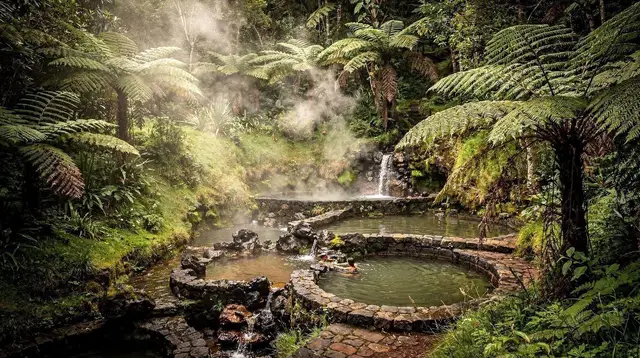
GetYourGuide does not provide a product photo for this activity — the image shows the meeting point, photographed by us.