How Much Does a Trip to São Miguel Cost?
How much does a trip to São Miguel cost?
São Miguel is Portugal-priced overall, not uniformly cheap: lodging and the rental car are the two biggest lines, displayed prices already include Azorean VAT, and tipping is a small round-up rather than a percentage. Thermal pools, boat trips and tours add up faster than most first-time visitors expect.
Where the money actually goes
Nobody plans a São Miguel trip around a single sticker price, because there isn’t one — the island doesn’t work like an all-inclusive resort with a headline number. Instead a visit is built from four separate budgets that behave quite differently from each other: a place to sleep, a way to get around, what you eat, and what you book to do. Understanding how each one moves is more useful than chasing a euro figure that would be out of date, or wrong for your dates, the moment it’s printed.
This page won’t quote hotel rates or rental-car tariffs — those change by season, by operator and by how far ahead you book, and a number here would mislead more than it would help. What it will do is explain, category by category, what drives the cost up or down, and two facts that quietly affect every single line on the receipt: the tax already baked into the price you see, and the tipping norm that is nothing like the one many visitors bring with them.
If you haven’t settled on trip length yet, that decision changes every number below more than any single choice you’ll make — see how many days you actually need on São Miguel before you start budgeting in earnest.
Lodging: the biggest line, and the most seasonal
For most itineraries, accommodation is the single largest expense, and it’s also the one that swings hardest with the calendar. Late July and August — peak hydrangea season and the island’s busiest weeks — push demand well above the shoulder months, while the wet, windy stretch from November to March is the cheapest and quietest time to book a room, at the cost of far more cancelled boat trips.
Where you base yourself matters almost as much as when you travel. Ponta Delgada has the widest range of hotels, guesthouses and short-term rentals, from simple rooms to full-service properties near the marina. Furnas offers a smaller, more specialised cluster built around its thermal setting, and tends to book out fastest around cozido lunch times. Smaller villages along the north and south coasts often undercut both, but with less choice and earlier closing hours for anything nearby. For a fuller comparison of where to sleep and why, see where to stay on São Miguel.
One detail worth knowing before you book anything: a room rate you’re quoted has VAT already folded in — see the tax and tipping section below — so the number on the confirmation email is genuinely what you’ll pay, not a base rate with a surprise added at checkout.
Getting around: a rental car changes the whole budget
A rental car is the practical default for exploring São Miguel, and it reshapes the transport line of your budget more than any other single decision. Buses (Auto Viação Micaelense, Varela, Caetano) exist and are inexpensive, but they run on school and work timetables rather than sightseeing ones, and there is no train on the island at all. That makes a car-free trip a genuine option for a Ponta Delgada-based city break, but a real constraint for anyone hoping to reach Nordeste, Sete Cidades and Furnas in the same week.
Once you do rent, the cost isn’t just the daily rate. Fuel matters more here than in a compact European city: stations thin out fast once you leave the main towns, and filling up before a full circuit of Nordeste is standard advice rather than caution. Peak-season demand for cars can also run ahead of supply on an island this size, which is one of the reasons booking transport early is worth doing — covered separately in what to book in advance on São Miguel, and in more mechanical detail in renting a car on São Miguel and driving on São Miguel: what to expect.
If you’re weighing whether a car is worth the outlay at all, guided tours versus self-drive on São Miguel walks through the trade-off directly, and the São Miguel bus guide sets out what public transport can and can’t realistically cover.
Food: cozido, casual eating, and the restaurants worth booking
Food costs on São Miguel span a wide range, and where you land depends on how many sit-down meals you plan versus how much you eat at cafés, markets and self-catered kitchens. Casual eating — a bakery lunch, a plate of grilled fish at a village tasca, fruit and cheese from the Mercado da Graça in Ponta Delgada — keeps the daily food line modest. Sit-down dinners at destination restaurants, particularly around Furnas, push it up.
Cozido das Furnas is the meal most visitors want at least once, and it’s worth understanding as a booking, not a walk-in: the pots go into a hole in the naturally hot ground by the Lagoa das Furnas in the morning, cook for five to seven hours on volcanic heat with no fire at all, and are hauled out at midday. Restaurants take the order and manage the hole — it isn’t something you arrange yourself — and the better-known spots fill up well ahead in high season. See cozido das Furnas explained for how the dish works, and where to eat near Furnas: booking ahead for how far in advance that matters.
Beyond cozido, look for limpets (lapas), fresh Atlantic fish, and the tea-and-pineapple pairing that’s distinctive to this island rather than the wider archipelago — tea and pineapple as local ingredients covers both, and lapas and Azorean seafood: what to try is a useful primer before your first dinner out. For the bakery side, bolo lêvedo and queijadas da vila are cheap, everywhere, and worth building into your daily rhythm rather than treating as a one-off — see bolo lêvedo and queijadas da vila: a baking tradition.
Activities: thermal pools, boats, hikes and tours
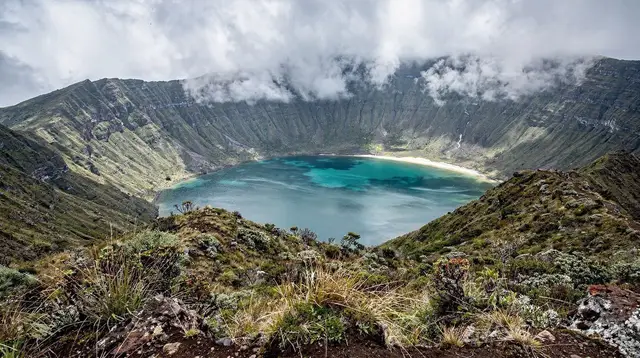
This is the most variable category on the whole trip, because it spans genuinely free experiences and paid ones sitting side by side. The Gorreana tea plantation — the oldest working tea estate in Europe, founded in 1883 — has long offered free, self-guided entry to its factory and fields, while its smaller neighbour Porto Formoso charges. Lagoa do Fogo has no facilities of any kind — no café, no ticket booth, nothing to pay for — which also means nothing to rely on if the weather turns. The thermal pools of São Miguel compared sets out which springs are paid, which are free, and what the difference actually buys you.
| Category | Typical cost pattern | Notes |
|---|---|---|
| Nature viewpoints, hiking trails | Usually free | Parking or trailhead access may vary; no facilities at Lagoa do Fogo |
| Tea plantation visits | Gorreana free; Porto Formoso paid | Both self-contained, no booking needed |
| Thermal pools | Mostly paid entry | Terra Nostra and Poça da Dona Beija charge; bring an old swimsuit, the iron-rich water stains fabric |
| Boat trips (whale watching, Ilhéu de Vila Franca) | Paid, weather-dependent | Cancellations are common in winter; sightings are never guaranteed |
| Guided tours (jeep, hiking, coasteering) | Paid, per person | Range widens with group size and vehicle type |
Boats and guided tours are where a budget can move the most in either direction, because they’re priced per activity and per person rather than folded into a daily rate. A Furnas half-day tour covering the caldeiras and thermal park is a fairly contained outlay for a full morning or afternoon — book a guided half-day around the Furnas caldera and its thermal park rather than trying to arrange the cozido reservation and thermal-pool timing yourself.
For the volcanic interior, a jeep tour crossing the island’s craters and viewpoints covers ground a rental car alone can’t always reach on the rougher tracks. Hikers weighing whether to walk Lagoa do Fogo independently or with a guide can compare the difference by looking at a guided hike to the crater lake, and for the north coast’s surf beach, a group surf lesson at Praia de Santa Bárbara is a reasonably contained one-off rather than an ongoing cost.
Whale watching deserves a specific budget note: boats are genuinely wild-animal encounters, guided by vigias — the shore lookouts left from the whaling years, which ended in the Azores only in the 1980s — and sightings, while usual, are never something an operator can guarantee. The whale watching best time to go guide explains the seasonal odds, and whale watching: weather and cancellations explained covers what happens to your booking, and your money, if the sea doesn’t cooperate.
For hikers comparing trail difficulty against cost and time, best hikes on São Miguel compared is a useful companion piece, and the Sete Cidades caldera rim walk remains one of the few marquee experiences on the island that costs nothing beyond getting yourself to the trailhead.
The two numbers every price already includes
Two facts change how you should read every price tag, menu and booking confirmation on this trip, and both are easy to get backwards if you’re used to North American or mainland Portuguese norms.
Tax is already in the price. What you see displayed — in a restaurant, a shop, most tour listings — already includes VAT. The Azores apply a reduced regional rate, roughly 16 percent, noticeably lower than mainland Portugal’s standard 23 percent. That means there’s no tax line waiting to be added at the till, and it also means the same category of goods or service is often modestly cheaper here than the equivalent on the mainland, not more expensive as visitors sometimes assume of an island destination.
Tipping is a round-up, not a percentage. The norm is to round the bill up, working out to roughly 5 to 10 percent for a sit-down meal — a fraction of the 15 to 20 percent expected in North America. Overtipping doesn’t cause offence, but it isn’t expected, and treating every meal as a 20-percent-plus occasion will inflate your food budget for no local reason. See tipping, VAT and restaurant etiquette in the Azores for the fuller picture, and Azores prices include lower VAT and the Azorean tip is a round-up for the two facts on their own.
A rough shape for a week, not a total
Rather than a single number, it helps to think in relative weight: lodging and the rental car together typically account for the largest share of a São Miguel trip, food comes next and is the most controllable of the four categories, and activities is the most elastic — capable of staying modest if you lean on free viewpoints and self-guided tea-plantation visits, or climbing quickly if you stack multiple paid boat trips and guided tours into the same week.
Trip length compounds all of this in a fairly predictable way: fixed costs like flights barely change whether you stay four days or seven, while lodging, food and activities scale roughly with each extra night. A classic three-day itinerary concentrates spending into fewer, denser days; a full seven-day complete itinerary spreads it thinner but adds more nights of lodging. If keeping costs down is the priority rather than covering the most ground, the budget getaway itinerary is built around that trade-off directly.
Ways the budget quietly grows
A handful of habits push a São Miguel trip’s cost up without any single decision feeling expensive at the time. Booking cars and Furnas restaurant tables at the last minute in peak season often means paying whatever is left rather than what was available weeks earlier — again, see what to book in advance on São Miguel.
Stacking several paid thermal pools in the same trip rather than picking one or two adds up faster than it looks on paper. And treating every restaurant meal as a special occasion, rather than mixing in market food and bakery lunches, is usually the single easiest place to trim without giving anything up. None of this requires austerity — it just means treating the four categories above as four separate decisions rather than one vague sense of “how expensive is the Azores.”
Planning on GetYourGuide
Verified deep-linked GetYourGuide tours. Book through these links and we earn a small commission at no cost to you.
GetYourGuide does not provide a product photo for this activity — the image shows the meeting point, photographed by us.