A Budget Getaway: 3 Days on São Miguel
Three Days, Free Viewpoints, and a Full Market Bag
São Miguel does not require a guide, a spa membership, or a reserved table to show its best sights. This three-day loop is built around what already costs nothing beyond fuel and a rental car: a capital you can walk end to end, a 143-year-old tea plantation that has always let visitors wander in for free, a caldera rim lined with viewpoints, and a second caldera whose fumaroles and waterfall sit right beside the footpath. It leans on self-driving and self-catering rather than bookings, and it deliberately steers around the two spending traps that catch most first-time visitors on a budget: the paid spa terrace above Ponta da Ferraria, and a walk-in cozido that turns out to need a reservation you did not make.
Base yourself in Ponta Delgada for all three nights — it keeps driving distances short and puts a supermarket and the municipal market within easy reach every evening. Fill the tank before you start; stations thin out once you leave the main towns.
Day 1: Ponta Delgada on Foot, and Stocking Up at the Market
Spend the first day without the car at all. Ponta Delgada’s old town is compact enough to cover on foot in a morning, and walking it costs nothing but time.
Start at the Portas da Cidade, the three 18th-century arches that mark the old town’s edge, then follow the grid of black-and-white cobbled streets past the Igreja Matriz de São Sebastião and the harbor-front Forte de São Brás. Both are free to view from outside, and the fort’s ramparts give a clean look over the marina. Loop down to Portas do Mar, the modern cruise and marina front, where the walkway along the water is free and shaded benches make a good stop. A walking guide to the old town lays out a route that hits all of this without backtracking.
If you would rather have someone narrate the city’s volcanic and colonial history than piece it together yourself, a two-hour historic walking tour through Ponta Delgada’s old streets and viewpoints covers the same ground with commentary — worth it if this is your only day in the capital, optional if you’re happy reading as you walk.
For lunch and for the rest of the trip, head to Mercado da Graça, the municipal market a few streets back from the harbor. This is the single most useful stop on a tight budget: fresh bread, local cheese, fruit, cured meats, and pastries cost a fraction of a restaurant meal, and everything here is already priced with VAT included — the Azorean rate runs around 16%, well under mainland Portugal’s 23%, so there is nothing added at the till. Buy enough for lunch today and pack extra for the road on days two and three; a guide to the market covers stall layout and what is worth carrying.
This is also the moment to set up the trip’s one real money-saving decision: skip counting on a walk-in cozido das Furnas later. The pots that cook underground near Lagoa das Furnas are ordered and booked by restaurants days in advance, and a table on the day is not guaranteed even if you show up early. Provisioning properly here removes that pressure entirely.
If you have energy left in the afternoon, the Gruta do Carvão, a lava tube a short walk from the center, has a modest entry fee but is one of the cheapest hour-long stops in town — a walking guide to the lava tube has the practical details. Otherwise, wind down at Portas do Mar and get an early night: day two starts with driving.
Day 1 costs at a glance
| Item | Approx. cost |
|---|---|
| Old town walking route | Free |
| Fort, church, arches (exterior) | Free |
| Market lunch and provisions for the trip | €10-15 |
| Gruta do Carvão entry (optional) | Low, a few euros |
| Guided historic walking tour (optional) | Paid, worth it only if time is short |
Day 2: Free Tea at Gorreana, Then the Free Viewpoints of Sete Cidades
Day two covers two of the island’s most photographed stops, and both are effectively free once you’re behind the wheel.
Drive north to Gorreana tea plantation, founded in 1883 and still the oldest working tea plantation in Europe. This is the trip’s best-value stop by a wide margin: entry to the factory floor and the surrounding fields has long been free and self-guided, with no ticket booth and no guide required. Walk through the drying and rolling rooms, follow the rows of tea bushes down toward the coast, and taste what’s brewing in the small tasting room, also at no charge. A plantation guide explains what you’re looking at machine by machine.
Skip Porto Formoso, the other working tea estate nearby — it is smaller and charges an entry fee, which puts it outside a tight budget when Gorreana covers the same ground for free. If you’re curious about the difference, a comparison of the two plantations explains why Gorreana is the better call here.
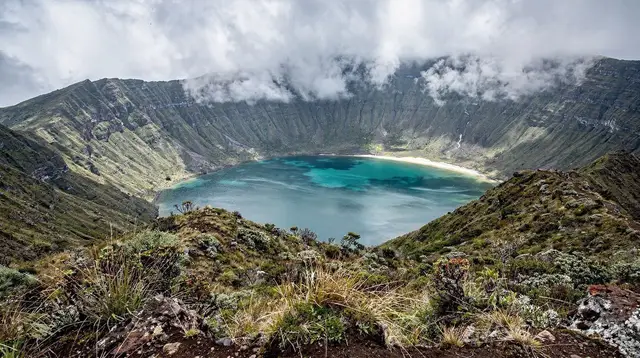
From Gorreana, cut across to the island’s west side and Sete Cidades, the village sitting inside a caldera around the twin lakes Lagoa Azul and Lagoa Verde. The viewpoints here are the real draw, and every one of them is free: Vista do Rei looks straight down into the caldera and both lakes at once; Boca do Inferno, above Lagoa do Canário, gives a quieter angle from higher ground; and several pull-offs along the caldera rim road offer their own framing with no crowds.
None of this needs a ticket, a guide, or even a long walk from the car. If you’re visiting between June and September, the hydrangea hedges along these roads are in bloom and worth timing your stops around — a photo guide to the viewpoints has the best light and angles.
If your legs want more than roadside stops, a half-day guided tour around the Sete Cidades caldera adds transport and commentary for a modest cost — useful if you’d rather not navigate the rim road yourself, but not necessary if you’re driving.
Eat from your market bag at one of the free viewpoint pull-offs rather than a village café, and you’ll close day two having paid for nothing but fuel and, if you chose it, one optional tour.
Day 2 costs at a glance
| Item | Approx. cost |
|---|---|
| Gorreana tea plantation, factory and fields | Free |
| Sete Cidades viewpoints (Vista do Rei, Boca do Inferno, rim pull-offs) | Free |
| Porto Formoso entry | Skipped — paid, not needed |
| Lunch from market provisions | €0 extra |
| Half-day guided caldera tour (optional) | Paid, optional |
Day 3: Furnas’ Caldeiras and the Waterfall at Caldeira Velha
The last day heads east to Furnas, a village sitting inside its own active caldera, and finishes at a thermal waterfall you can see without paying for the pools beneath it.
Furnas’ steaming ground is public and free to walk: the caldeiras around the village vent sulfurous steam right beside footpaths and the road, and you can watch them work at close range at no cost. Walk down to Lagoa das Furnas, where the cozido pots are lowered into the hot ground each morning — you won’t be eating one today, but watching the process and reading the steam-marked ground is free, and a guide to the fumaroles explains what’s actually happening underfoot.
If you’re curious how the dish itself works, this explainer on cozido das Furnas is worth reading even without booking a table — it’s exactly the local specialty this budget day skips paying for, in favor of the sandwiches and pastries carried over from Mercado da Graça.
If you’d rather have a local guide walk you through Furnas’ caldeiras, its garden, and its thermal pool in one outing, a half-day tour through Furnas’ craters and thermal grounds bundles the sights with transport — a reasonable trade if you’re short on a second day out east, though everything it covers on the caldeiras themselves can also be walked for free.
From Furnas, drive over to Caldeira Velha, a thermal waterfall and pool complex on the slope of the Água de Pau massif. The paid pools here are not part of this budget day, but the waterfall itself and the forest boardwalk around it are visible from the public trail without buying a ticket to the bathing area — a short, free walk that still delivers the postcard view of water falling past volcanic rock and steam. A short-walk guide to Caldeira Velha marks exactly where the free trail ends and the paid pool entrance begins, so you don’t end up in the ticket line by accident.
For those who want the trail properly guided rather than self-navigated, a guided hike that takes in Caldeira Velha’s waterfall and forest trail is the paid alternative — again, optional, not required to see the waterfall itself.
Skip Ponta da Ferraria on this itinerary: its hot spring is genuinely free where the sea meets the lava flow, but it only works around low tide, and the paid spa terrace above it is an easy way to blow the day’s budget on something the tide pool does for nothing when timed right. If a future trip has more slack in the schedule, it’s worth doing properly rather than rushed at the end of a caldera day.
Head back to Ponta Delgada for the evening, closing three days that covered a capital, a 143-year-old tea estate, a caldera rim of postcard viewpoints, and a second caldera’s steaming ground and waterfall — almost all of it without a ticket.
Day 3 costs at a glance
| Item | Approx. cost |
|---|---|
| Furnas caldeiras and Lagoa das Furnas | Free |
| Caldeira Velha waterfall trail (viewing, not the paid pools) | Free |
| Lunch from market provisions | €0 extra |
| Half-day Furnas tour (optional) | Paid, optional |
| Guided Caldeira Velha hike (optional) | Paid, optional |
Making It Work
The two facts that make this three-day loop affordable are worth repeating, because they’re easy to assume otherwise: Gorreana’s factory and fields have long been free to enter and walk on your own, no guide or ticket required, and every price you see on São Miguel already includes Azorean VAT — around 16%, lower than mainland Portugal — so there’s no tax surprise at checkout, whether it’s a market pastry or a fuel fill-up. Tipping follows the same logic: a small round-up, not the 15-20% expected elsewhere.
The one habit that protects the budget most is the market run on day one. Provisioning at Mercado da Graça removes the temptation — and the cost — of a last-minute restaurant meal on day three, when a walk-in cozido booking usually isn’t there to be had anyway. Pair that with a rental car booked ahead of the June-to-September peak, and three days here run on fuel, a market bag, and a handful of optional extras rather than a string of ticket lines. For the fuller cost picture across a longer stay, the general budget guide for São Miguel breaks down car, fuel, and food costs month by month.
FAQ: Budget Travel on São Miguel
Is Gorreana tea plantation really free to visit?
Yes. Gorreana, Europe’s oldest working tea plantation, has long let visitors walk the factory floor and the surrounding fields on their own, at no charge and with no guide required. Only the smaller Porto Formoso plantation nearby charges an entry fee, which is why this itinerary skips it.
How much does a 3-day budget trip to São Miguel cost, excluding flights and car rental?
Counting market meals, fuel, a couple of low-cost thermal pools and no paid tours, a frugal traveler can get through the three days on roughly 30 to 45 euros a day. The car and any flights are the two costs this budget plan cannot shrink.
Do I need to book a rental car in advance?
Booking ahead is strongly recommended, especially from June to September when demand is highest and cars sell out. A rental car is the practical way to cover this itinerary, since bus timetables are built around school and work schedules, not sightseeing.
Can I just show up and order cozido das Furnas without booking?
It is risky. Cozido pots go into the hot ground near Lagoa das Furnas in the morning and cook for five to seven hours with no fire; restaurants take the order and the booking days ahead, and a table on the day is not guaranteed. For a tight budget, buying supplies at Mercado da Graça on day one is the safer plan.
Are the Sete Cidades viewpoints and Vista do Rei free to visit?
Yes. Vista do Rei, Boca do Inferno above Lagoa do Canário, and the roadside pull-offs around the caldera rim cost nothing beyond fuel and time. The only paid option in this area is the guided boat or jeep tours, which this itinerary does not require.
Does the price I see on São Miguel already include tax?
Yes. The Azorean standard VAT rate is around 16%, lower than mainland Portugal’s 23%, and it is already folded into every displayed price, from a market pastry to a rental car quote. There is no tax added at the till, and tipping is a simple round-up, not a fixed percentage.
Planning on GetYourGuide
Verified deep-linked GetYourGuide tours. Book through these links and we earn a small commission at no cost to you.
GetYourGuide does not provide a product photo for this activity — the image shows the meeting point, photographed by us.