What to Pack for Canyoning on São Miguel
What should you pack for a canyoning trip on São Miguel?
Pack for humidity and sudden rain, not cold: quick-dry base layers, a light waterproof jacket, sturdy closed-toe shoes if the operator does not supply canyoning shoes, sun protection, and a full dry change of clothes for afterwards. São Miguel has no snow or glaciers at any altitude, so alpine gear like a down jacket or crampons has no place in the bag.
Packing for Wet Rock, Not Alpine Cold
The most common mistake visitors make when packing for canyoning on São Miguel is treating it like a mountain sport. It isn’t. There is no snow line on this island, no glacier, no altitude cold to dress against — the highest point, Pico da Vara, sits at 1,103 m in a temperate, ocean-soaked climate, and canyoning routes run through forested streambeds and waterfalls at far lower elevations than that.
The cold you will actually meet is wet-skin cold: stream water, rain, and wind on damp clothing. That is a different problem from alpine cold, and it calls for a different bag. Leave the down jacket, the thermal base layers rated for freezing air, and anything resembling crampons or gaiters at home. None of it has a job to do here, and packing for the wrong kind of cold means arriving with weight and bulk that solve nothing.
What follows is a packing list built around the two facts that actually shape a canyoning day on this island: there is no snow or glacier at any altitude, so nothing alpine belongs in your bag, and the weather itself is unpredictable hour by hour, which matters more for what you wear before and after the canyon than most people expect. For what canyoning on the island actually involves once you’re in the water, see our overview of what to expect canyoning on São Miguel; this page stays narrowly on gear.
What Your Operator Already Provides
Before packing anything, it helps to know what you are not responsible for. Licensed canyoning operators on São Miguel supply the technical layer: wetsuit, helmet, harness, and any ropes or descenders the route requires. You do not need to own or bring any of that, and bringing your own wetsuit is rarely worth the suitcase space unless you canyon often enough elsewhere to already own gear fitted to you.
| Provided by the operator | You bring yourself |
|---|---|
| Wetsuit | Swimwear or quick-dry base layer worn underneath |
| Helmet | Nothing — just make sure hair is tied back if long |
| Harness and ropes | Nothing |
| Neoprene shoes (most operators) | Closed-toe shoes if not supplied — confirm when booking |
| Guide, safety briefing | Sun protection, water for before/after, dry bag for valuables |
Because equipment varies slightly between operators, always check the footwear question specifically when you book — it is the one item that most often falls to the visitor rather than the outfitter.
The Base Layer: What Goes Under the Wetsuit
A wetsuit works by trapping a thin layer of water against your skin and letting your body warm it, which means what you wear underneath matters less for warmth than for comfort. Swimwear alone is enough for most people, especially in the warmer months when both air and sea are mild. If you chill quickly, a thin rash guard or a quick-dry thermal top — the kind sold for watersports, not for winter hiking — adds a layer without adding bulk. What you should not reach for is anything cotton: it holds water against the skin, dries slowly, and turns cold and heavy the moment it’s wet, which is the opposite of what you want directly under a wetsuit or as a base layer generally on a trip built around getting soaked.
Footwear: Grip Matters More Than Warmth
Streambeds are uneven, often slick with algae, and mix rock, mud and moving water. Most operators include neoprene canyoning shoes with the booking precisely because ordinary trainers lose their grip fast on wet volcanic rock. If your operator does not supply them, bring closed-toe shoes with real tread that you don’t mind ruining — old trainers or approach shoes work, sandals and flip-flops do not, and anything built for snow or ice (winter hiking boots, for instance) is both unnecessary weight and a poor fit for wet rock. This is worth confirming directly with whoever you book through, since it is the detail that varies most across operators and the one most likely to catch a first-timer out.
What to Wear There and Back: The Rain Question
This is where São Miguel’s weather actually shapes your packing list, more than the canyon itself does. The island’s conditions change hour by hour and can differ completely between two valleys a few kilometres apart — it is entirely possible to drive out under a clear sky and find rain waiting at the trailhead, or the reverse. A canyoning booking does not wait for a forecast to firm up, so the practical approach is to dress as though rain is always possible, regardless of what the sky looks like when you leave your accommodation.
That means:
- A light, packable waterproof shell for the walk in and the drive — not a heavy insulated coat, just something that keeps wind and rain off over a layer or two of quick-dry clothing.
- Quick-dry trousers or shorts rather than jeans, which take hours to dry and are miserable if the drive back turns damp.
- A small dry bag or waterproof phone pouch for anything electronic — car keys, phone, wallet — since these ride with you in the canyon-side bag while the technical gear is on your body.
None of this is heavy-duty mountain rainwear. It’s the kind of light shell you’d pack for a changeable coastal walk, sized to fold into a small daypack, not something meant to survive a storm at altitude. For a broader sense of how the island’s weather behaves across a stay, our São Miguel weather guide and the note on how conditions shift hour to hour are worth reading before any outdoor booking, canyoning included.
After the Canyon: The Dry Change That Actually Matters
The single most useful thing to pack is not something you wear during the canyon at all — it’s the dry set of clothes waiting for you at the end. Whatever the weather does during the outing, you finish wet, and the difference between a comfortable drive back and a miserable one is almost entirely down to having full dry clothing staged in the car or at the pickup point: base layer, trousers, socks, and a jacket if the air has turned cool.
A towel earns its space in the bag for the same reason. This matters in every season, but it matters most from November to March, when daytime temperatures on the island typically sit around 14-17°C and rain is possible on any given day — cooling down in wet clothes in that kind of air is unpleasant fast, and a warm, fully dry layer waiting at the end turns the whole experience around.
Packing by Season
The gear itself — wetsuit, helmet, harness — doesn’t change with the calendar; the operator supplies the same equipment year-round because canyoning routes run year-round. What changes is what you wear before and after, and how seriously you take the rain layer.
| Season | Air conditions | What to prioritise |
|---|---|---|
| June-September | Warm, driest months, sea 22-24°C | Light base layer, sun protection, minimal rain gear still advised |
| April-June, September-October | Mild, green, changeable | Packable rain shell, quick-dry layers, dry change non-negotiable |
| November-March | 14-17°C daytime, rain likely | Warmer quick-dry base, proper waterproof shell, full dry outfit and a warm layer for after |
Even in peak summer, the sea running at 22-24°C tells you nothing about stream or waterfall water, which stays cooler — see the note on water temperature across the island’s activities if you want the fuller picture, or the comparable surf season water temperatures for a sense of how the Atlantic itself behaves by month.
Low season doesn’t mean canyoning stops — for how the island runs from November to March generally, see São Miguel in winter and the wider note that this stretch is genuinely quieter, not dead. For a month-by-month view across the whole year, the month-by-month guide is a useful companion to this list.
Canyoning Gear Versus Coasteering and Kayaking Gear
Because São Miguel offers several water activities that sound similar from a packing perspective, it’s easy to over-pack by borrowing a list meant for something else. Coasteering, which mixes swimming, scrambling and jumping along the open coastline rather than working down a forested streambed, calls for broadly the same wetsuit-and-dry-change approach — see our coasteering safety guide for how the two differ in practice.
Kayaking is a different case again: sitting in a boat rather than swimming through one keeps you drier for longer, and what you need changes depending on whether you’re paddling the sheltered Sete Cidades caldera lakes or the open Atlantic off the south coast — our kayaking safety comparison breaks down the difference.
Neither substitutes for the canyoning-specific list above, but knowing how they differ helps if you’re booking more than one water activity across your stay and wondering whether a single packing list covers all of them. It doesn’t quite — canyoning is the wettest and most gear-intensive of the three, precisely because you’re in the water and moving through it rather than over or beside it.
Sun, Water and the Small Things
Between showers, São Miguel’s sun is stronger than the mild air temperature suggests, especially reflecting off wet rock and moving water. Reef-safe sunscreen, applied before the wetsuit goes on rather than after, and a hat for the walk in are worth the small extra weight. Bring drinking water for before and after — you won’t carry it through the canyon itself, but the walk to and from the start point, especially on a warm summer day, adds up. A basic first-aid kit is not necessary; operators carry one. What is worth having is a way to protect a phone or camera that isn’t going into the canyon with you — a simple dry bag left with the guide or in the vehicle covers it.
A GoPro or similar action camera is worth bringing if you own one, since canyoning produces exactly the kind of footage people wish they’d captured afterwards — jumps, slides, waterfalls seen up close — but only if it’s properly secured. A floating hand strap or a mount that clips to the harness, arranged with your guide before the outing starts, beats holding it loose in a hand that also needs to grip rock and rope. A camera dropped into moving water is gone for good, and no dry bag saves it once it’s out of your hand.
Getting to the Meeting Point
Most canyoning bookings on São Miguel start with a pickup from a central point in Ponta Delgada or a meeting spot near the canyon itself, so what you need in the car beforehand is short: your booking confirmation, the dry bag and dry change already covered above, and enough fuel if you’re driving yourself rather than being collected.
Roads leading to canyons like Ribeira dos Caldeirões or Salto do Cabrito are mostly paved but narrow in places, and if you’ve rented a car for the rest of your stay, our guide to driving on São Miguel covers what differs from driving at home, while the renting a car guide is worth reading before you book if you haven’t arranged a vehicle yet. If your outing starts or ends in Ponta Delgada itself, our note on parking in the capital saves a few minutes of circling before an early start.
Combining Canyoning With the Rest of Your Day
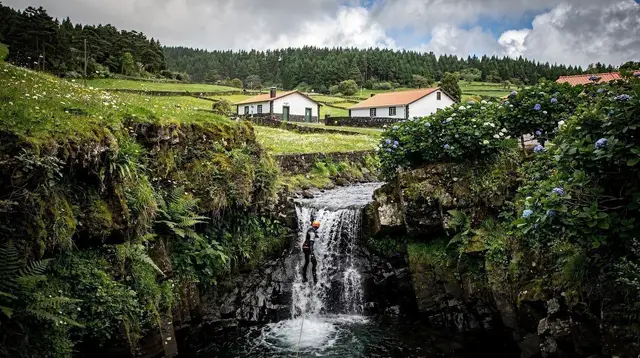
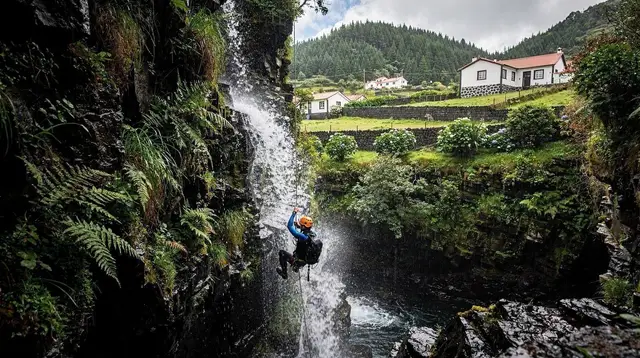
Because canyoning outings on São Miguel typically run a half day, many visitors pair the activity with something calmer either side of it. A short half-day canyoning outing near Ribeira dos Caldeirões leaves the other half of the day free, and the waterfall park itself is worth a slower look afterwards on foot — see our guide to the Ribeira dos Caldeirões trail. If you’d rather try a specific route, a guided canyon descent at Salto do Cabrito is one of the island’s better-known outings and follows the same packing rules above.
For visitors who want to see more of the island around a single canyoning morning without renting a car themselves, an island-wide jeep tour is a common way to fill the rest of a day, and cruise passengers with limited time ashore can look at organised shore excursions from Ponta Delgada that sometimes bundle a canyoning stop with sightseeing. None of these change what you pack for the canyon itself — the list above holds regardless of what else is on the day’s schedule.
Canyoning operators on São Miguel typically set a minimum age for safety reasons, since the descents involve jumps, abseils and swimming through moving water that younger children aren’t suited to. If you’re travelling with kids too young for this particular outing, our guide to São Miguel with kids and the round-up of family-friendly activities cover gentler ways to spend that half day, from the thermal pools at Furnas to an easier coastal walk, without anyone missing out on getting wet in some form.
If waterfalls and stream walking appeal but you’d rather stay on your own two feet than in a wetsuit, the hike to Salto do Prego near Faial da Terra covers similar terrain without the technical gear, and the island’s full canyoning category page lists every route and outfitter running on São Miguel if you’re still deciding what to book.
For a rundown of who canyoning actually suits physically, our guide on fitness and skill level is worth reading alongside this one, and if timing is still open, the rainfall and season guide explains how weather affects bookings month by month, not just what to wear on the day.
The Short Version
Pack for humidity, rain, and wet rock — not for cold air or altitude. The operator supplies the wetsuit, helmet and harness; you supply a swimsuit or quick-dry base layer, closed-toe shoes if not provided, a light packable rain shell for before and after, sun protection, and — most importantly — a complete dry change of clothes waiting for you at the end. Skip anything designed for snow, ice, or genuinely freezing air: São Miguel has none of those conditions at any point on the island, at any time of year, and gear bought for them is dead weight in a canyoning bag.
Canyoning on GetYourGuide
Verified deep-linked GetYourGuide tours. Book through these links and we earn a small commission at no cost to you.
GetYourGuide does not provide a product photo for this activity — the image shows the meeting point, photographed by us.