Canyoning on São Miguel: Fitness and Skill Level Guide
What level of fitness or experience do you need for canyoning on São Miguel?
Guided canyoning here is built for reasonably fit adults with no prior canyon experience: you need to be a confident swimmer, comfortable with heights and cold water, and able to walk over uneven, wet volcanic ground for a few hours. It is not a technical alpine descent, and guides adapt the pace to the group rather than expecting climbing or rope skills on arrival.
Working Out If Canyoning Suits You
Canyoning is one of the more physical things to do on São Miguel, and the question most people actually have isn’t “which route is hardest” but a simpler one: am I fit enough, and is this the kind of thing I’ll enjoy rather than endure. That’s a more useful way to think about it than looking for a difficulty rating, because on this island the honest answer rarely comes down to a single number.
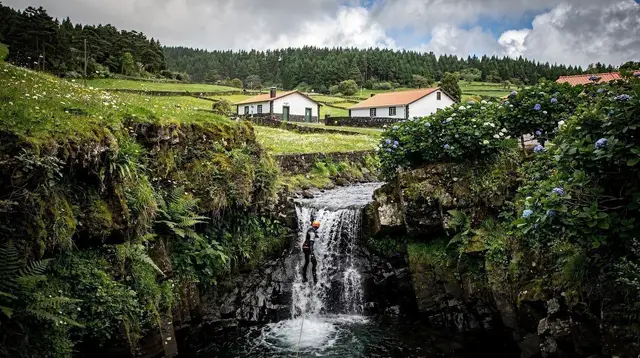
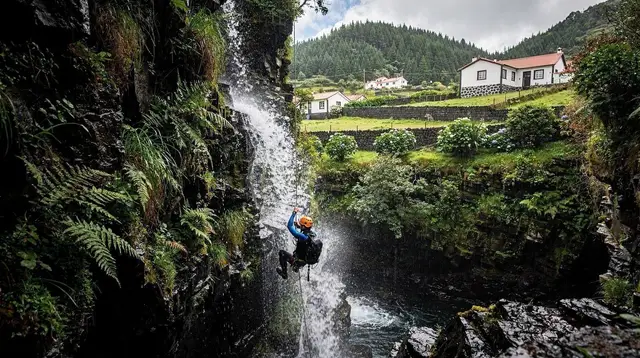
Guided canyoning here means descending a stream-carved ravine on foot, by scramble, by short abseil on a rope, and by swimming or wading through cold pools, moving downhill with a small group and a guide rather than climbing or navigating independently. It sits somewhere between a hike and a water activity, and it rewards general fitness, comfort in water, and a level head around heights more than any specific sport background. For a fuller walkthrough of what a day actually involves, see what to expect from canyoning on São Miguel.
The Island’s Terrain, Honestly Described
It helps to separate what São Miguel’s landscape actually is from what people sometimes picture before they arrive. The island’s highest point, Pico da Vara, tops out at 1,103 metres, and its canyons are cut into the flanks of volcanic hills and stream valleys rather than into high mountains. There is no alpine approach, no glacier, no multi-day trek to reach a canyon entrance. The terrain is volcanic, green, often wet underfoot, and shaped by rainfall and streams working through soft rock over thousands of years, which is exactly what makes it good canyoning ground: short, steep, water-cut ravines close to the road rather than remote high-altitude gorges.
That doesn’t make the activity trivial. Volcanic rock can be slippery when wet, the vegetation is dense, and a ravine can feel genuinely committing once you’re a few abseils in with no easy way back up. But it does mean the physical scale is different from what canyoning asks of you in the Alps or the Pyrenees: shorter approaches, lower elevation, and a day built around a handful of drops and pools rather than a long technical descent.
If you want the wider geological picture of how the island’s volcanic ground behaves, volcanic ground: caldeiras versus lava tubes explained is a useful companion read, and São Miguel’s volcanic history overview sets the whole landscape in context.
What “Guided” Actually Takes Off Your Plate
The single biggest reason canyoning is accessible to people without prior experience is that it’s run as a guided activity from start to finish. You aren’t expected to read the ravine, choose your line, rig your own rope, or judge whether a pool is safe to jump into — a guide does that, briefs the group at each obstacle, and adjusts the pace to whoever is having the hardest time that day. Harnesses, helmets and wetsuits are fitted and explained on site, and the abseiling technique is taught step by step rather than assumed.
That’s a meaningful difference from independent canyoning or climbing, where fitness and skill both have to be self-assessed and self-managed. Here, the guide is effectively doing the risk judgement and technical decision-making, and your job is to be physically capable of following instructions under a bit of cold-water stress: stepping backward off a ledge on a rope, swimming a short stretch, climbing out over wet rock. People with zero outdoor-sports background do this regularly. People who are unfit, who panic in cold water, or who genuinely cannot swim are the ones for whom it becomes hard regardless of how good the guiding is.
a guided descent through the Salto do Cabrito ravine, with all technical gear included is one way to see this kind of terrain with instruction built in from the first step. A shorter option built around the same idea is a half-day canyoning outing that keeps the technical time and the walking to a more manageable window, which suits people who want to try the activity without committing to a full day of cold water and scrambling.
Swimming, Cold Water and Nerve — The Real Prerequisites
If there’s one requirement that matters more than general fitness, it’s comfort in water. The pools inside São Miguel’s ravines are fed by rain and stream water rather than the sea, and they run cold year-round. Wetsuits blunt the cold but don’t remove it, and part of most descents involves swimming a short stretch, treading water while waiting your turn, or wading through a pool with a daypack and harness on. Being a confident swimmer — not necessarily fast, but calm and capable in open water — matters more than being able to run a fast five kilometres on dry land.
The second real prerequisite is a working relationship with heights. Each abseil is short by alpine standards, but you are still leaning back over a drop with your weight on a rope, repeatedly, sometimes with water running past you. Guides talk people through this individually and there’s no shame in going slowly, but a serious, unmanageable fear of heights is worth being honest about before you sign up rather than discovering it hanging over the first drop. If cold, moving water on its own coastline is more your interest than descending through rock, coasteering and volcanic coastline safety covers a related but different way to get wet and scramble along São Miguel’s edges.
Who This Genuinely Suits — and Who It Doesn’t
Canyoning on São Miguel tends to suit reasonably active adults and older teenagers who don’t have a specific medical reason to avoid strain on joints, cold exposure, or swimming. You don’t need to be an athlete. Regular walking, the ability to climb a few flights of stairs without real difficulty, and general comfort being outdoors and wet for a few hours cover most of what a day actually demands. People who hike occasionally, swim recreationally, or do any kind of regular low-key exercise are typically fine.
It suits people less well if they have significant heart or joint conditions that cold water or repeated impact could aggravate, if they are pregnant, if they cannot swim, or if they have a fear of enclosed or exposed spaces severe enough that being on a rope over a drop would be genuinely distressing rather than just nerve-wracking.
None of this maps cleanly onto named routes or a beginner/expert label — the operators running these trips assess groups and individuals on the day rather than publishing a graded difficulty scale for each ravine, and it would be misleading to invent one here. If you’re unsure, the honest approach is to describe your fitness, swimming ability and any relevant health conditions directly when you book, rather than relying on a route name to tell you whether it fits.
Families weighing canyoning against other options may find it useful to read São Miguel with kids alongside this guide, since age suitability for canyoning specifically tends to be handled case by case rather than through a fixed minimum.
No Train, and Why That Shapes the Day
One practical fact worth folding into your fitness planning: São Miguel has no railway, and the island’s canyons sit inland, away from the main towns, reached by narrow rural roads rather than direct bus routes. Renting a car is the default way most visitors get around the island for sightseeing, but it is not necessarily the right tool for canyoning specifically, since a self-driven visitor would still need to find parking near a ravine entrance, manage a return trip in wet gear, and navigate roads that can be narrow, unlit or fogbound.
That’s the main reason guided canyoning trips are built around included transport from a central pickup point: it removes the need to drive yourself in wet gear after a physically tiring day, and it means you don’t need local navigation experience to reach terrain that a first-time visitor would otherwise struggle to find.
If you’re weighing this trade-off across other activities too, guided tours versus self-drive on São Miguel lays out the general logic, and driving on São Miguel: what to expect is worth reading if you’re renting a car for the rest of your trip regardless. For visitors relying on public transport, the São Miguel bus guide is honest about its limits for activity-based days like this one.
Preparing Your Body Without Overtraining for It
Because the terrain is closer to a demanding hike with water than to a technical mountain descent, the preparation that actually helps is unglamorous: general cardiovascular fitness from regular walking, a swim now and then if you don’t swim often, and comfort wearing a wetsuit if you’ve never worn one before a trip. There’s no canyoning-specific training worth doing in the weeks before a visit, and no equipment to buy — technical gear is provided and fitted on site.
What does help on the day is arriving reasonably rested rather than straight off an overnight flight, eating properly beforehand since the activity runs for several hours, and being upfront with the guide about any injury, condition or fear that might affect how you handle a particular obstacle. Guides on São Miguel deal with first-timers constantly and would rather know in advance than find out mid-ravine.
If your legs and joints are already fatigued from earlier hiking, pairing canyoning with a gentler day either side is sensible. Lagoa do Fogo’s hiking trail and the climb toward Pico da Vara both give a good, honest sense of how much walking the island’s volcanic terrain typically asks for, without any rope work involved.
Timing It Around Rainfall
Because canyoning depends on stream flow, weather has a direct effect on how a day plays out, and heavy rain both raises water levels and increases the risk of cancellation for safety reasons — a separate question from fitness, but one worth reading before you plan a specific week. Canyoning season and rainfall on São Miguel covers that in more depth, and what to pack for canyoning is worth checking the night before regardless of season, since being physically ready counts for little if you turn up without the right base layer or footwear for the drive there and back.
If Canyoning Turns Out Not to Be for You
Not every visitor wants to swim through cold pools or abseil down a rock face, and that’s a reasonable conclusion to reach honestly rather than push through. São Miguel’s ravines and waterfalls can be seen plenty of other ways: on foot along marked trails, from a vehicle on a guided circuit, or from the water on a calmer paddle.
a full-island jeep tour that takes in the island’s ravines and volcanic scenery from the seat of a 4x4 rather than on a rope covers similar landscapes at a gentler physical level, and for a water-based alternative that doesn’t involve abseiling, renting a kayak on the south coast at Vila Franca do Campo offers a different, calmer way to be on the water. Neither replaces the specific experience of a canyon descent, but both are honest options if the fitness and comfort profile above doesn’t sound like a good match.
Fitness and Canyoning on São Miguel: Common Questions
Do I need previous canyoning or climbing experience?
No. Guided canyoning on São Miguel is set up as an introductory outdoor activity. Guides brief you on the ropes, harness and abseil technique on site, and most participants are trying it for the first time.
Do I need to be a strong swimmer?
You need to be a comfortable, confident swimmer able to move through pools and against light current in cold, moving water while wearing a wetsuit and gear. Weak or non-swimmers should discuss this with the guide before booking.
Is São Miguel’s terrain as demanding as alpine canyoning?
No. The island’s high point is 1,103 metres and its canyons are volcanic ravines carved into hillside streams, not high-mountain gorges. The physical demand comes from repeated abseils, scrambling and cold water, not from altitude or long alpine approaches.
What if I’m afraid of heights?
Some unease is normal and guides talk people through each abseil individually. A serious fear of heights or of being lowered on a rope is worth being honest about beforehand, since the activity does involve repeated descents on a line.
Can children or older adults take part?
Suitability depends on the individual’s fitness, swimming ability and comfort with heights and cold water rather than age alone. Families should ask directly about minimum age and group composition when booking, since this varies by trip.
Is a rental car needed to reach the canyon?
There is no train on São Miguel, and public buses are not built around activity pickups. A guided canyoning trip typically includes transport to the ravine as part of the day, which is the practical alternative to self-driving on the island’s narrow rural roads.
What should I do to prepare physically beforehand?
General fitness helps more than any specific training: being able to walk briskly for an hour, swim comfortably, and climb stairs without strain covers most of what the day asks of your body. No canyoning-specific training is expected.
What if canyoning turns out not to be right for me?
São Miguel has plenty of ways to see the same volcanic ravines and waterfalls without abseiling, from marked hiking trails to jeep tours, so a change of plan doesn’t mean missing the landscape.
Canyoning on GetYourGuide
Verified deep-linked GetYourGuide tours. Book through these links and we earn a small commission at no cost to you.
GetYourGuide does not provide a product photo for this activity — the image shows the meeting point, photographed by us.