Stargazing on São Miguel: What to Know
What should I honestly expect from stargazing on São Miguel?
Clear, star-filled nights do happen on São Miguel, but Atlantic weather changes by the hour and can differ from one side of the island to another, so cloud, mist or drizzle can arrive with little warning. There is no verified dark-sky rating or light-pollution measurement for the island, so treat a clear night away from town lights as a good outcome rather than something you can plan around, especially outside the drier summer months.
Setting Expectations Before You Go Out After Dark
São Miguel gets asked about as a stargazing destination fairly often, usually by travellers who have already found a claim online that the island has a “protected starry sky” or unusually low light pollution. Neither of those claims is backed by anything verifiable, and this page won’t repeat them. What can be said honestly is simpler: São Miguel is a volcanic island in the middle of the North Atlantic, most of it rural and lightly populated outside Ponta Delgada, and on a clear, calm night away from town the sky does open up in a way it doesn’t over most of mainland Europe. Whether you get that clear night is mostly down to the weather on the evening in question, not a guarantee the island offers.
That framing matters because the two biggest variables in a night under the sky here are not equipment or location, but timing and weather, and both are largely out of your control. This guide is about setting expectations honestly rather than promising a result, and about the two things that actually matter once the sun goes down: what the sky is likely to do, and what genuinely deserves your caution once you’re standing outside in the dark.
Why the Sky Won’t Always Cooperate
The single fact worth carrying into any plan to be outside after dark on São Miguel is that the weather changes hour by hour, and it does not change the same way everywhere on the island at once. It is entirely normal for Furnas to sit under drizzle while Ponta Delgada, twenty-some kilometres away, stays dry, or for a clear evening on the south coast to arrive alongside a bank of cloud sitting stubbornly over the central highlands.
The island’s volcanic terrain forces moist Atlantic air upward unevenly, and the result is a patchwork of microclimates rather than one forecast for the whole island. Our weather guide goes into this in more depth, and it’s worth reading before you build an evening around a clear sky.
Season matters too, but it doesn’t remove the uncertainty, only shifts the odds. Roughly June through September is the driest, most settled stretch of the year, and it’s when a calm, cloudless evening is most likely. Outside that window, and especially from November to March, rain is possible on any given day, and cloud cover is the norm rather than the exception.
That doesn’t make the cooler months a dead season for anything else worth doing — thermal pools, tea plantations, museums and the caldeiras all stay open, as covered in our guide to São Miguel in winter — but it does mean a clear night should be treated as a pleasant surprise in that period, not something to plan a trip around. Our month-by-month guide breaks down what each part of the year is realistically like if you want to weigh the odds before booking.
The practical takeaway is to build in flexibility rather than a fixed date. If you have more than one evening on the island, keep an eye on the forecast each afternoon and be ready to change your plan at short notice — head out on the clear evening, and do something else on the cloudy one. Chasing a single planned “stargazing night” on a fixed date is the surest way to be disappointed by a bank of cloud that wasn’t there the day before.
Where the Sky Actually Opens Up — In General Terms
This page won’t hand you coordinates for a specific viewing spot, because the honest answer is that the best spot on any given night is wherever the cloud happens to have cleared, and that changes constantly. What’s true in general is that the interior highlands and the areas away from Ponta Delgada and Ribeira Grande sit under less ambient light than the main towns, simply because they’re farmed and sparsely built rather than developed.
The trade-off is that the same interior high ground — the road up toward Lagoa do Fogo, for instance — is also the part of the island most often sitting inside cloud, and the pass can close in bad weather. Our page on when the clouds clear at Lagoa do Fogo explains why that particular high ground is unreliable even as a daytime viewpoint, let alone after dark.
A more practical approach than aiming for one named “best” spot is to think about it the way you would think about a sunset: pick somewhere with an open view to the sky and clear of direct streetlight, check the forecast for that specific side of the island that evening, and be ready to move if the cloud sits somewhere you didn’t expect. Our guide to sunset viewpoints on São Miguel lists open, unobstructed spots that work just as well once the sun is fully down, without claiming any of them as a certified dark-sky site — because none of them are.
The Real Risks After Dark
The thing to actually be careful about on São Miguel after dark has nothing to do with wildlife. There are no snakes and no dangerous land animals on the island at all — that’s simply a fact about the Azores, not a reassurance specific to night-time — so nothing is waiting in the hedgerows. Our page on whether São Miguel is safe and our piece on the island having no snakes cover this in more detail if it’s a concern for you.
What is genuinely worth respecting is the terrain and the sea. Much of the island’s most open, unobstructed sky sits near coastal cliffs, and those edges are frequently unfenced, uneven underfoot, and much harder to judge in the dark than they look in daylight photos. Add in fog, which can descend over a road or a headland with very little warning even on a night that started clear, and it’s easy to lose your bearings on ground you don’t know. If your evening plan includes any stretch of coast path or clifftop, stick to marked paths, keep well back from any edge you can’t clearly see the bottom of, and don’t push on if fog starts rolling in — turn back the way you came rather than trying to find a shortcut in poor visibility.
Driving is the other practical risk. The island’s roads are narrow, the EN1-1A that rings São Miguel has tight bends and steep drops in places, and the interior passes toward Sete Cidades and Lagoa do Fogo are the sections most likely to be foggy, wet or closed outright — conditions that are considerably harder to judge at night. If you’re driving yourself to a viewing spot, our guide to driving on São Miguel is worth reading beforehand, and it’s sensible to keep to routes you’ve already driven in daylight rather than exploring an unfamiliar road for the first time after dark.
Combining a Night Out With Something Worth Doing Regardless
Given how weather-dependent a clear sky is here, it makes sense to plan an evening around something worthwhile that doesn’t depend on the stars cooperating, and treat any clearing as a bonus. A number of activities on the island naturally run into the evening and give you a reason to be outside after dark either way.
An evening boat trip along the coast is one option: as the light fades, the cliffs and sea caves take on a different colour, and if the sky clears afterward you’re already away from town. A sunset boat tour along the island’s cliffs and caves is built around the changing light rather than a guaranteed clear night, which is an honest way to plan an evening here.
A soak after dark is another option that works regardless of what the sky is doing, since the appeal doesn’t depend on visibility. A visit to the Furnas hot springs after dark gets you outside the town of Furnas, away from Ponta Delgada’s lights, doing something worthwhile whether or not the clouds break.
For an evening that’s built specifically around watching the light change and staying out past sunset without arranging your own transport, a private sunset tour with drinks and snacks included covers the driving and timing for you, leaving you free to simply watch what the sky does as it gets dark.
If your real goal is reaching higher, more open ground away from town lights without navigating unfamiliar roads yourself after dark, a guided full-day jeep tour of the island that runs into the evening is a practical way to get up into the interior and back down again safely, with someone else doing the driving on the passes that give locals trouble even in daylight.
None of these are marketed as dedicated stargazing excursions, and that’s deliberate — nobody on the island can promise you a clear sky on a given evening, and any tour claiming to is overstating what the weather allows.
Practical Basics for an Evening Outside
A few ordinary preparations make more difference than any piece of gear. Bring more layers than you think you need: temperatures drop faster than expected once the sun is down, especially at altitude or near open coast where the wind picks up. A torch or phone light is genuinely useful, both for finding your footing on uneven paths and for being visible to any traffic if you’re walking along a road with no pavement, which describes a good stretch of the island outside the towns. If you’re driving, fill the tank before you set out — fuel stations are sparse outside the main towns and most close in the evening, a point covered in our guide to renting a car on São Miguel.
It’s also worth checking in with whoever you’re staying with about your plan, particularly if you intend to head toward the coast or up into the highlands after dark. Mobile signal thins out in parts of the interior, and a fogbound pass is not somewhere you want to be improvising a route. None of this is about the island being unusually risky — it’s the same common sense that applies to any rural, hilly coastline at night, applied to a place where the weather changes faster than most.
If your trip has any flexibility in it at all, that’s the single best tool you have. Rather than fixing one evening for “stargazing,” keep watching the forecast for each side of the island as your trip goes on, and take the clear evening when it actually shows up. For a wider sense of how the island’s weather behaves across the year and how to plan around it more generally, our itineraries built around photography and viewpoints are a useful reference for daylight planning that carries over reasonably well into the evening hours.
Your Questions About Night Skies on São Miguel, Answered
Is São Miguel a good place for stargazing?
It can be, on a clear, calm night away from Ponta Delgada and Ribeira Grande, but there is no verified dark-sky designation or light-pollution measurement for the island to back up any ranking. Treat any clear night as a bonus produced by the weather that evening, not a guaranteed feature of the destination.
What’s the best time of year to try?
The driest, most settled stretch runs roughly June to September, which gives the best odds of a clear evening. Outside that window, especially November to March, rain is possible on any given day, so a clear night becomes more a matter of luck than planning.
Why does the forecast change so often?
São Miguel sits alone in the North Atlantic, and its volcanic terrain pushes moist air upward unevenly across the island. Conditions can shift within an hour and differ completely between the coast and the interior, or between the north side and the south side, so a forecast checked at sunset can already be wrong by midnight.
Is it dangerous to be out after dark on São Miguel?
The real hazards are the sea, unmarked or unfenced cliff edges, and fog rolling in over unfamiliar roads, not wildlife. There are no snakes and no dangerous land animals on the island, so the risks after dark are entirely about terrain, water and visibility, not what might be waiting in the dark.
Do I need a car to go stargazing?
A rental car is the practical way to get away from the main towns’ lights, since buses stop running on tourist-friendly schedules well before dark. Driving after dark on the island’s narrow roads calls for caution, especially on the passes toward Lagoa do Fogo or Sete Cidades, which can close or sit inside cloud even when the coast is clear.
Should I book a night tour instead of going out alone?
A guided evening activity, such as a sunset boat trip or an after-dark visit to a thermal area, takes the route-finding and timing off your hands and pairs naturally with whatever the sky happens to do that night. It’s a reasonable way to be outside after dark on the island without planning the logistics yourself.
Sunset & Stargazing on GetYourGuide
Verified deep-linked GetYourGuide tours. Book through these links and we earn a small commission at no cost to you.
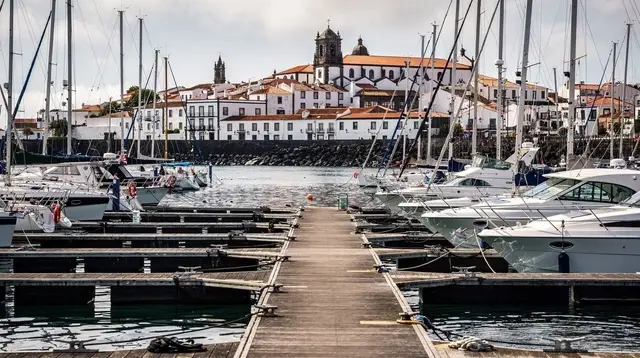
GetYourGuide does not provide a product photo for this activity — the image shows the meeting point, photographed by us.